
Princess Cut vs Cushion Cut
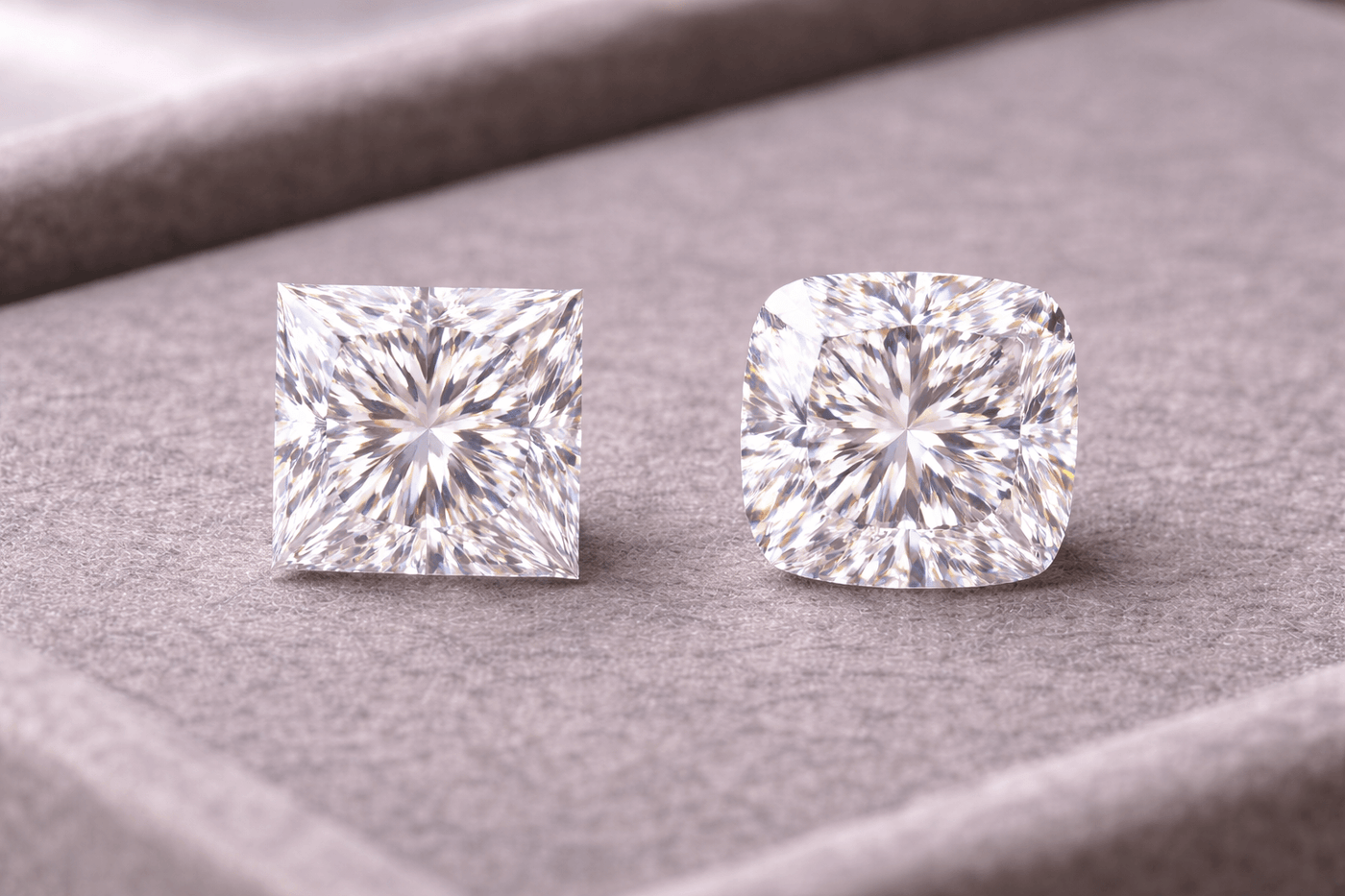

Princess and cushion cuts rank among the most popular diamond shapes for engagement rings—each with a distinct history and aesthetic. The princess cut is a square-cut diamond that was invented in 1981. It is known for its clean lines, angular shape, and bright sparkle (1). The cushion cut, on the other hand, is a shape that has been around for hundreds of years. It has a square or rectangular outline and softly rounded corners. People often say it has a vintage, romantic feel. This guide covers what sets these cuts apart and how to choose the right one for an engagement ring or fine jewelry piece. You will learn how each cut looks and wears, how to tell if it is good quality, how to take care of it, and even which one might look best on you and fit your budget. (4)
What Are Princess and Cushion Cuts?

A princess cut diamond is a square or slightly rectangular "modified brilliant" cut diamond. It came out in 1981 to give a modern square shape with the most sparkle. Princess-cut diamonds have sharp, straight edges and pointed corners, which gives them a bold, modern look. One important thing to know is that most of the carat weight is in the pavilion, which means that the stone may look a little smaller when you look at it from the front than other shapes of the same carat weight. Princess cuts are popular for solitaire and halo engagement rings because they are very bright and have sharp lines. (1)
The cushion cut is a shape that looks more like something from the past. It has a square or rectangular shape with corners that are noticeably rounded, which makes it look like a soft "pillow". The cushion cut has been around since the 1800s. It combines the square shape of a princess or round diamond with large, open facets that often make a warm, glowing fire. When talking about old styles, it is sometimes called the "old mine cut" or "antique cut." Cushion cuts—explore our diamond engagement rings—today can have a soft, subtle sparkle (with bigger facets) or a very fiery "crushed ice" look if more facets are added. Cushion diamonds have a timeless beauty that makes them popular in antique-style or vintage-inspired jewelry. (1)
Types / Variations of Princess and Cushion Cuts
Princess Cut Diamond

Most of the time, a classic princess cut is square with four sharp, pointed corners. It has a brilliant-cut facet pattern with 57 or 58 facets that makes it look very fiery and sparkling. A well-cut princess diamond will have a good balance of brightness and sparkle because of the flat top (table) and deep pavilion. However, it may look a little smaller face-up because of the weight distribution. (1) Like all diamond cuts, princess cuts are made from diamond crystals and are graded using the same 4Cs. The pointed corners of a princess diamond are the most likely to chip if they are hit. Jewelry stores usually protect them with strong prongs or bezel settings. People often use princess cuts for engagement rings, stud earrings, and statement pendants. Their clean lines go well with modern, geometric designs (5).
Cushion Cut Diamond

The outline of a cushion cut is softer. The usual cushion is square or slightly rectangular with corners that are gently rounded and bigger facets that make the fire stand out. There are two main styles of modern cushion cuts: traditional cushion brilliant, which has fewer, larger facets for a classic look, and modified brilliant cushion (also called "crushed ice" cushion), which has many small facets for maximum brilliance. The way the cushion is made and the way the facets are arranged make a warm, glowing sparkle. For durability, cushions with rounded corners are less likely to chip than those with pointed corners. But they are often cut with deeper proportions, so a cushion can look smaller when it is face-up than other shapes of the same carat weight. Cushion cuts are often used in antique-style solitaire and halo rings, as well as colored gemstone jewelry. For example, cushion shapes are popular for sapphires, rubies, and other gems in heirloom designs. They look good in both old and new settings because of their shape. (1)
How to Identify Quality in Princess and Cushion Cuts
When looking at princess or cushion cut diamonds, it's important to have a professional certification. A grading report from a well-known lab like GIA or IGI confirms the diamond's cut, color, clarity, and carat weight. When cutting a princess diamond, make sure the facets and symmetry are perfect. Princess diamonds that are cut well have a pattern of light and dark areas that are balanced. This makes them look more brilliant and sparkly (2). The pointed corners of the shape can help hide inclusions near the edges, but overall clarity is still important for long-term beauty (1).
Symmetry is very important for cushion cuts. Cushions that are made well have corners that are evenly rounded and an outline that is the same on all sides. To lower the risk of chipping (3), the girdle should be medium-thick, especially at the corners. Check the polish and facet accuracy very closely. A well-cut cushion will look smooth and balanced, with no flat spots or uneven bulges along the edges.
Check the metal and craftsmanship if the diamond is set in a ring. Look for official stamps that show real precious metals, like 14K or 18K gold or platinum stamps (6). A well-made setting shows that the designer put a lot of thought into it and that it will last. For example, princess cuts look best with secure prongs or bezel settings, and cushion cuts should be held firmly by evenly spaced prongs.
A good princess or cushion cut diamond will have a reliable lab report, great symmetry and cut precision, and be set in a well-made, properly hallmarked mounting (6).
Buying Guide: How to Choose the Right Cut
Budget:
Compared to round brilliants, princess and cushion cuts can be pretty cheap. A princess cut diamond usually costs less per carat than a round diamond of the same weight because its square shape keeps more of the rough crystal. Cushions are also usually cheaper than rounds because their deeper cuts and different styles give buyers more choices within a certain price range. If size is important to you, a princess cut may let you get a bigger stone for your money because it was less rough. But when you make your choice, be sure to shop around and compare prices per carat. (1)
Lifestyle & Occasion:
Princess-cut rings have a sharp, modern look that makes them perfect for people who like clean, modern styles or geometric, minimalist jewelry. Princess stones have sharp corners that can catch on fabrics, so if you live a very active life, be careful. Strong settings or protective bezels can help. People who like classic or antique-inspired styles will love cushion cuts because they have rounded edges and a vintage look. They are popular choices for engagement rings and pendants that look like they belong to a family. People often use both cuts for engagement rings, anniversary gifts, or statement pieces. When choosing, think about the person's style and what they do every day (like desk work vs. hands-on work). A thicker band or bezel setting can make any cut more durable. (1)
Skin Sensitivity and Metal Choice:
The shape of the cut doesn't directly affect how sensitive your skin is; it's more about allergies to metals. But a good tip is to choose a setting made of high-quality metal. Platinum and 18K gold alloys (with the right hallmarks) are good choices for people with allergies. Hallmarks show how pure the metal is (6), which helps you avoid nickel or low-quality alloys that aren't listed. Platinum, for instance, is naturally hypoallergenic and very strong, making it a good choice for people with sensitive skin. Make sure the ring is certified to be nickel-free if you have allergies. In terms of cutting, a cushion's smooth edges are a little gentler on skin and clothes than a princess's sharp corners. This is one small thing to think about in your daily life.
Long-Term Value:
Both cuts are popular enough to keep their resale value, but diamonds often sell for less than they do at retail. Princess and cushion shapes, for example, don't usually cost as much as rounds, but they are still in high demand among brides, which keeps their prices high on the secondary market. According to people in the business, the price of a diamond changes depending on its shape and how much people want it. Modern brides like princess cuts, while vintage-loving buyers still want cushion cuts. To get the most value over time, make sure the quality is good (good 4Cs grading). In short, both princess and cushion diamonds are valuable cuts on their own. The best investment is always a stone that is cut well and of high quality. (5)
Care, Cleaning & Maintenance

To keep a princess or cushion diamond shining, you should clean it often and check its setting. Once a week, soak diamond jewelry in a mild ammonia-based cleaner, like a diluted glass cleaner, overnight. Then, use a soft toothbrush to gently brush it. Pay close attention to the back of the stone, where oils build up. Rinse well (don't use sinks without strainers) and polish with a cloth that doesn't leave lint. Stay away from harsh chemicals and toothpaste because they can dull the metal or loosen the prongs (7). Diamonds are very hard, so they can handle steam or ultrasonic cleaners. Just make sure the setting is secure first.
It is also important to do regular maintenance. Because the sharp corners of a princess cut are easy to break, you should have a jeweler check the prongs often. Princess diamonds don't have a culet (bottom facet), which means that the pavilion tip can chip easily if it isn't protected. You can protect those corners with four strong V-shaped prongs or a bezel setting. Cushion cuts should also have secure prongs, even though their rounded edges make them less likely to chip. In either case, you should fix any loose stones or worn prongs right away to avoid losing them. (2)
Common Myths & Misconceptions
Many people think that cushion cuts don't sparkle as much as princess cuts. In reality, the difference is in the style of the facets, not how beautiful the whole thing is. GIA says that cushion diamonds are cut to make a softer kind of sparkle, with more focus on fire and soft flashes of light than the sharp brilliance seen in princess cuts (3). They may not shine the same way, but they are not boring.
Some people also think that princess cuts are too trendy or don't have enough depth. The princess cut is one of the most popular diamond shapes, second only to the round brilliant, according to IGI. This is because it has clean lines, a modern look, and a lot of sparkle (5). It has been popular for decades, which shows that it is a powerful passing trend.
Some people also think that cushion cuts are out of style. In fact, many modern brides are drawn to them because of their vintage-inspired charm. Cushion cuts look great in both old-fashioned and modern settings, which makes them one of the most flexible shapes out there (3).
In short, neither cut is "better" or "worse." They just show beauty in different ways. Knowing these differences helps buyers pick a diamond that really fits their style instead of going with what they think they know.
Pros & Cons of Princess and Cushion Cut
|
Aspect |
Princess Cut |
Cushion Cut |
|
Appearance |
Sharp, square silhouette with crisp corners. Highly modern and geometric. |
Soft square with rounded edges – a vintage, romantic “pillowy” look. |
|
Sparkle |
Brilliant sparkle with many facets and high fire. Bold, white flashes of light. |
Warm, subtler sparkle. Cushion facets emphasize fire (“crushed ice” sparkles in modified cuts). |
|
Versatility |
Pairs well with sleek, contemporary settings; suits a wide variety of metal colors (especially white metals). |
Flattering in both antique and modern designs, often with halo settings; popular with colored gemstones too. |
|
Cost & Value |
Generally more affordable per carat than rounds (due to cutting yield). |
Often a good value choice – tends to cost less per carat than a round of similar size. |
|
Durability |
Edges create a bold look but corners must be protected (use prongs or bezel) to avoid chipping. |
Rounded corners naturally resist chips; require standard prong settings. Watch for a deeper pavilion (stone can appear smaller face-up). |
|
Ideal For |
Those who love clean, contemporary design. Great for solitaires, channel or princess-cut accent stones in rings. |
Lovers of vintage or heirloom styles. Works well with halo and cushion-cut accent stones, and looks remarkable in warm metal. |
Trends & Modern Market Demand
Cushion cuts have come back in a big way in the last few years. Cushion diamonds are always among the most popular choices for modern engagement rings, thanks in large part to celebrities and a renewed interest in vintage-style designs (4). People who want something classic but different like them because of their soft edges and romantic feel.
Princess cuts, on the other hand, are still a popular choice. The princess cut is a modern classic that never really goes out of style. Its sharp lines and modern elegance have kept demand steady (5). In general, people today are more interested in fancy shapes that can be customized. Couples can choose a ring that reflects their own style and story with shapes like cushion and princess, which are different from the classic round brilliant. Both cuts are very popular right now, but cushion cuts are the more "on-trend" choice for wedding jewelry right now (4).
Investment & Resale Value
It's not common for diamonds to be guaranteed investments, but cushion and princess cuts are two of the more valuable fancy shapes. Experts say that resale prices can be very different depending on demand, quality, and market conditions. Most diamonds do not sell for full retail value (5). Round brilliants are still the most popular diamonds to sell, but well-cut princess and cushion diamonds are still in demand.
Cushion cuts, which have a vintage look, do well in the markets for antique and estate jewelry. Princess cuts are also worth a lot of money because they are so popular. This is especially true when the cut quality and clarity are high. Quality is the most important thing about any diamond. Stones with good color, clarity, and craftsmanship always sell for more than stones of lower quality.
In real life, the resale value of fancy shapes is usually between 50% and 70% of the original price, depending on the state of the market. But for most buyers, the best thing about it is that they enjoy it. Choosing a cut you really love makes the diamond worth much more than what you could sell it for; it becomes a piece you'll cherish for years to come. (5)
Who Should Buy Which Cut?

Princess Cut: Great for someone who likes modern, architectural styles. Princess cut is for you if you like clean lines and a lot of sparkle. It looks good with a lot of different ring settings, like solitaire, channel-set halos, and more. It's also great for people who are active, as long as you choose a strong setting to protect the corners (2). If you want the most carat weight for your money, a princess cut is also a great choice because it wastes less rough crystal. Overall, brides who want a ring that stands out and is trendy often choose princess cuts. (1)
Cushion Cut: Good for people who like romantic, vintage, or classic styles. The pillow shape of the cushion may be just what you need if you like heirloom designs or just want a softer, warmer look. It looks great with halos that look like antiques and warm-toned metals like rose or yellow gold. A lot of sapphires, emeralds, and rubies are cut into cushions, so the cushion cut works well with colored stones too. If you care more about color or clarity than size, this is a great choice because it looks a little smaller when you look at it face up (the big facets show true color). In short, a cushion cut is a good choice for anyone who likes a classic, dreamy look. (1)
Frequently Asked Questions – FAQ
-
Q: What is the main visual difference between princess cut and cushion cut diamonds?
A: A princess cut diamond has a sharp, square outline with sharp, pointed corners and a beautiful pattern of facets. Cushion cuts are square or rectangular but have rounded corners, which gives them a softer look that looks like a pillow. Princesses are geometric and modern, while cushions are soft and have a vintage feel. (1) -
Q: Which cut sparkles more, a princess or a cushion?
A: Princess cuts are very bright because they have many small facets, which often make them shine very brightly. Cushion cuts shine in a different way; they bring out the warm fire and glitter in the stone. The sparkle pattern on a cushion is not the same as on a princess. It may look "different, but not less beautiful" (3). A well-cut princess looks very lively and fiery, while a cushion looks more like an old fire that is glowing. -
Q: Are princess cut diamonds more prone to chipping than cushion cuts?
A: Yes, princess cuts have sharp corners that can chip if they aren't protected. Use strong prongs or a bezel to protect those corners (1). On the other hand, cushion cuts have rounded corners that make them stronger. you should check both shapes often for loose prongs and take care of your ring like you normally would. (2) -
Q: Do cushion cut diamonds only look good in vintage-style rings?
A: Not at all. Cushion cuts are well-known for vintage and antique styles, but they can also look great in modern settings, like in sleek halo or bezel designs. The cushion's mix of classic style and modern flexibility makes it look good in almost any setting. Cushion has a good mix of classic elegance and modern sophistication (1). A cushion cut can still be a beautiful choice if you like modern rings. -
Q: Do princess cut diamonds look larger than cushion cuts of the same carat weight?
A: Usually, neither shape will look much bigger than the other at the same carat weight because both have deep pavilions. Princess cuts have a lot of weight in the pavilion, which makes them look a little smaller when viewed from the front (1). Cushions can also have deep cuts that make the face-up size smaller. The way people think about size is more about the proportions of the cut than the shape. So, neither the princess nor the cushion has a clear "size advantage." It's more about the depth and the table percentages. -
Q: Can I get a princess or cushion cut in gemstones other than diamonds?
A: Yes. Colored stones like sapphires, rubies, and emeralds, as well as diamond simulants like moissanite, can also be cut in princess and cushion shapes. These square/round hybrid shapes work with a wide range of stones and sizes (5). Cushion cuts are very popular in sapphires and rubies, for instance, because the rounded corners help keep these stones safe. The cut shapes work the same way in other gems, but keep in mind that pointed corners may not be strong enough for softer stones like opal.
Expert Jeweler Tips
-
For a flawless princess cut: To get a perfect princess cut, make sure the facets are even and the symmetry is perfect. A princess diamond that has been cut well will have a clear, square outline and a pattern of light and dark that is even. GIA says to look at the stone under a magnifying glass: all four sides should look the same, and the tiny facets should line up perfectly (2). This makes sure that the light is as bright as possible. Also, stay away from pavilions that are too deep, as they make the stone look smaller. Check the GIA report or ask the jeweler for the right proportions.
-
For a sparkling cushion cut: To check the sparkle of a cushion cut, look at it in bright, natural light. The best way to tell how brilliant a cushion cut is is by looking at it. This is because some have bigger facets for fire and some look like crushed ice. GIA experts say that you should look at a cushion cut in different lights to see the "fire" (colored flashes) and brilliance for yourself (3). Check to see that the facets are all the same size and that there are no dark spots. Lastly, think about a four-prong or halo setting, which goes well with the cushion shape and makes it more secure.
Conclusion
Your personal style and what you value most will help you decide between a princess cut and a cushion cut diamond. Both cuts are lovely and well-liked in their own way. The princess cut gives a sharp, modern shine, while the cushion cut gives a warm, classic look. As experts in the field say, the shape of the diamond you choose tells your own story. In the end, you can choose the shape that best represents you by taking into account all the details in this guide, such as the 4Cs quality and how well it fits your lifestyle. To make sure you enjoy your chosen gem for a lifetime, remember to buy a certified stone and choose a jeweler you can trust.
Check out our carefully chosen groups of princess and cushion cut diamonds to find the one that speaks to you. If you want more information about gems and tips on how to buy them, you might want to sign up for expert jewelry newsletters and blogs to get the latest news and ideas.
Modern sparkle or vintage charm.
Discover Princess and Cushion cut diamond rings, thoughtfully designed at Diamond and Sapphire's ring collection.
Read more
Princess cut diamonds are square with brilliant facets, offering intense sparkle, while emerald cuts are rectangular with step facets, emphasizing clarity and elegance. The choice depends on whethe...
Read morePrincess cut diamonds are square with brilliant facets, offering intense sparkle, while emerald cuts are rectangular with step facets, emphasizing clarity and elegance. The choice depends on whethe...
Read more