
Frequently Asked
Herringbone Necklaces FAQ
What is a herringbone necklace?
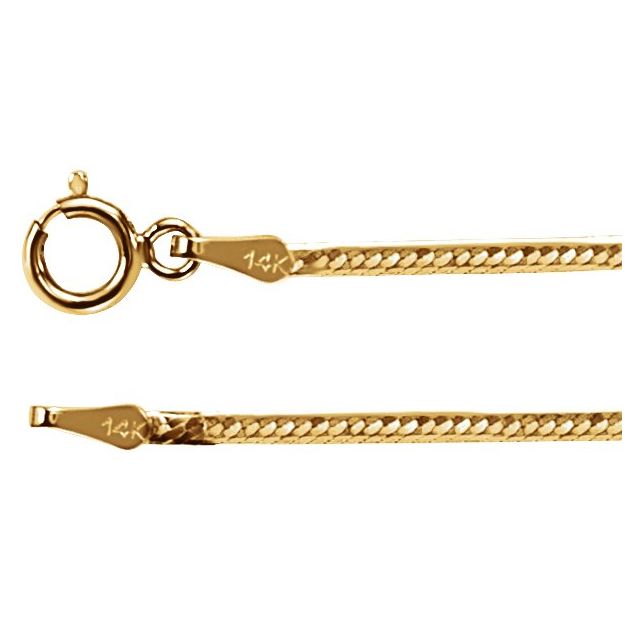
A herringbone necklace is a chain woven from many short, flat links laid at opposing angles, the same slanted pattern you see in herringbone tweed or brickwork. Because the links sit tightly side by side rather than looping through one another, the chain has no gaps and no visible joints. The result is a smooth, flexible band of gold that lies flat against the skin and reflects light like a mirror. It is one of the dressiest chains you can own, and it looks equally at home over a t-shirt or under an evening neckline.
Why does a herringbone chain look like liquid gold?
The magic is in the geometry. Each tiny link is flat and polished, and because they all lie in the same plane at the same angle, their surfaces act as one continuous mirror instead of dozens of separate facets. When you move, the whole chain flashes together in a single sheet of light. That unbroken reflective surface is what gives herringbone its signature liquid, almost molten look, and it is why a herringbone reads richer and glossier than a rope or cable of the same width.
What width herringbone should I choose?
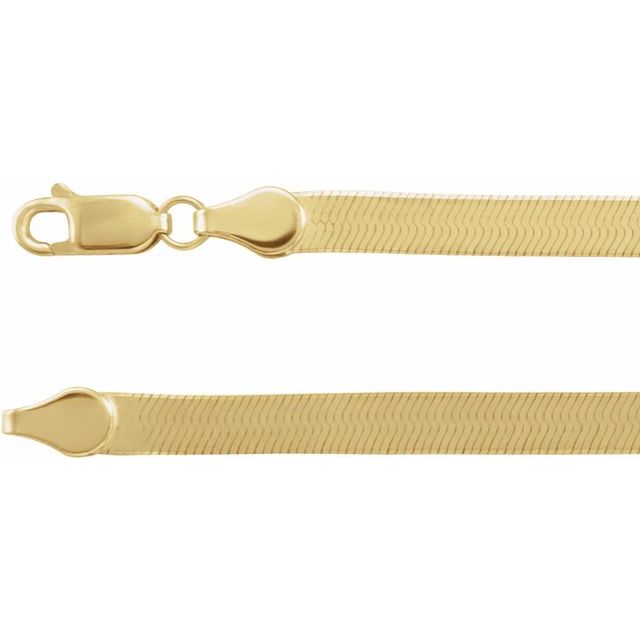
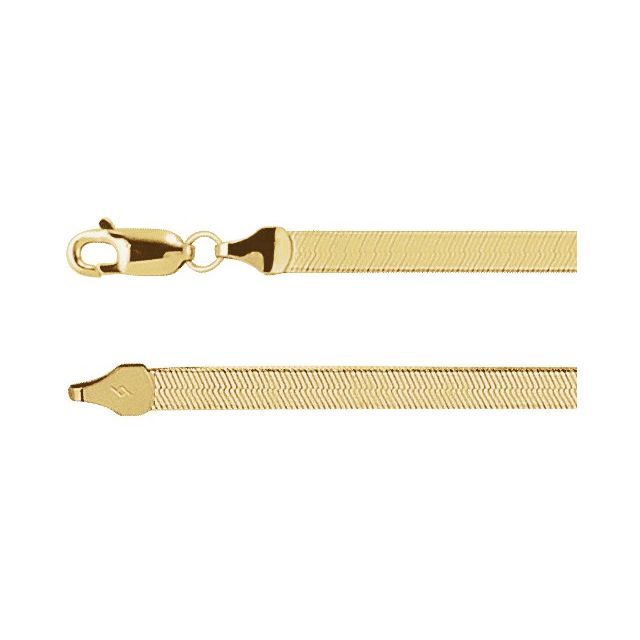
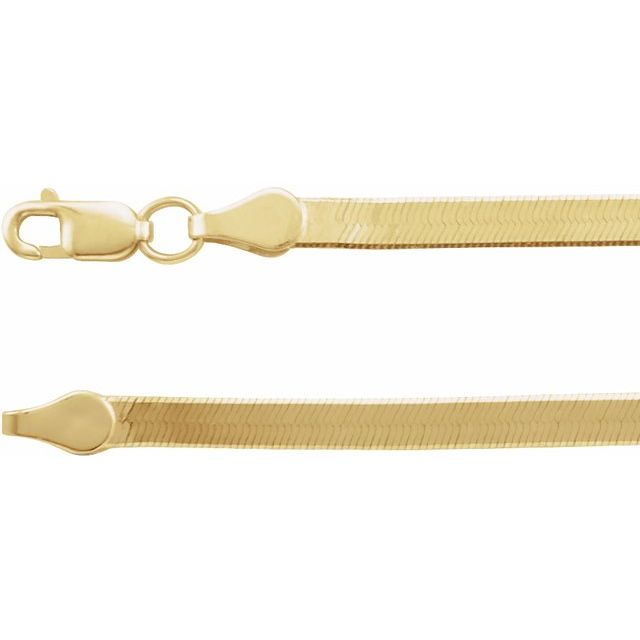
Width sets the entire mood of the chain. A 1.5 to 1.6mm herringbone is delicate and refined, ideal for layering or wearing high on the throat. Around 2.8mm is the classic width that most people picture, bold enough to stand alone yet still elegant. From 3.8mm upward the chain becomes a true statement, a wide reflective plane that turns a plain outfit into a look. If you want one herringbone that does the most, 2.8mm is the sweet spot. If you want to be seen from across the room, size up to 3.8 or 4.6mm.
What is the difference between flexible and twisted herringbone?
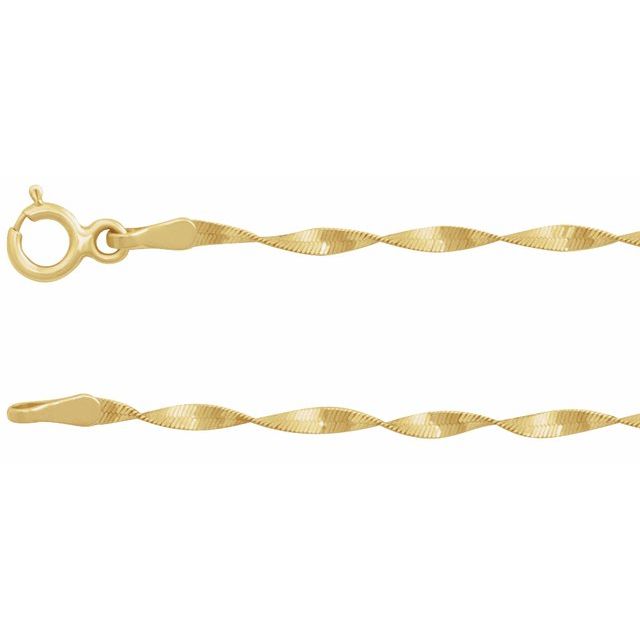
A flexible herringbone is the classic flat version, a smooth ribbon that lies close to the skin. A twisted herringbone takes that same flat weave and gives it a gentle spiral, so the mirror surface winds slowly down the chain instead of lying still. The twist adds movement and a little extra sparkle while keeping the chain slim, which makes it a lovely layering piece with more personality than a straight herringbone. Both are solid gold and both lie comfortably against the neck.
What length looks best?
Length changes how the chain sits. A 16-inch herringbone rides high on the throat like a choker and shows off the flat weave against bare skin. An 18-inch chain, the most popular, falls just at or below the collarbone and flatters almost any neckline. A 20-inch chain drops to the top of the chest and reads more relaxed, while a 24-inch herringbone sits mid-chest, layers beautifully over a shorter chain, and gives a wide statement width room to shine. For a bolder chain, a slightly longer length keeps the proportions balanced.
Do herringbone chains kink or crease easily?
Herringbone is the one chain that rewards a little care. Its flat woven structure is what makes it lie so smoothly, but bending it sharply or folding it can leave a permanent crease, so it should never be knotted, twisted hard, or crammed into a tight space. Worn normally it drapes and moves without any trouble. The simple habits that protect it are easy: store it flat or hung rather than balled up, take it off before sleep and hard workouts, and clasp it before putting it away so it keeps its shape. Treated gently, a solid gold herringbone stays flawless for decades.
Are these herringbone necklaces solid or hollow?
Every herringbone in this collection is solid 14K gold, not hollow and not plated. Hollow herringbone chains are built from very thin gold over an empty core to keep the price down, but they dent and crease far more easily and are almost impossible to repair once damaged. A solid herringbone carries the full weight of its gold, lies flatter, resists everyday knocks better, and can be serviced over a lifetime. It costs more because it contains more gold, and it is the version worth keeping.
Will a solid gold herringbone tarnish or turn my skin green?
No. Solid 14K gold contains far too much pure gold for its small amount of alloy to react with your skin, and gold itself does not tarnish. The green marks people sometimes notice come from plated or base-metal chains, never from solid gold. A herringbone can pick up a dull film from lotion, perfume or sweat over time, but a minute in warm water with a drop of mild soap and a soft cloth brings the mirror shine right back.
Can I wear my herringbone in the shower or the pool?
Solid gold handles water fine, so a quick shower will not harm the metal. The real risks are chlorine in pools and hot tubs, which over many exposures can weaken the fine solder along any chain, and the chance of a flat herringbone catching, folding or kinking when you are moving around. For a herringbone you love, take it off before swimming and before the gym, and it will keep both its shape and its shine far longer.
How do I care for and store my herringbone necklace?
Clean it every few weeks in warm water with a drop of mild dish soap, wipe gently along the flat of the chain with a soft cloth, rinse, and pat dry. Put the necklace on after perfume, lotion and hairspray rather than before. Most important, store a herringbone laid flat in a pouch or hung on a hook, never folded or tangled with heavier pieces, since a sharp bend is the only thing that can crease it. Done consistently, this keeps solid gold bright and flat for a lifetime.