

Frequently Asked
Pavé Engagement Rings FAQ
What is a pave engagement ring?
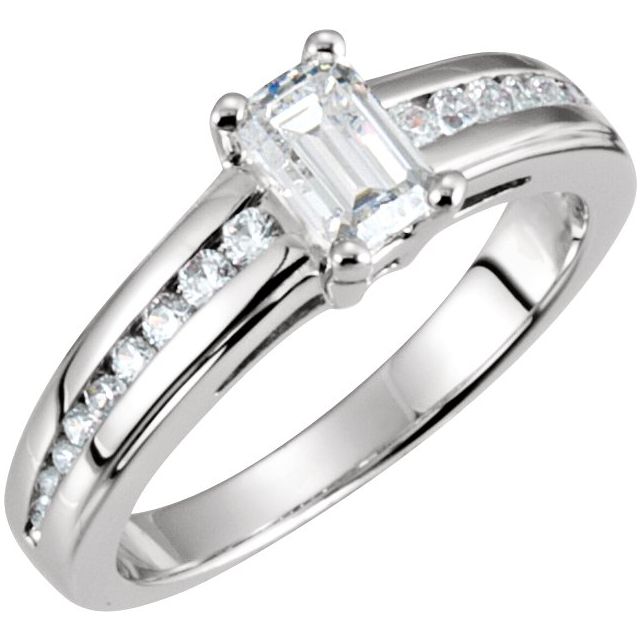
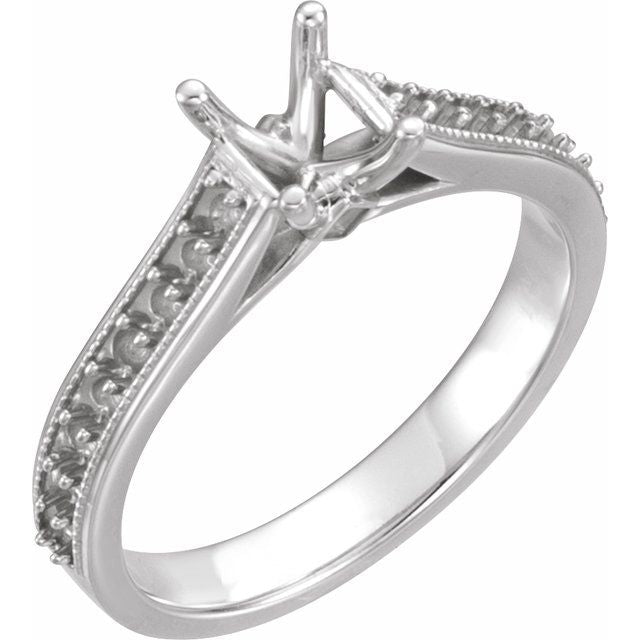
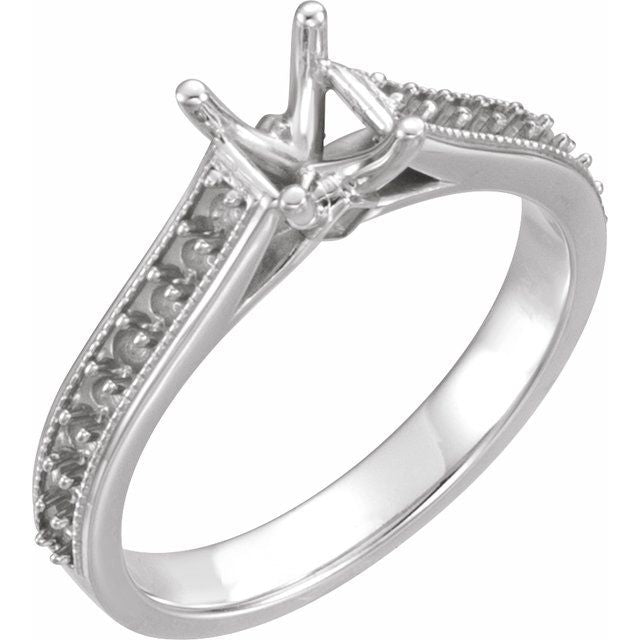
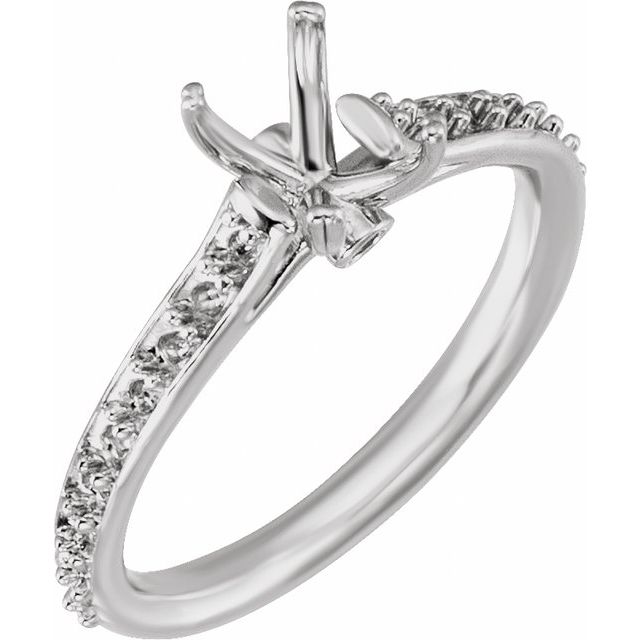
A pave engagement ring has a band set with many small diamonds placed close together, held in by tiny beads of metal or micro-prongs. The name comes from the French word for paved, because the little stones cover the band like a cobbled path of light. The result is a ring that sparkles along its whole length, not only at the center. Every pave ring in this collection is shown complete with a real, independently certified lab-grown center diamond and a fully set band, so what you see on the page is the finished ring and its honest all-in price, not a bare setting.
Does pave make the center diamond look bigger?
Yes, and that is one of the main reasons people choose it. The row of small diamonds carries light right up to the center and softens the line where the band meets the main stone, so the eye reads the whole top of the ring as sparkle. A tapered pave band that narrows toward the center adds to the effect by making the center the widest point. You are not changing the carat weight of the center, but a pave setting genuinely makes it look larger and brighter than the same stone would look on a plain band.
What is French pave and how is it different?
French pave, sometimes called fishtail or cut-down pave, sets each small diamond in a little V-shaped cut-out in the metal instead of behind a flat bead. Because more of each stone is exposed and less metal shows from the side, French pave looks brighter and more diamond-heavy than standard bead pave. It is the most sparkling version of the look and a good choice if you want the band to read as pure light. In this collection the French and accented pave styles give you that extra brilliance, while the classic pave styles give a slightly more traditional, even finish. Both are secure when set well.
Are lab-grown diamonds real diamonds?
Yes. A lab-grown diamond is chemically, physically, and optically the same material as a mined diamond, pure crystallized carbon, grown in a matter of weeks rather than over a billion years. It is not a simulant like moissanite or cubic zirconia; it tests as diamond because it is diamond. The center of every ring in this collection is a lab-grown stone graded by an independent laboratory such as GCAL, IGI, or GIA, and each ring links to its certificate. Choosing lab-grown is what lets you set a larger center and a fully paved band for the same budget, since you are paying for real diamonds without the mined premium.
Which pave style should I choose?
Start with the feeling you want. A classic pave band is bright and balanced and works with any center. A cathedral pave lifts the stone with arches and runs diamonds up the shoulders for more presence. A petite or slim pave stays delicate and suits a slender hand or a smaller center. A tapered pave makes the main stone look as large as possible. A knife-edge or compass-set pave gives a modern, architectural line, and a sculptural or signature band adds an artful gallery you will not see everywhere. Use the comparison table above to match a style to the hand it is going on, and remember you can pick the center shape separately.
What does the all-in price include?
Everything you see on the ring. The price covers the pave-set band and the certified lab-grown center diamond, set and finished to your ring size. We do not show a low setting-only figure and then add the diamond at checkout. If you would like a larger center, a different color or clarity, or natural diamonds instead of lab-grown, our concierge can quote and hand-select the stone for you, but the number on the page is the price of the complete ring as shown.
How long does a pave ring take to make?
Each ring is made to order. Because the center is set, the pave is finished, and the band is sized to your exact fit, most rings ship within about two to three weeks. If you are working toward a proposal date or an anniversary, tell us when you need it and we will confirm the timeline before you order and do our best to prioritize it.
Is pave hard to care for, and can I resize it?
Pave is durable when it is set well, and ours is set by hand with secure beads or micro-prongs, but a diamond band asks for a little more everyday care than a plain one. Avoid knocking the edge against hard surfaces, take the ring off for heavy work or the gym, and have it checked once a year so any bead that loosens over time is retightened before a stone can shift. Resizing is possible on most pave rings, though a band that is fully paved all the way around leaves less plain metal to work with, so we usually size it a half step rather than several sizes at once. Tell our concierge your size up front and we will make it right the first time.