
Frequently Asked
Pearl Necklaces FAQ
Are these real pearls, and what does cultured mean?
Yes, every pearl in this collection is a real, genuine pearl. Cultured simply describes how it was grown. A technician places a small nucleus inside a live oyster or freshwater mussel, and the animal coats it with layer after layer of nacre, the same substance that lines its shell, over months or years. The result is a true pearl in every sense, just farmed rather than found by chance. Almost all fine pearls sold anywhere today are cultured, because natural wild pearls are vanishingly rare and priced accordingly. What you are buying is the genuine article, grown under care instead of luck.
Akoya, freshwater or seed pearls: which pearl necklace is right for me?
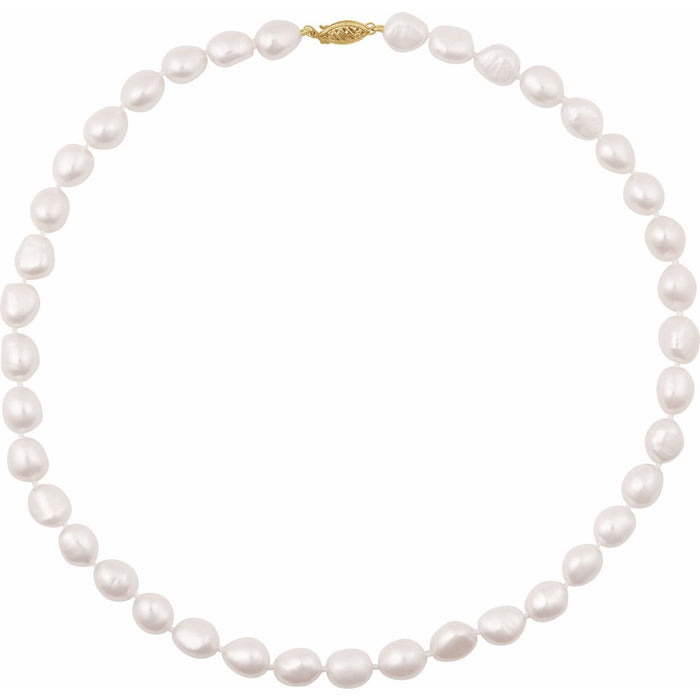
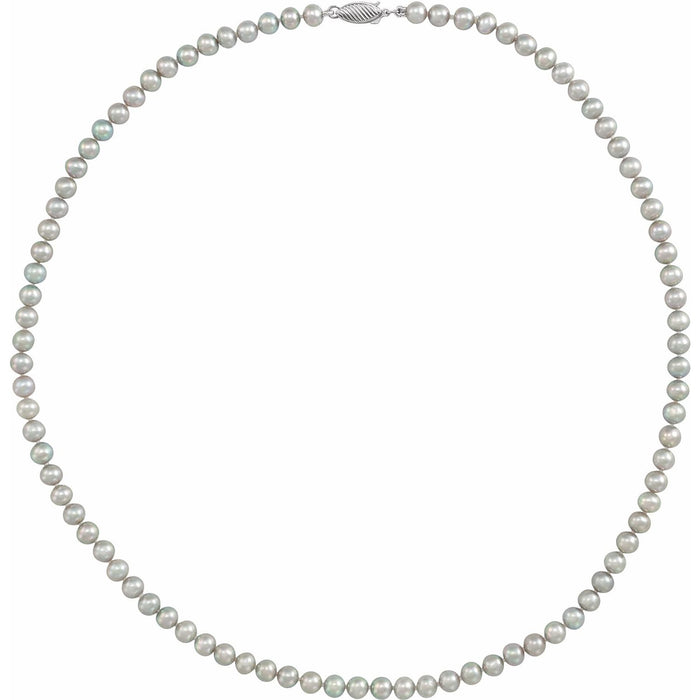
It comes down to look and budget. Akoya pearls are saltwater grown, very round, and famous for a bright mirror luster, so an Akoya pearl necklace reads the most classic and formal. Freshwater pearls are grown in mussels, come in white, gray and free-form baroque shapes, and give you a softer glow for less money, which makes them the easy everyday choice. Seed pearls are tiny freshwater pearls used to trace shapes like crosses and circles, so those necklaces feel delicate and modern rather than traditional. If you want one classic strand, look at Akoya. If you want versatility and value, freshwater is your friend.
What length pearl necklace should I buy?
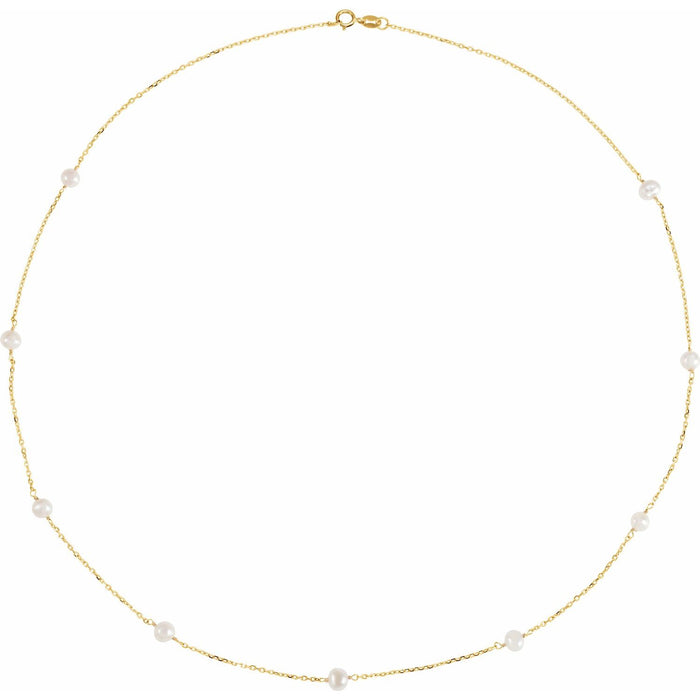
Most necklaces here are 16 or 18 inches, and the difference is real. A 16 inch necklace sits high, close to the base of the throat, and flatters open and boat necklines. An 18 inch necklace, the most popular length, falls just below the collarbone and works with almost any outfit and neckline. Several designs adjust between 16 and 18 so you can wear it either way. If you like to layer, a shorter pearl piece over a longer chain looks current, and a single-pearl station necklace is the easiest of all to stack with other lengths.
How do I choose between a strand, a station and a pendant pearl necklace?
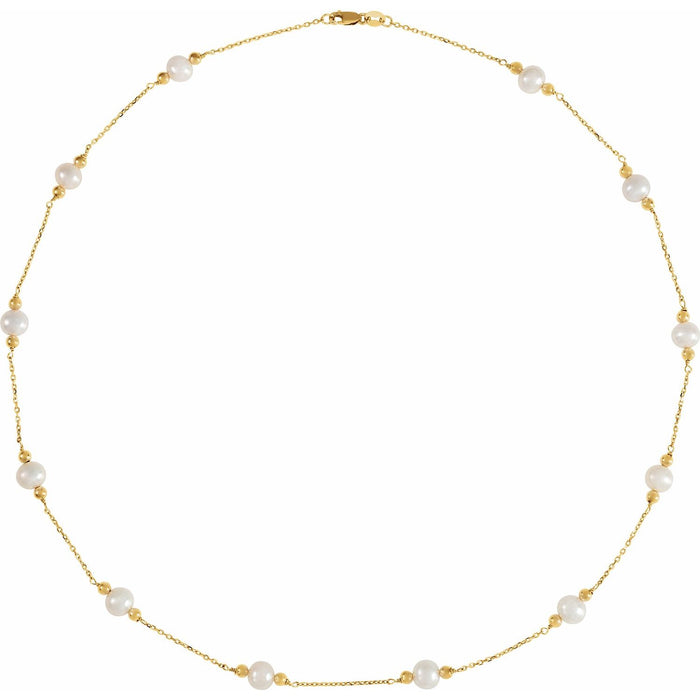
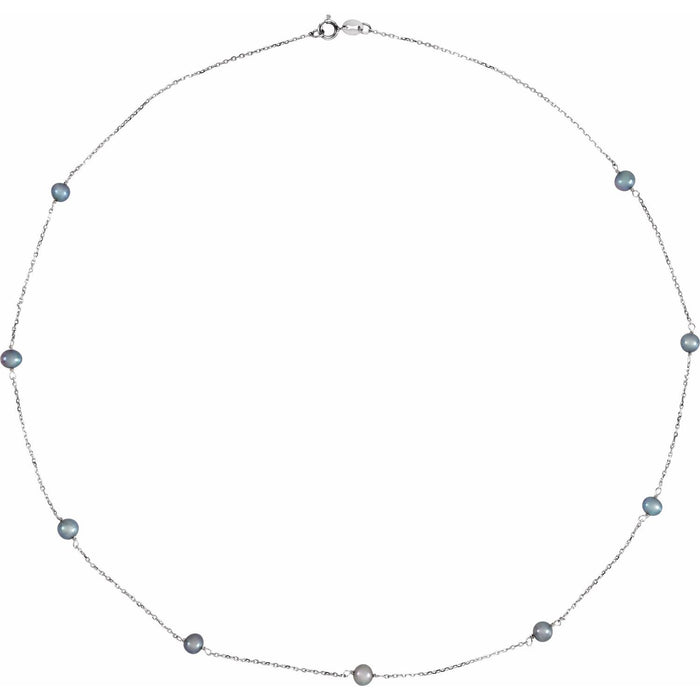
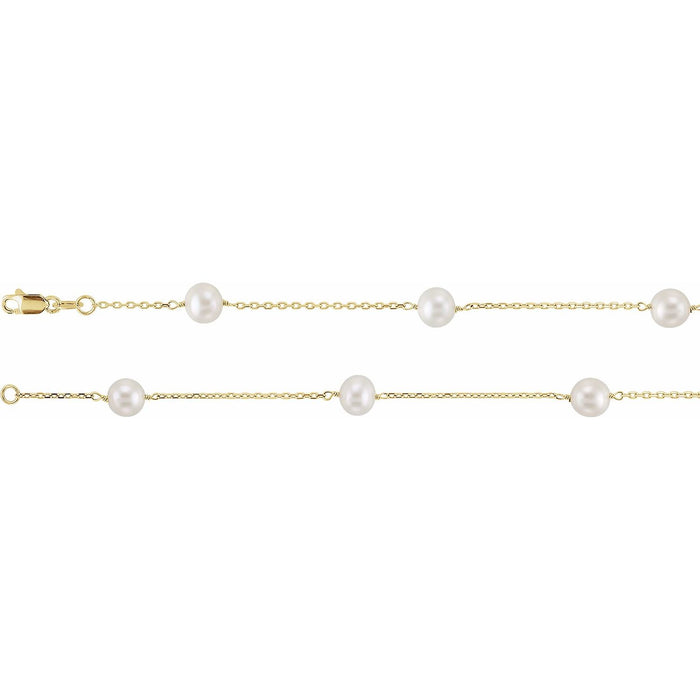
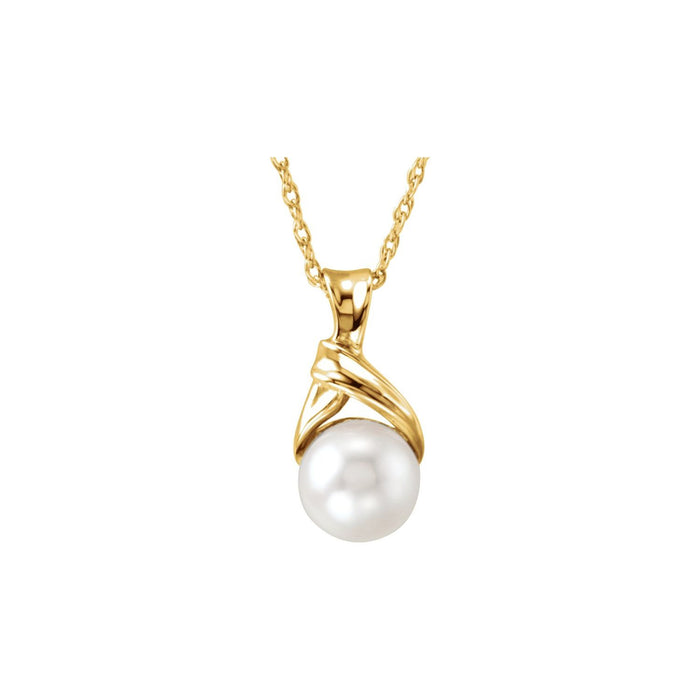
Think about how much pearl you want on show. A full strand or classic necklace puts pearls all the way around and reads the most traditional. A station necklace spaces a few pearls along a fine gold chain, so skin shows between them and the piece feels lighter and more casual, ideal for layering or everyday wear. A pendant style hangs a single pearl or a pearl motif from a chain, which keeps things minimal and lets one good pearl do the work. There is no wrong answer, only how formal or how quiet you want the necklace to feel.
Can I wear a pearl necklace every day, or only for special occasions?
Pearls are far more wearable than their formal reputation suggests. A simple station necklace or a single-pearl pendant looks completely at home with a sweater and jeans, and many people wear one daily and never think about it. The dressier pieces, like a diamond halo pearl or a full Akoya strand, step up for weddings, work and evenings out. The trick is matching the design to your life. Choose a fine station or a small pendant for constant wear, and save a heavier strand or a diamond piece for when you want the necklace to be the point.
What metals do these pearl necklaces come in?
Solid precious metal only. Depending on the design you can choose 14K yellow, white or rose gold, and many pieces also offer platinum. We do not use gold-plated, gold-filled or sterling silver in this collection, because a genuine pearl deserves a setting that lasts as long as it does. Yellow gold gives a warm, traditional frame that flatters white pearls, white gold and platinum keep the look cool and modern, and rose gold adds a soft blush that pairs beautifully with both white and gray pearls. The metal is yours to pick at no change to the design.
Are the black and gray pearls natural in color?
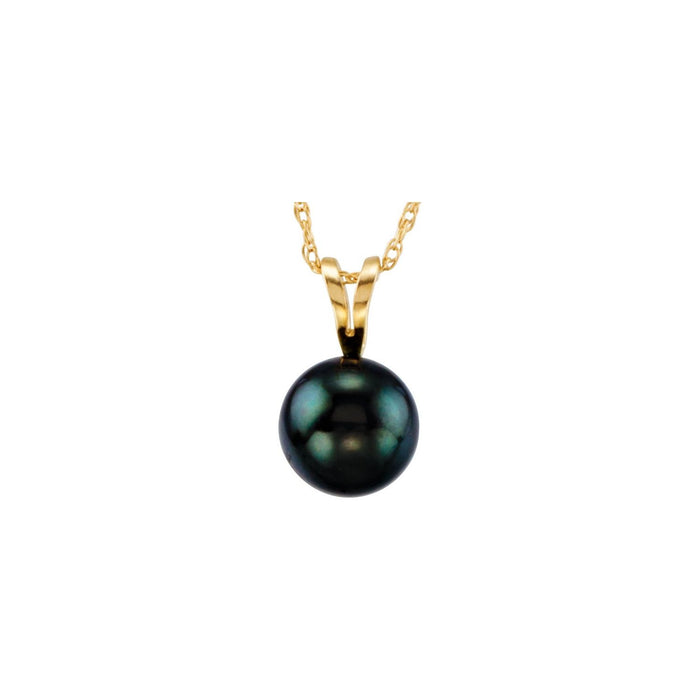
The colors are stable and permanent, though how they arise varies. Gray freshwater pearls and black Akoya pearls in this range get their color through treatment, a standard and long-accepted practice in the pearl trade that produces even, lasting tones. This is different from a rare natural black Tahitian pearl, which grows its color on its own and costs a great deal more. What matters for wear is that the color will not rub off or fade, and that a gray or black pearl gives you a moodier, more modern alternative to classic white without the Tahitian price. Each product page notes the pearl type so you know exactly what you are getting.
How do I care for a pearl necklace?
Pearls are softer than gemstones and want gentle handling. Put your necklace on last, after perfume, hairspray and lotion, because those can dull the nacre over time. After wearing, wipe the pearls with a soft, slightly damp cloth to lift skin oils, and never soak a strand or use jewelry dips or ultrasonic cleaners, which can harm both the pearl and the silk knots on a strand. Store the necklace flat and separate from harder jewelry so nothing scratches the surface. Worn often and wiped down now and then, a good pearl necklace keeps its glow for generations.
Is a pearl necklace a good wedding or heirloom gift?
Few pieces suit those moments better. A pearl necklace is a traditional bridal choice, soft against skin and flattering in photographs, and it carries meaning as a symbol of purity and new beginnings. Because these are solid gold and platinum rather than plated, they hold up as the kind of jewelry a mother hands to a daughter. The engravable seed pearl designs are made for exactly this, ready to mark a christening, a graduation or an anniversary with a date or a name. A well-kept pearl necklace easily outlives the occasion it was given for.
How much should a good pearl necklace cost?
It depends on the pearl type, the amount of gold and any diamonds. A freshwater or seed pearl pendant on a fine gold chain is the most accessible way in, while a full Akoya strand or a design with natural diamonds sits higher because it carries more value in both the pearls and the metal. Everything here is solid karat gold or platinum with genuine cultured pearls, so the price reflects real materials rather than a plated shortcut. Across this collection you will find pieces from around two hundred dollars up to the low thousands, which lets you match a genuine pearl necklace to almost any budget.