
Frequently Asked
Pink Sapphire Rings FAQ
What is a pink sapphire ring, and what makes a good one?
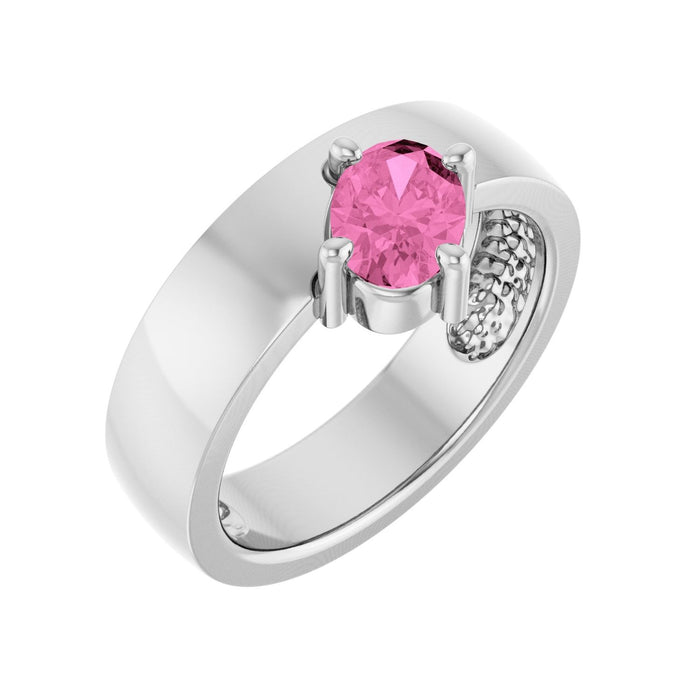
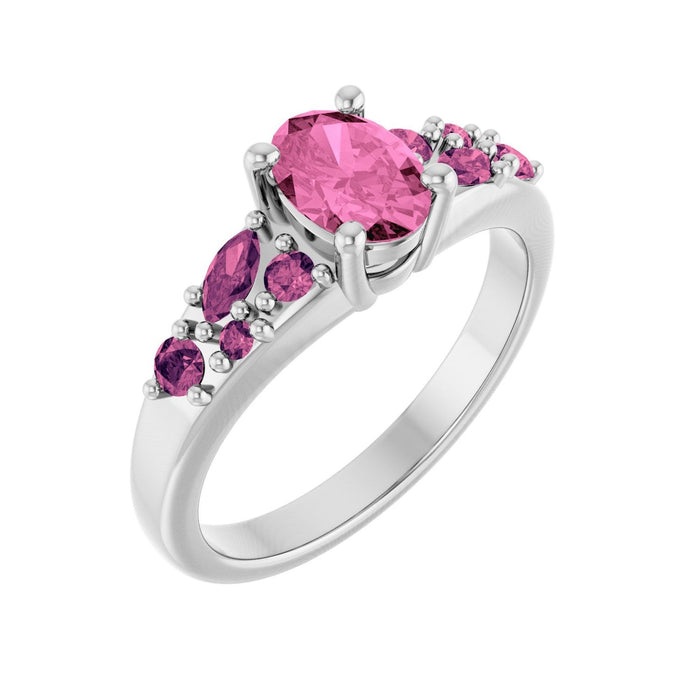
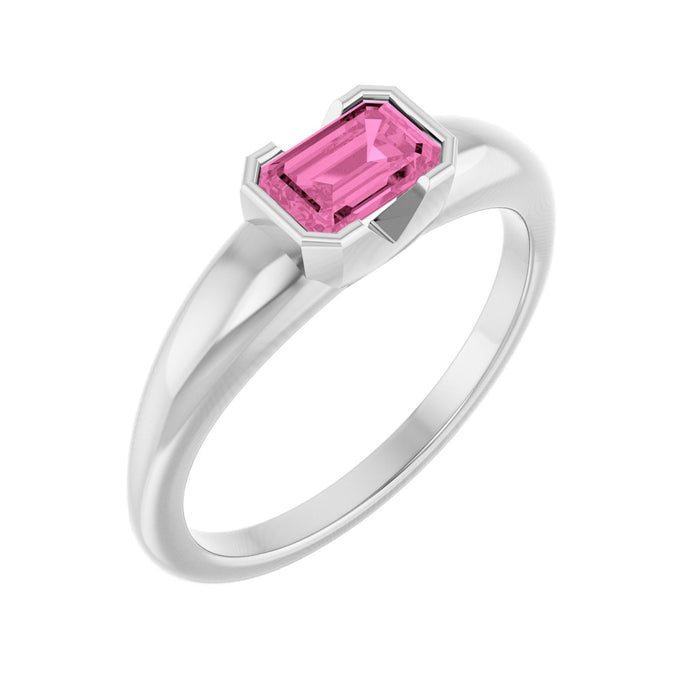
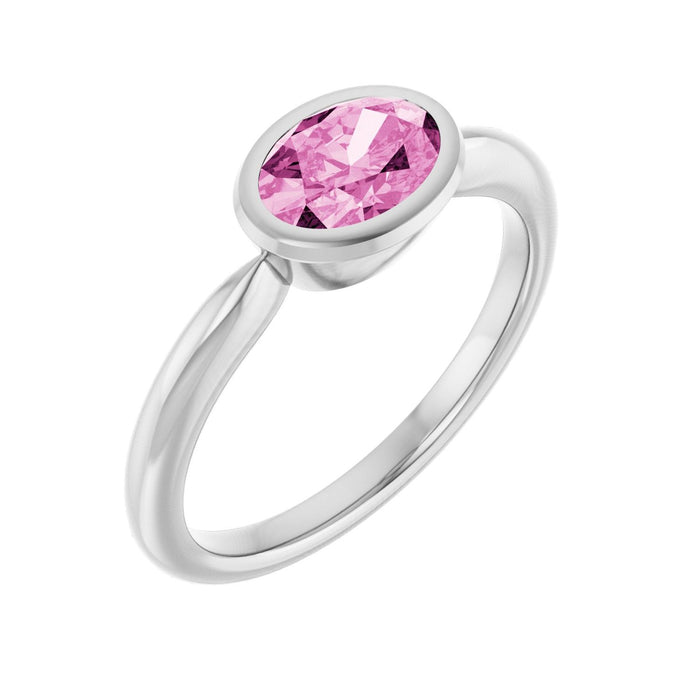
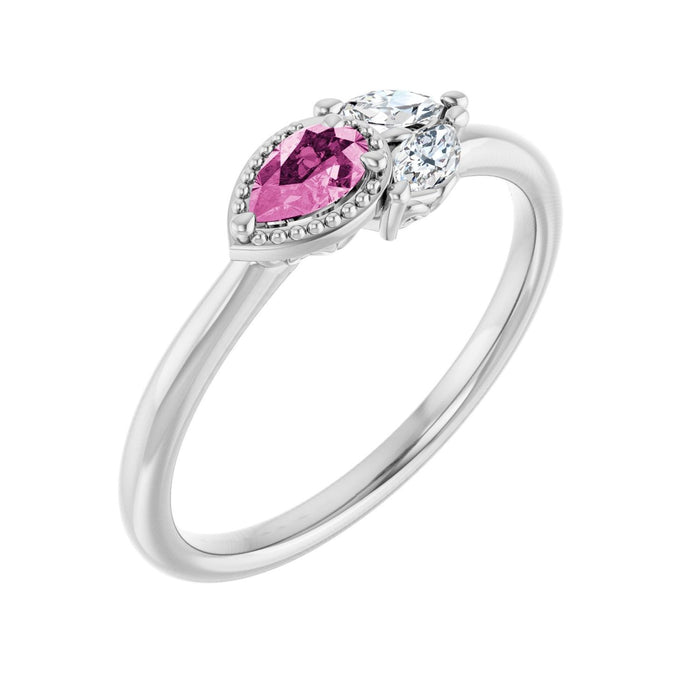
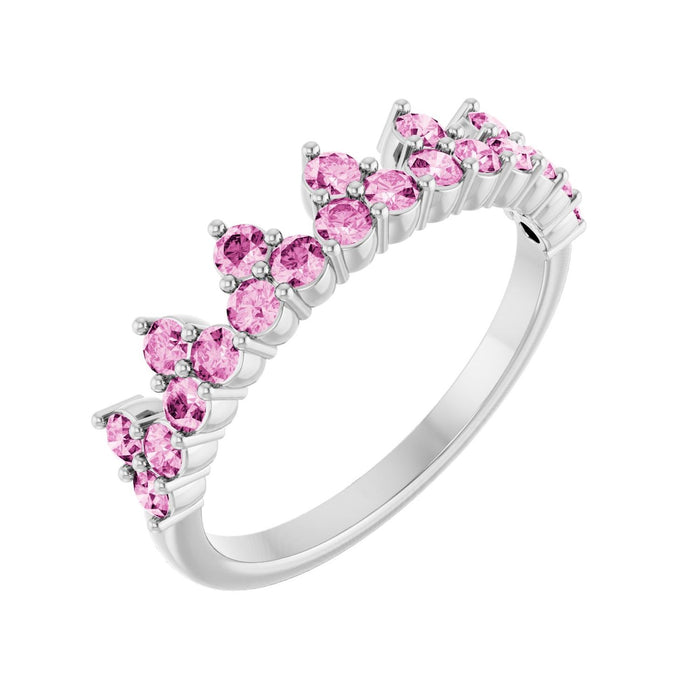
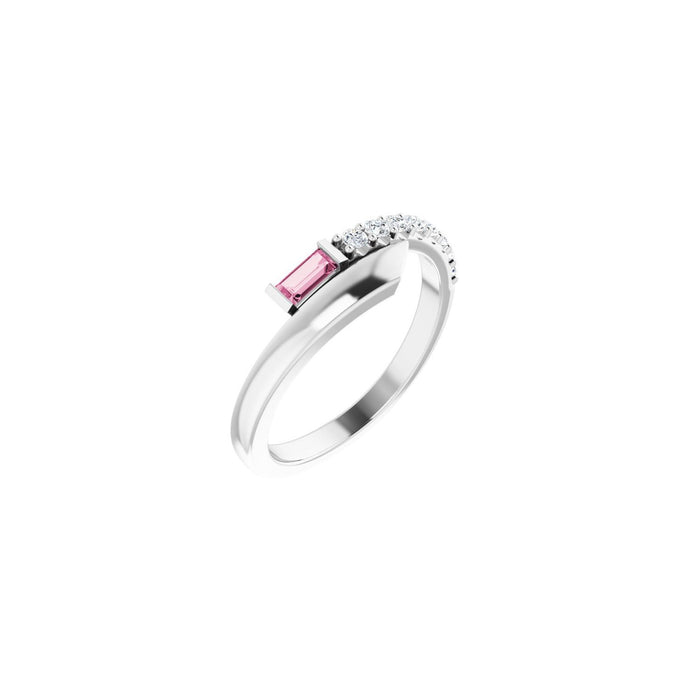
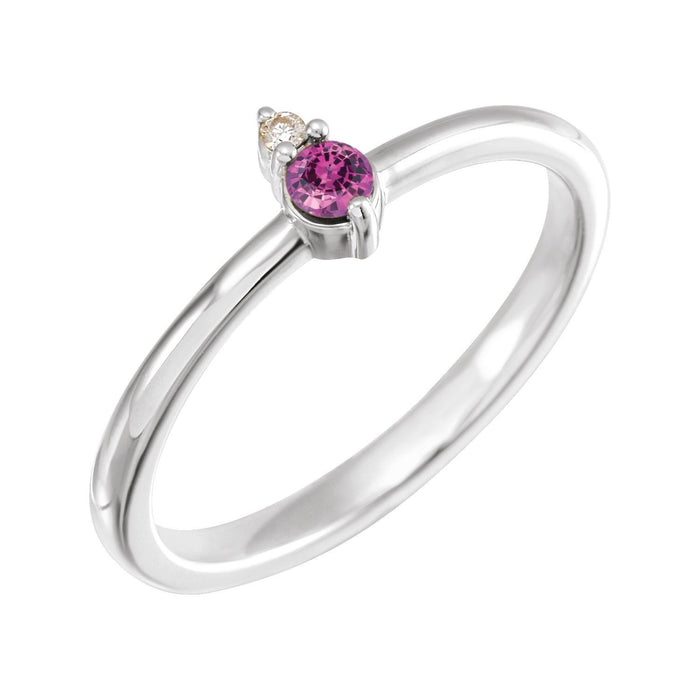
A pink sapphire ring centers on the pink variety of corundum, the same mineral species as ruby and blue sapphire. What separates a good one from an ordinary one comes down to color, cut, and setting. Look for a saturated, even pink, anywhere from soft baby-pink to vivid hot pink, with light returning cleanly across the stone rather than pooling in dark zones. The cut should sit level and catch light from the center. In this collection every stone is set in solid 14K gold or platinum, so the metal holds its finish and protects the stone through years of daily wear. Styles run from an asymmetric solitaire to a bezel design, a three-stone with diamond accents, and a pink sapphire paired with pink tourmaline. Prices start at $859 all-in, meaning the setting and the center stone are both included in that figure.
What is the difference between lab-grown and natural pink sapphire, and which should I pick?
Both are offered across this collection, and both are real pink sapphire. Lab-grown pink sapphire shares the exact chemistry, crystal structure, and hardness of mined material; the only difference is origin. Because it forms in controlled conditions, lab-grown gives you a larger, cleaner, more saturated stone for the same budget, which is why it appeals to buyers who want maximum size and color per dollar. Natural pink sapphire is rarer, formed over millions of years, and carries the collectible value and provenance some buyers prefer. Neither is better in absolute terms; they suit different priorities. If your goal is the biggest, brightest pink for the money, choose a lab-grown style. If rarity and origin matter more to you, choose natural. Each product page states clearly which type that ring uses, so you always know what you are buying before it goes in your cart.
Are the diamond accents real diamonds, and are they lab-grown or natural?
Several styles in this collection use genuine diamond accents alongside the pink sapphire, including the three-stone design. We disclose the type of diamond on each individual product page rather than making a blanket claim, so check the listing for the ring you like. Accent diamonds are chosen to frame the pink center and add sparkle without competing with it, which is why they read as small, bright points of white light beside the pink. The pink sapphire is always the focus of the piece and the diamonds support it. If you have a preference for a particular kind of accent stone, contact us before ordering and we will confirm exactly what a given style carries. We would rather give you an honest answer per ring than an easy generalization that might not hold true for every design in the group.
Which setting style should I choose: solitaire, bezel, three-stone, or stackable?
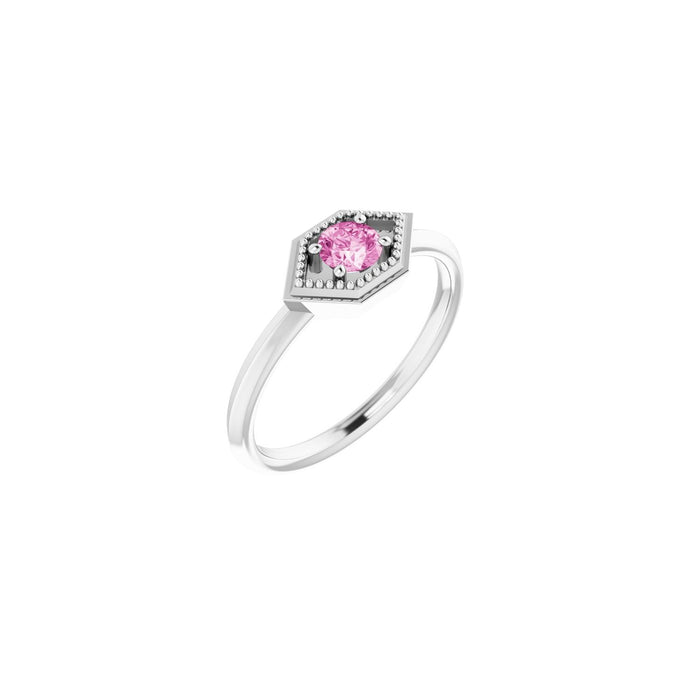
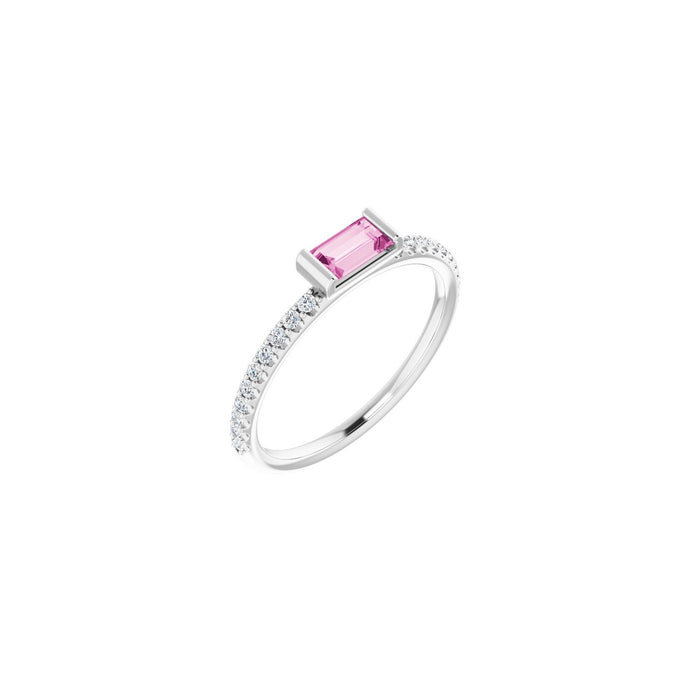
It depends on how you want the ring to wear and what look you are after. A solitaire, including the asymmetric and petite versions here, puts all the attention on the pink sapphire and reads clean from across a room; it is the easiest style to pair with a wedding band. A bezel, such as the emerald-cut bezel, wraps metal around the stone's edge, which protects it and gives a smooth, modern profile that snags less in daily wear. The three-stone adds diamond accents on either side for extra sparkle and a fuller look on the finger. A stackable is slimmer by design, built to sit with other bands and grow into a set over time. The bypass and geometric styles offer a more sculptural, contemporary line. If low maintenance ranks highest, lean bezel; if you want presence, lean three-stone.
Which metal looks best with a pink sapphire?
Rose gold is the natural partner for pink sapphire; its warm blush tone echoes the stone and makes softer pinks read richer and more romantic. That said, all four metals here have their case. White gold and platinum give a cool, neutral frame that lets a vivid hot-pink stone pop with maximum contrast, and platinum adds density and a naturally white finish that never needs re-plating. Yellow gold brings a warm, vintage-leaning feel and flatters warmer skin tones. If you want the pink to look as saturated as possible, choose white gold or platinum. If you want a soft, harmonious, tonal look, choose rose gold. Every ring in this collection comes in solid 14K gold or platinum, not plated base metal, so whichever you pick holds up to daily wear. Consider your existing jewelry too, so the new ring sits well alongside what you already own.
Is pink sapphire durable enough for an engagement ring or daily wear?
Yes. Pink sapphire is corundum, which sits at 9 on the Mohs hardness scale, second only to diamond among common gemstones and harder than nearly everything you are likely to knock it against day to day. That hardness resists scratching and scuffing, which is exactly what you want in a ring worn constantly, including an engagement ring. The setting matters too: a bezel guards the stone's edges, while a solitaire shows more of the stone but leaves the girdle a little more exposed. Untreated sapphire is also tough enough to take an ultrasonic cleaning, which keeps long-term maintenance simple. No stone is indestructible, so we still recommend removing any ring for heavy manual work, gym sessions, or gardening. With reasonable care, a pink sapphire ring will hold its color and finish for a lifetime, which is part of why sapphires have served as engagement stones for generations.
Can a pink sapphire ring be an engagement ring, and who is it for?
Absolutely. A pink sapphire makes a distinctive engagement ring for someone who wants color and character instead of a traditional white diamond, and its Mohs 9 hardness backs it up for daily wear. Beyond engagements, these rings suit a lot of occasions: sapphire is the September birthstone, so they make a thoughtful birthday gift; they work as an anniversary piece, a push present, a graduation marker, or a self-purchase to mark something you are proud of. The stackable and petite styles are easy first fine-jewelry pieces or additions to an existing stack, while the three-stone and larger solitaires carry enough presence for a milestone. Pink reads romantic and a little unexpected, which is why it appeals to people who want something recognizably theirs. If you are shopping for a proposal, pair it with matching pieces from our pink sapphire earrings for a coordinated gift.
How much do pink sapphire rings cost, and what does the from $859 price include?
Pink sapphire rings in this collection start at $859, and that is an all-in price: the setting and the center stone are both included, not quoted separately. Where a given ring lands above that entry point depends on the metal (platinum costs more than 14K gold), the size and type of the pink sapphire, and whether the design carries diamond accents. Lab-grown center stones generally deliver more size and color per dollar, so they let you reach a bigger look at a lower price than a comparable natural stone. There are no hidden charges for the basic setting in the listed price. If you want a larger center stone, an upgraded metal, or a custom touch, that can change the total, and we will quote it clearly before you commit. The goal is a straightforward number, so you know what a finished, ready-to-wear ring actually costs.
What ring sizes do you offer, and can I customize the stone or metal?
We offer a full standard size range and can help you dial in the right fit before you order. If you are unsure, measure a ring that already fits the correct finger, or ask a local jeweler for your size; a snug fit that clears the knuckle is what you want. Many styles can be adjusted for metal and, in some cases, the center stone, so if you love a design but prefer rose gold over white, or a natural stone over lab-grown, reach out and we will tell you what is possible for that specific ring. Sizing and remakes vary by design, particularly for fully set or eternity-style bands, which are harder to resize than a plain shank. The simplest path is to confirm your size first. For anything beyond a standard order, a different stone, a specific metal, or a tweak to the setting, contact us and we will walk through the options.
How do I care for and clean a pink sapphire ring?
Cleaning a pink sapphire ring is easy. Soak it in warm water with a drop of mild dish soap, work gently around the stone and setting with a soft toothbrush, rinse, and dry with a lint-free cloth. Because untreated sapphire is hard and stable, an ultrasonic cleaner is generally safe and will lift grime from behind the stone; if you know a stone has been treated, stick to the soap-and-water method to be safe. Keep the ring away from harsh chemicals, since chlorine, bleach, and abrasive household cleaners can attack the metal and loosen prongs over time, even though they will not scratch the sapphire itself. Take the ring off before swimming, cleaning, gardening, or lifting weights, and store it separately so harder stones do not rub against softer jewelry. Have the setting checked once a year so a jeweler can confirm the prongs are tight and the stone is secure.