
 View Piece
 View Piece
 View Piece
 View Piece
 View Piece
 View Piece
 View Piece
 View Piece
 View Piece
 View Piece
 View Piece
 View Piece
 View Piece
 View Piece
 View Piece
 View Piece
 View Piece
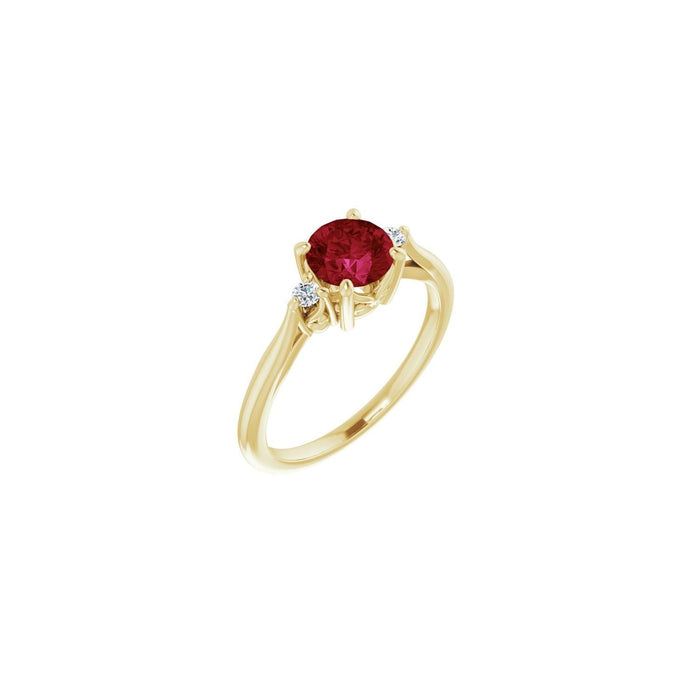 View Piece
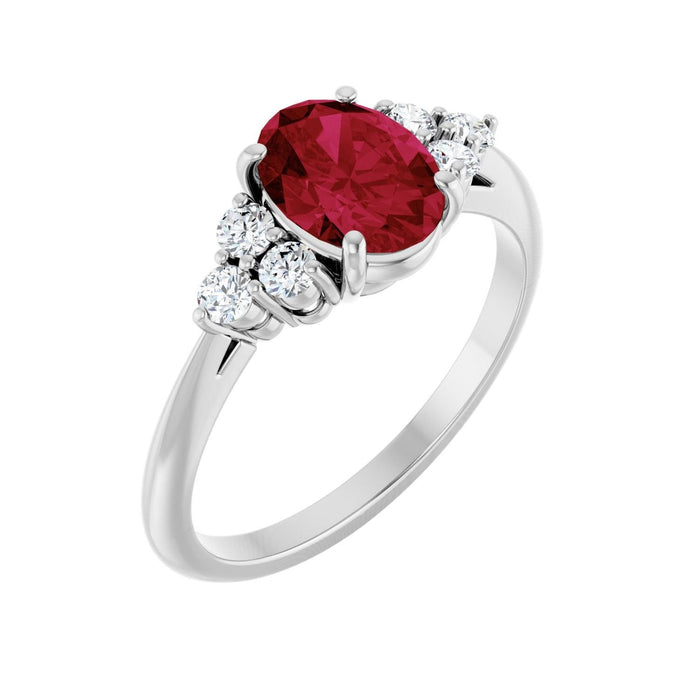 View Piece
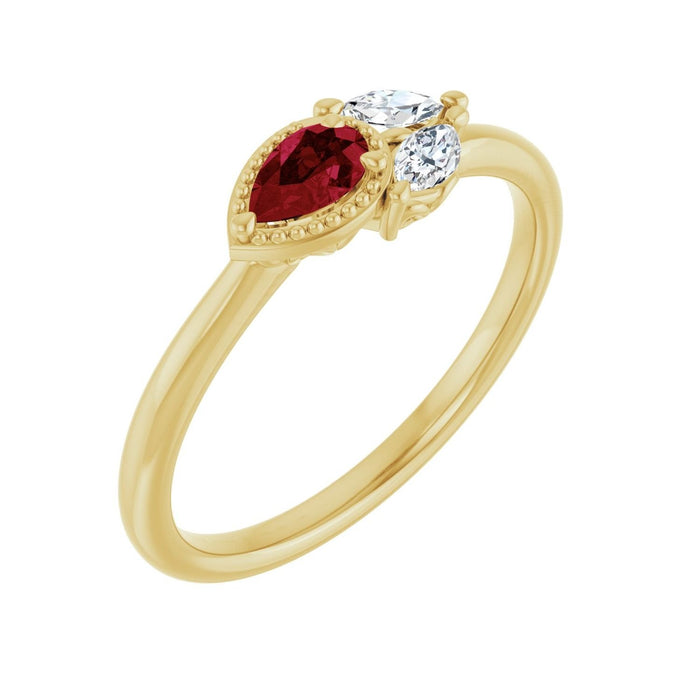 View Piece
Frequently Asked
Ruby Rings FAQ
Is the ruby real?
Yes. Every ring centers a real ruby, which is the red variety of the mineral corundum. You choose between a lab-created ruby and a natural ruby wherever both are stocked. A lab-created ruby is grown in a controlled environment and is chemically and physically the same corundum as a mined one; a natural ruby is earth-mined and unique. Neither is an imitation, and we never sell glass-filled or composite ruby.
How durable is a ruby ring for everyday wear?
Very. Ruby is corundum and rates 9 on the Mohs scale, the same hardness as sapphire and second only to diamond at 10. That makes it one of the toughest colored gems you can wear daily. You can treat a ruby ring far more casually than a softer stone such as emerald or opal, which is why many of the designs here are open, accented or cocktail styles rather than heavily protective ones.
Are the rubies treated?
Almost all natural ruby on the market is heat-treated to improve its red color and clarity. This is a standard, permanent and long-accepted practice and does not make a ruby any less real or less durable. We disclose it as the norm. A small number of our natural stones are untreated; those are the exception. Lab- created rubies are grown clean and are not oiled or filled.
Do you sell glass-filled or composite ruby?
No. Lead-glass-filled or composite ruby is a low-value material that behaves nothing like solid ruby, and we do not carry it. Every natural ruby we source is a genuine, solid corundum stone that is heat- treated or untreated, never glass-filled. We screen for this before a stone is ever listed.
What is the difference between lab-created and natural ruby?
Both are true ruby, the red variety of corundum, with the same chemistry, hardness and color. A lab- created ruby is grown in a controlled environment, so it tends to look cleaner, costs less, and is produced without mining. A natural ruby is earth-mined, one of a kind, and almost always heat-treated. We price each honestly and keep the lab price at or below the natural price at every matching carat.
Is this an engagement ring?
No. These are fashion rings, made for the right hand, a stack or a self-purchase rather than a proposal. Wear one however you like. If you are looking for a ruby center in a bridal design, that is a different collection; here the focus is cocktail and right-hand style.
Do the rings come with a gemstone certificate?
These calibrated rubies ship without an individual lab report. We hand-select every center for even red color and a clean face. If you would like a certified natural ruby or a larger specimen stone, our concierge will source and quote one honestly.
What does the price include?
Everything. The price is the complete ring: the setting in your chosen metal, the ruby center you select, and the labor to set and size it. There is no separate stone to buy and nothing to add at checkout.
Can I choose the carat, metal and stone type?
Yes. Each ring lets you pick the metal, the center carat weight, and whether the ruby is lab-created or natural wherever both are stocked. Ring size is confirmed after you order so we can size the finished ring to your finger.
Is a ruby ring a good July birthday gift?
It is a natural fit. Ruby is the July birthstone, so a red ruby ring reads as a thoughtful birthday piece for a July baby, and an easy reason to treat yourself if you are one.
At a glance
Compare Ruby Rings
| If you want… | Look at | Typical price |
|---|---|---|
| The most red for the money | Bold Oval or Emerald-Cut lab ruby (8x6 mm) | $1,500–2,200 |
| A true heirloom stone | Natural ruby solitaire or pear + diamond | $1,095–3,295 |
| Everyday & stackable | Baguette, French-set or infinity bands | $200–1,000 |
| A statement with sparkle | Round or cushion ruby & diamond halo | $1,095–2,795 |
| The easiest way in | Sterling silver lab ruby ring | Under $250 |