
 View Piece
 View Piece
 View Piece
 View Piece
 View Piece
 View Piece
 View Piece
 View Piece
 View Piece
 View Piece
 View Piece
 View Piece
 View Piece
Frequently Asked
Vintage-Style Engagement Rings FAQ
What makes a ring vintage style rather than actually antique?
A vintage-style ring is newly made today but designed with the ornamentation of an earlier era, details like milgrain beading, filigree, scrollwork, or Art Deco baguette geometry. An antique or estate ring is a genuine old piece, usually decades or a century old, that has already lived a life on someone else's hand. The difference matters in practice. A vintage-style ring gives you the heritage look with unworn metal, sound prongs, a current-day warranty, and a center diamond that arrives with its own laboratory certificate. An antique ring asks you to accept metal fatigue, a stone of unknown grade, and no paperwork. Everything in this collection is vintage-style: the romance of the old with the reliability of the new. We do not sell estate or period pieces.
What is milgrain, and why does it look so vintage?
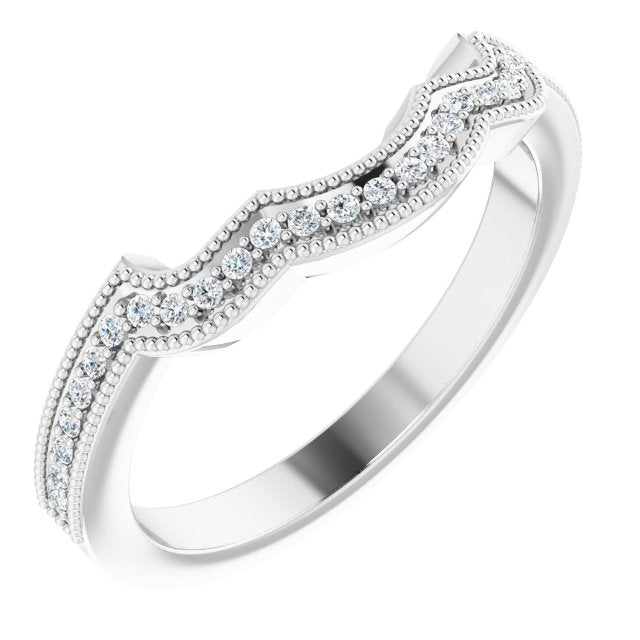
Milgrain is a row of tiny metal beads pressed along the edge of a ring, a band, a halo, or the outline of a setting. The name comes from the French for a thousand grains, and that is more or less what it looks like up close, a delicate string of beading that catches light in a soft, textured way rather than a hard shine. Jewelers used it heavily in the Edwardian and Art Deco periods because it framed a stone the way a fine border frames a portrait, and it hides the seam where two surfaces meet. On a modern ring it instantly signals heritage. Several of the vintage-inspired and vintage-halo designs here carry milgrain along the halo and the shoulders.
What is filigree?
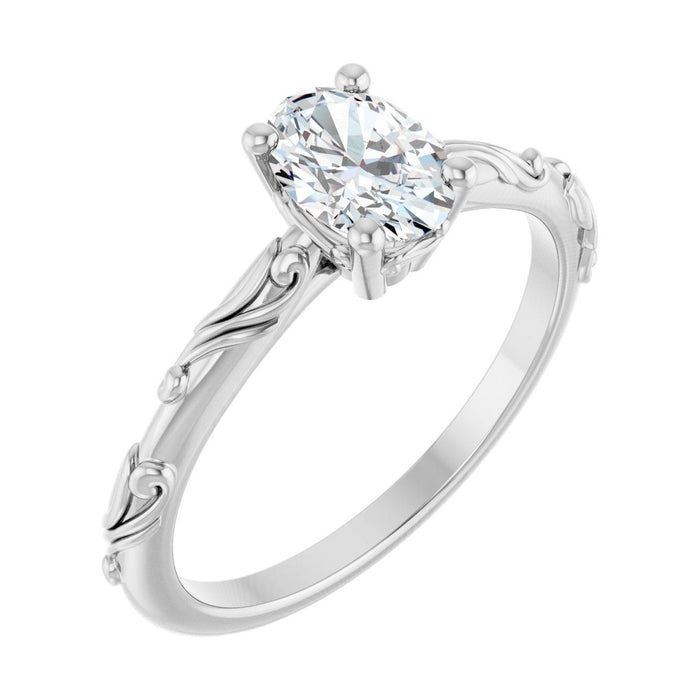
Filigree is openwork metal, fine wires and pierced patterns that let light pass through the sides and gallery of a ring rather than sitting as a solid block of metal. Think of it as lace made in gold or platinum. It was a signature of antique jewelry, when settings were built to be seen from every angle, not just the top. Filigree and open galleries make a ring look intricate and hand-built, and they lighten the profile so a substantial setting still feels delicate on the finger. In this collection the filigree and open-gallery feeling shows up most in the scrollwork, twisted-vine, and floral designs, where the metal is carved and pierced rather than left plain.
Can a lab-grown diamond really sit in a vintage-style setting?
Yes, and it is the smartest way to do it. A lab-grown diamond is chemically, physically, and optically the same material as a mined one, pure crystallized carbon, grown in weeks rather than over a billion years. It is not a simulant like moissanite or cubic zirconia. It cuts, faces, and sparkles exactly like any other diamond, so it looks entirely at home inside a milgrain halo or a Deco frame. The advantage is budget. Because a lab-grown center costs a fraction of a mined stone of the same size and grade, you can put a larger, cleaner diamond, often D color and VVS clarity, into an ornate heritage setting without pushing the price into the range an antique ring with a comparable stone would command. Each center here is graded by an independent laboratory such as GCAL, IGI, or GIA, and each ring links to its certificate.
Are vintage-style rings durable, or is all that detail fragile?
Well-made vintage-style rings are plenty durable, and in some ways sturdier than a true antique. The detailing, milgrain, filigree, and scrollwork, is cut into or built from solid modern gold and platinum, not thinned by a century of wear, so it holds up to daily life. The one honest caveat is that ornamented settings have more surface and more small features than a plain band, so they collect dust and need a gentle clean now and then to keep the sparkle and the beading crisp. Treat one like any fine ring: take it off for heavy lifting, gardening, and the gym, keep it away from harsh chemicals, and have it cleaned and checked once a year. Do that and the heritage detail will look as sharp in a decade as it does the day it arrives.
How do I care for milgrain and filigree so they keep their detail?
The care is simple and gentle. Soak the ring for a few minutes in warm water with a drop of mild dish soap, then work a soft toothbrush lightly around the milgrain beading, the filigree openwork, and behind the stone where lotion and dust gather. Rinse and pat dry with a lint-free cloth. Avoid ultrasonic and steam cleaners at home, since aggressive vibration can be hard on fine beadwork and older-style galleries over time. Bring the ring to us or to a trusted jeweler once a year for a professional clean and a prong check. That yearly look also catches any wear early, which is exactly how heirloom rings survive to become heirlooms.
What is the price range, and what does the price include?
Vintage-style rings in this collection start at about 1,139 dollars and reach roughly 3,759 dollars for a two and a half carat statement, with most designs landing between 1,300 and 2,700 dollars. That number is honest and all-in. It covers the vintage-style setting and the certified lab-grown center diamond, set and finished to your ring size. We never show a low setting-only figure and then add the diamond at checkout. If you would prefer a larger center, a different color or clarity, or natural diamonds in place of lab-grown, our concierge can quote and hand-select the stone for you, but the price on the page is the price of the complete ring exactly as shown.
How do I choose a vintage-style ring for her?
Start with the detail that speaks to you, because that is what carries the vintage feeling. If she loves soft, romantic jewelry, look to milgrain halos and floral or twisted-vine designs. If her taste runs cleaner and more architectural, the Art Deco baguette rings give you heritage with straight, modern lines. Then choose the center shape: oval and round suit a milgrain halo, cushion and pear are the true antique-era shapes and love a vine or rope shank, and emerald and princess pair naturally with Deco baguettes. Finally think about scale, from a subtle 0.7 carat up to a two and a half carat statement. If you are between ideas, our concierge can talk it through with you and even hold a couple of options while you decide.
Can a vintage-style ring be resized or customized?
Yes. Every ring is made to order and sized to your exact fit before it ships, so tell us her size up front and we will make it right the first time. Most rings ship within about two to three weeks. Vintage-style bands resize well, since the part of the shank a jeweler cuts and rejoins during a size change is separate from the setting that holds the center, though heavy scrollwork or full-eternity beading can limit how far a ring moves, and our concierge will tell you honestly what is possible for a given design. Beyond sizing, we can often adjust the center carat, swap to a different color or clarity, or set natural diamonds instead of lab-grown. Reach out and we will tailor the ring to exactly what you have in mind.