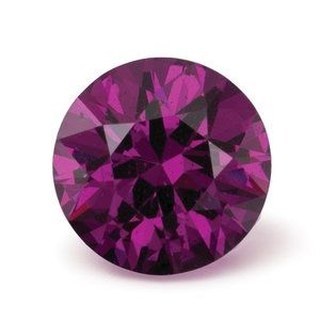
January Birthstone: Garnet
Modern: GarnetMohs: 6.5 – 7.5Zodiac: Capricorn · Aquarius
Garnet is a whole family of related minerals rather than a single stone, which is why it appears in so many colors. The classic is a deep, wine red, seen in almandine and pyrope garnets, but the family also gives us the vivid orange of spessartite, the raspberry-rose of rhodolite, and the rare, brilliant greens of tsavorite and demantoid, among the most valuable green gems in the world. Most garnet reaches you untreated, so the color you see is entirely natural.
The name comes from the Latin for pomegranate, whose glistening seeds its crystals resemble. For centuries garnet was carried as a protective talisman by travelers and warriors, believed to light the way through darkness and guard against harm. It has endured ever since as a symbol of loyalty, devotion and steadfast friendship, a fitting stone to open the year.
At 6.5 to 7.5 on the Mohs scale, garnet is durable enough for everyday rings, though the softer green varieties are happiest in a protective setting. Look for lively color and good transparency; because fine red garnet remains relatively affordable, you can enjoy a generous, characterful stone without a diamond-scale budget.
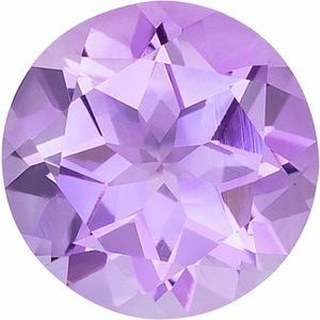
February Birthstone: Amethyst
Modern: AmethystMohs: 7Zodiac: Aquarius · Pisces
Amethyst is the purple variety of quartz, its color drawn from traces of iron and natural irradiation deep in the earth. The tone ranges from the palest lavender to a deep, velvety grape, and the most prized stones show rich, even color with subtle flashes of red. Because quartz grows in large, clean crystals, amethyst is available in generous sizes with excellent clarity.
Once considered as precious as ruby and reserved for royalty and clergy, amethyst takes its name from the Greek 'amethystos', meaning 'not intoxicated' — the ancient Greeks believed it guarded against drunkenness and kept the mind clear. It has been a symbol of clarity, calm and sincerity ever since, and remains one of the most loved of all colored stones.
At 7 on the Mohs scale, amethyst wears well day to day, though prolonged, intense sunlight can gradually pale its color, so it is better worn than left in a sunny window. Most amethyst is untreated, while some paler material is gently heated to deepen the hue. Choose a saturated, even purple without obvious colorless zoning.
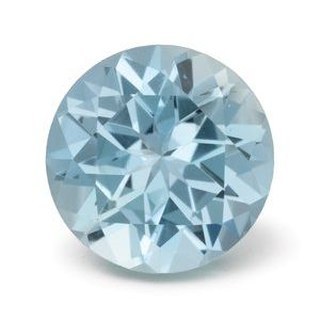
March Birthstone: Aquamarine
Modern: AquamarineAlso: BloodstoneMohs: 7.5 – 8Zodiac: Pisces · Aries
Aquamarine is the sea-blue member of the beryl family, the same mineral group as emerald. Its color, from the faintest sky blue to a deeper blue-green, comes from iron. Unlike its cousin emerald, aquamarine is typically very clean, and fine stones have a wonderful glassy transparency that seems to hold light.
Named from the Latin for 'sea water', aquamarine was long a talisman of sailors, believed to calm the waves and ensure a safe voyage home. It has come to stand for serenity, clarity and quiet courage, an apt stone for March and the first turn toward spring. March's second official birthstone, bloodstone, which is also its traditional stone, is a deep green chalcedony flecked with red.
At 7.5 to 8 on the Mohs scale, aquamarine is hard and well suited to everyday wear. Much of it is routinely heated to shift greenish material toward a pure blue, a stable and widely accepted treatment. Larger stones show the color best, since the blue can be delicate; look for even, unclouded color and bright transparency.
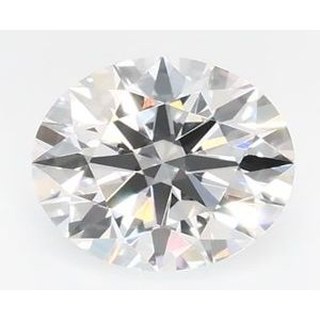
April Birthstone: Diamond
Modern: DiamondMohs: 10Zodiac: Aries · Taurus
Diamond is pure crystallized carbon and the hardest natural material known, a perfect 10 on the Mohs scale. That hardness, together with the way a well-cut stone bends and returns light, gives diamond its unmatched brilliance and fire. The classic is colorless, but diamonds also occur in fancy colors, from warm champagne and yellow to rare, coveted pinks and blues.
Treasured for millennia and the enduring symbol of engagement since the twentieth century, diamond represents eternal love, strength and invincibility; its very name comes from the Greek 'adamas', meaning unconquerable. April babies inherit the most celebrated gem of all.
Diamond is graded on the 4Cs — cut, color, clarity and carat — and of these, cut matters most for beauty. Today fine lab-grown diamonds offer the identical material and sparkle at a lower price, an honest and increasingly popular choice. Because it is so hard, diamond is ideal for rings worn every day, though even diamond should be protected from sharp knocks against its cleavage direction.
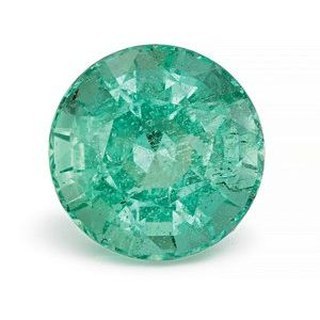
May Birthstone: Emerald
Modern: EmeraldMohs: 7.5 – 8Zodiac: Taurus · Gemini
Emerald is the green variety of beryl, colored by chromium and vanadium, and its color is its whole story: the finest stones show a pure, saturated green with a soft inner glow. Nearly all emeralds carry natural inclusions, so characteristic that the trade affectionately calls them the stone's 'jardin', or garden — a fingerprint of natural origin rather than a flaw.
Beloved since antiquity, emerald adorned Egyptian pharaohs and Cleopatra, who claimed its mines as her own, and later the crowns of European and Mughal royalty. It has always symbolized rebirth, love, foresight and wisdom, the green of renewal made permanent in stone.
At 7.5 to 8 on the Mohs scale, emerald is hard, but its many inclusions make it more brittle than sapphire or diamond, so protective settings and gentle handling are wise, and ultrasonic cleaning is best avoided. Almost all emeralds are treated with oils or resins to improve clarity, an accepted practice that should always be disclosed. Choose color first, and accept a little 'garden' as the mark of a genuine natural stone.
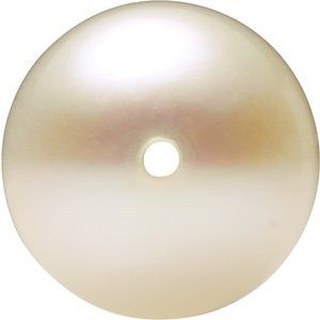
June Birthstone: Pearl
Modern: PearlAlso: Alexandrite, moonstoneMohs: 2.5 – 4.5 (pearl)Zodiac: Gemini · Cancer
June is unusually rich, with three very different birthstones. The pearl is the only gem made by a living creature, grown within an oyster or mussel and prized for its soft inner luster rather than for sparkle. Alexandrite is one of nature's true marvels, a chrysoberyl that appears green in daylight and red under warm indoor light. Moonstone glows with a drifting, billowy blue-white light called adularescence, as though lit from within.
Pearls have symbolized purity, wisdom and the moon for thousands of years, worn by emperors and brides alike. Alexandrite, discovered in Russia's Ural Mountains in the nineteenth century and named for the future Tsar Alexander II, is a symbol of good fortune. Moonstone has long been linked with intuition and new beginnings. Together they make June a month of quiet, changeable beauty.
These are the more delicate birthstones. Pearl is soft, 2.5 to 4.5 on the Mohs scale, and should be kept from perfume, cosmetics and chemicals and stored apart from harder jewelry. Alexandrite, at 8.5, is very durable but genuinely rare, so fine natural stones are costly and lab-grown versions common. Moonstone, around 6 to 6.5, is best in earrings, pendants and occasional-wear rings. Each rewards careful, loving wear.
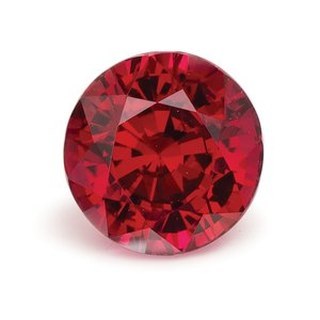
July Birthstone: Ruby
Modern: RubyMohs: 9Zodiac: Cancer · Leo
Ruby is the red variety of corundum, the very same mineral as sapphire; only the red is called ruby, and every other color of corundum is a sapphire. Its color comes from chromium, and the most coveted tone is a pure, glowing red once described as 'pigeon's blood'. Fine ruby is among the most valuable of all gems, rarer in large, clean sizes than diamond.
Across cultures ruby has been the stone of passion, protection and life itself, its red the color of the heart and of vitality. Warriors once wore it into battle for courage, and it has adorned the crowns and treasuries of kings for centuries.
At 9 on the Mohs scale, second only to diamond, ruby is superbly tough and ideal for rings worn every day. Most ruby is heat-treated to improve color, a stable and accepted practice; what to avoid is heavily glass-filled or 'composite' ruby, a lesser material that should always be disclosed. Fine natural ruby is precious, while beautiful lab-grown ruby offers the identical mineral at a friendlier price.
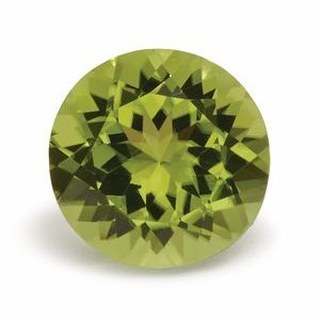
August Birthstone: Peridot
Modern: PeridotAlso: Spinel (2016), sardonyxMohs: 6.5 – 7 (peridot)Zodiac: Leo · Virgo
Peridot is one of very few gems found in a single color, a fresh yellow-green to olive that never changes its basic hue. It is unusual in another way, too: it forms deep in the earth's mantle and even arrives in some meteorites, making it a genuinely extraterrestrial gem. August also claims spinel, added to the list in 2016, a brilliant stone that occurs in glorious reds, pinks and blues.
Peridot was mined by the ancient Egyptians on the Red Sea island of Zabargad and called the 'gem of the sun'. Spinel, for its part, spent centuries mistaken for ruby — several famous 'rubies' in royal collections, including the Black Prince's Ruby in the British Crown Jewels, are in fact red spinels. Both stones carry associations of strength, protection and good fortune.
Peridot sits at 6.5 to 7 on the Mohs scale, durable enough for rings worn with a little care, and is almost always untreated, so its color is entirely natural. Spinel is harder, at 8, and increasingly sought by collectors for its brilliance and its frequent lack of treatment. August's third official birthstone, sardonyx, which is also its traditional stone, is a handsome banded reddish-brown and white agate.
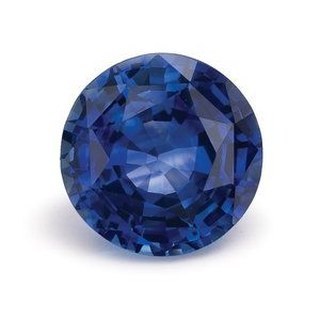
September Birthstone: Sapphire
Modern: SapphireMohs: 9Zodiac: Virgo · Libra
Sapphire is the celebrated blue variety of corundum, colored by iron and titanium, though it occurs in nearly every color except red — including pink, yellow, green, teal and the rare, coveted pink-orange padparadscha. The classic is a rich, velvety blue, and historic sources such as Kashmir and Burma are the stuff of legend. As the house stone of Diamond & Sapphire, it holds a special place here.
Worn by royalty and clergy for centuries as a symbol of wisdom, loyalty, nobility and divine favor, sapphire has crowned kings and, more recently, sealed some of the most famous engagements in the world. It is a stone of truth and constancy, part of why it has become such a beloved choice for engagement rings.
At 9 on the Mohs scale, sapphire is second only to diamond in hardness and one of the very best choices for a ring meant to be worn every day for a lifetime. Most sapphire is heat-treated to improve color and clarity, a permanent and accepted practice, while untreated stones with fine natural color command a premium. Discover the full spectrum of hues in our sapphire color guide.
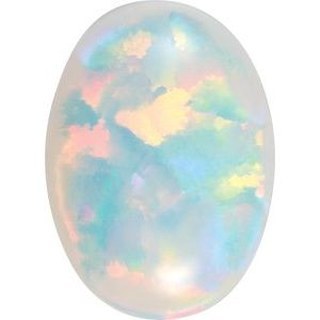
October Birthstone: Opal
Modern: OpalAlso: TourmalineMohs: 5.5 – 6.5 (opal)Zodiac: Libra · Scorpio
October's two stones are the most colorful of all. Opal is unlike any other gem: a single stone can flash every color of the spectrum as it moves, an effect called play-of-color, created by microscopic spheres of silica that diffract light. Tourmaline is the great chameleon of the gem world, appearing in more colors than almost any other species, sometimes two or three within a single crystal, as in the pink-and-green 'watermelon' tourmaline.
Opal has been prized since Roman times as a stone of hope, creativity and faithfulness, once thought to hold the colors of every other gem at once. Tourmaline's name comes from a Sinhalese word meaning 'mixed stones', a nod to its endless variety. Together they make October a celebration of color itself.
Opal asks for gentle care. It is relatively soft, 5.5 to 6.5 on the Mohs scale, and contains water, so it should be kept from heat, dryness, knocks and ultrasonic cleaning, and is happiest in earrings, pendants and protected rings; some opal is a natural 'hydrophane' that can absorb water. Tourmaline is harder, at 7 to 7.5, and well suited to rings. Choose opal for the strength and pattern of its color play, and tourmaline for pure, saturated hue.
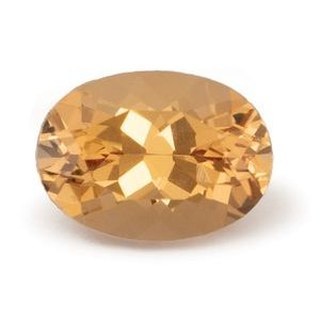
November Birthstone: Topaz
Modern: TopazAlso: CitrineMohs: 8 (topaz)Zodiac: Scorpio · Sagittarius
November glows in warm gold. Topaz in its pure form is colorless, but the birthstone is traditionally the golden to sherry-orange 'imperial' and golden topaz, honeyed tones that suit autumn perfectly. Citrine is the golden-yellow to amber variety of quartz, sharing the same sunlit palette at a friendlier price, which is why the two stones share the month.
Topaz was long believed to bring warmth, abundance, strength and protection, and its name may derive from Topazios, an island in the Red Sea. Citrine, sometimes called the 'merchant's stone', carried associations of prosperity and success. Both stones seem to hold a little captured sunlight.
Topaz is hard, 8 on the Mohs scale, but has a distinct cleavage direction, so it should be shielded from sharp knocks; citrine, at 7, is a durable and easy-care quartz. Much of the blue topaz on the market is colorless topaz irradiated to blue, and a good deal of citrine is heat-treated amethyst — both accepted, stable treatments. Choose imperial topaz for its prized warm color, and citrine for a generous, sunny golden stone.
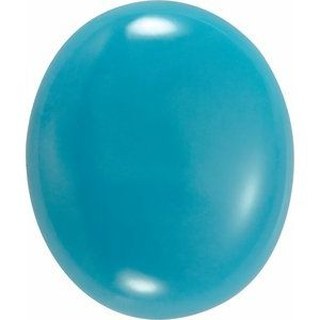
December Birthstone: Turquoise
Modern: TurquoiseAlso: Tanzanite (2002), blue zirconMohs: 5 – 6 (turquoise)Zodiac: Sagittarius · Capricorn
December is a study in blue, with three stones to choose from. Turquoise is one of the oldest gems known to humankind, an opaque robin's-egg blue to green prized for thousands of years. Tanzanite, by contrast, was discovered only in the 1960s and is found in just one place on earth, near Mount Kilimanjaro, glowing a velvety violet-blue. Blue zircon completes the trio with a bright, fiery brilliance and remarkable sparkle.
Turquoise adorned Egyptian pharaohs, Persian sultans and Native American silverwork alike, everywhere regarded as a stone of protection, good fortune and calm. Tanzanite, named by Tiffany & Co. for its only source, joined the birthstone list in 2002 and has become a modern favorite. Zircon — a natural stone often confused by name with the man-made 'cubic zirconia', though entirely different — has been treasured since antiquity.
These are stones to wear with some care. Turquoise is soft and porous, 5 to 6 on the Mohs scale, and can be affected by cosmetics, oils and sunlight; much of it is stabilized to protect it, which should be disclosed. Tanzanite, 6 to 7, has a cleavage direction and is best kept from sharp knocks and ultrasonic cleaning. Blue zircon, whose color comes from heat treatment, is beautiful but can abrade at facet edges over time. All three shine brightest in earrings, pendants and thoughtfully worn rings.
