
Engagement Ring Styles: A Complete Guide
Few purchases carry as much meaning as an engagement ring. A small band of metal and stone has represented love, commitment, and personal identity for centuries—tracing back to 1477, when Archduke Maximilian I gave Mary of Burgundy a diamond ring and set a precedent that spread quickly through European nobility (7). Diamond rings did not dominate the market overnight, though. It took the wealth created by the Industrial Revolution—and De Beers' landmark 1947 campaign, "A diamond is forever"—to cement the diamond as the defining symbol of enduring love (7).
Today, couples have more freedom than ever to express their relationship through the ring they choose. Vintage-inspired solitaires, bold colored-stone designs, asymmetric modern settings—every option tells a different story. This guide covers what makes an engagement ring meaningful, how to evaluate quality, the full range of setting styles, and how current values and market trends are reshaping the choices couples make. Read through, and by the end you will have the information needed to find a ring that fits both your lifestyle and the depth of your relationship.
What Is an Engagement Ring?

An engagement ring is a piece of jewelry that signals a commitment to marriage. Traditionally it features a diamond or precious stone set in metal—a convention with roots in ancient Egypt and Rome, where rings symbolized eternity. Diamond rings gained their central role in 1477, when the first recorded diamond engagement ring appeared (7). The ring is worn on the fourth finger of the left hand because of the Roman myth of the "vena amoris," the vein of love thought to run straight to the heart. Contemporary diamond engagement rings honor that tradition while reflecting changing tastes, budgets, and values.
One foundational distinction every buyer should understand: shape versus cut. Shape is the outline of the stone—round, oval, pear, square. Cut is the arrangement of facets that governs brilliance and fire (1). Brilliant-cut stones like round, princess, and cushion carry many facets designed to maximize sparkle. Emerald and Asscher cuts use step facets that create a sense of clarity and a striking hall-of-mirrors effect. Knowing this difference explains why two diamonds of equal carat weight can look—and cost—very differently, and helps you ask the right questions when comparing stones side by side.
Types & Variations of Engagement Ring Styles
Solitaire

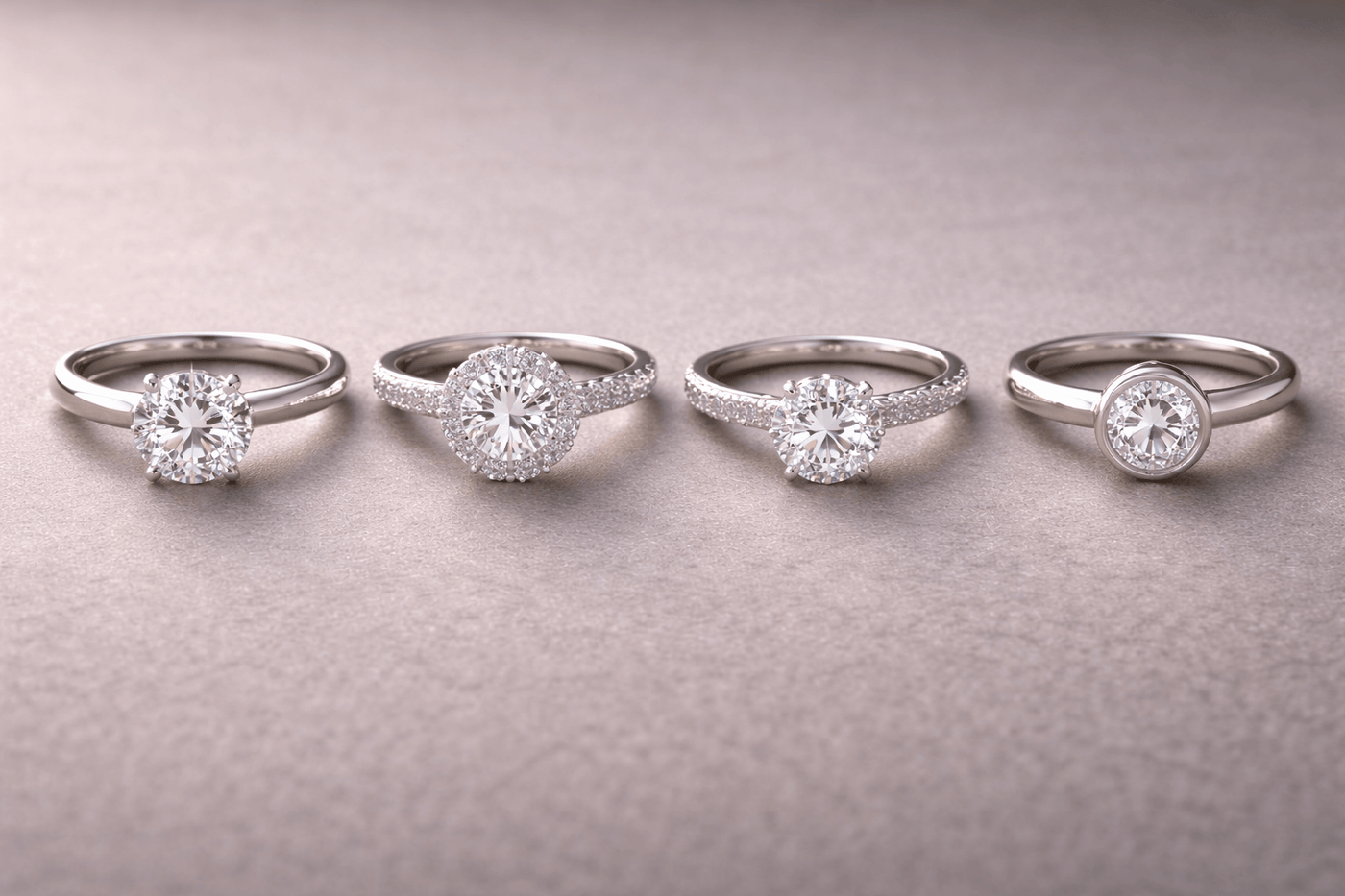
A solitaire places a single stone on a plain band, letting the diamond speak for itself. The classic version uses prongs to secure the gem—four prongs expose more of the stone, while six add security. Made in gold or platinum, solitaires are prized for their clarity of design. No side stones means cleaning is straightforward and there are few places for fabric or hair to catch. This style suits buyers who prefer restraint, want to concentrate their budget on one exceptional diamond, or live an active life. The solitaire also pairs cleanly with stacked wedding bands, making it a practical long-term choice. (1)
Settings with Sidestones

Sidestone settings line the band with additional gems, amplifying the center diamond's presence. Channel-set rings seat small diamonds flush in a groove, shielding them from daily wear. Bar-channel settings open the spaces between stones to let in more light. Both approaches create a luminous band that pairs well with the center stone and can incorporate colored gemstones for added dimension. Because the stones are protected, these settings hold up well for everyday wear—though careful cleaning is needed to remove grime from between stones. Sidestone rings appeal to buyers who want extra brilliance or wish to add symbolic accents like birthstones without overshadowing the main diamond. (1)
Three‑Stone Rings

A trilogy ring—also called a three-stone ring—pairs a center diamond with two smaller stones on each side. The design carries a clear symbol: past, present, and future. Stones of different colors or shapes can make each position distinct. The center stone is typically larger than the flanking pair, and the spread of multiple focal points adds sparkle toward the outer edges while optically lengthening the finger. Prong settings are standard for each stone; periodic inspections keep those prongs tight and the stones firmly seated. Trilogy rings are a strong choice for anyone drawn to symbolic meaning or who wants to incorporate colored side stones or heirloom gems alongside the main diamond. (1)
Halo
A halo ring encircles the center stone with a ring—or double ring—of small diamonds, making it appear larger than its carat weight suggests. A center stone of at least 0.50 carats tends to produce the most balanced proportions. The small prongs securing the halo diamonds do require periodic professional checks, as they can wear with daily use. Halo rings frequently combine pavé or micro-pavé bands with contrasting metal accents. Beyond the visual effect, the halo also protects the girdle of the center stone. Couples seeking maximum brilliance—or wanting to make a modest diamond look more substantial—gravitate toward this style. The trade-off is maintenance: because so many small stones are held by fine prongs, this setting rewards consistent professional care. (1)
Pavé and Micro‑Pavé

Pavé bands pack small diamonds tightly along the band, leaving almost no visible metal—the result is a surface that seems to be in constant motion with light. Repairs can be tricky if a stone loosens, so careful cleaning habits matter. Micro-pavé takes the technique further, using even smaller stones and finer prongs for a look that recalls cobblestone streets seen in miniature. Pavé bands complement solitaire or halo settings beautifully and are equally striking on their own. They suit buyers who love continuous sparkle and are comfortable with periodic maintenance to keep every stone secure. This style also pairs naturally with fancy-shaped center stones, particularly oval, pear, and cushion cuts, where the band's unbroken shimmer draws the eye toward the stone's distinctive outline. (1)
Bezel

A bezel setting wraps a thin metal collar around the center stone, shielding its edges from chips—a real advantage for those who work with their hands or lead an active life. The metal rim can visually extend the stone's footprint, making it read larger on the finger. One trade-off: a poorly cut diamond may appear less brilliant inside a bezel, since the surround limits the angles from which light enters. Bezels come in full versions that completely encircle the stone and half versions that leave one side open, allowing more light interaction. They work with diamonds and colored stones alike and are particularly effective at protecting pointed shapes like pears and marquises, where the tips are most vulnerable to chipping under daily wear. (1)
Invisible and Tension Settings


Less common but visually striking, invisible settings use grooved stone pavilions slotted into a metal framework so that multiple gems read as one seamless surface. The technique demands exceptional craftsmanship, and any chip or loose stone is difficult to repair. Tension settings take a different approach: the band's spring tension holds the center stone suspended between two open ends, creating the appearance of a floating diamond. Both styles suit buyers who want something genuinely distinctive, though each requires periodic professional inspection to confirm the stone remains secure. Because the engineering tolerances in both designs are tight, resizing these rings is often impossible without replacing the setting entirely—something to factor in before ordering. (1)
Vintage and Art‑Deco–Inspired Styles

Vintage-inspired rings draw from the Edwardian, Victorian, and Art Deco periods, featuring filigree, milgrain (beaded metal edges), and hand engraving. Long shapes like ovals or marquises reinforce the period feel and can make a stone appear larger than its carat weight. Art Deco designs favor step-cut diamonds—emerald or Asscher—and geometric patterns that blend glamour with architectural precision. Platinum and white gold are common metal choices, sharpening the contrast with the stone. Buyers drawn to history, romance, and fine craftsmanship tend to gravitate toward vintage-inspired natural diamond rings; they offer something classic that still feels individual. (1)
Contemporary and Custom Designs

Contemporary rings deliberately depart from convention—asymmetry, mixed metals, and unusual stones are all fair game. Colored gemstones like sapphires, spinels, and tourmalines are popular in 2025, as are unusual cuts and combinations of yellow with white gold or platinum (3). Designers use negative space and stacked structures to create rings that feel like wearable sculpture. Custom commissions can incorporate birthstones or lab-grown diamonds chosen for their environmental footprint. Working directly with a designer allows couples to produce something that genuinely reflects their own story—including elements, like a parent's stone or a significant date engraved inside the band, that no catalog piece could replicate.
How to Identify Quality in Engagement Rings
The Gemological Institute of America established the 4Cs—carat weight, cut, color, and clarity—as the global standard for evaluating diamonds (1). Carat describes how much the stone weighs; cut describes how well it has been shaped and finished, directly affecting brilliance; color describes the presence of yellow or brown tint; and clarity describes internal and surface characteristics. For fancy colored diamonds and gemstones, hue and saturation also factor into value. Always request a grading report from a recognized laboratory—GIA or IGI—before purchasing. These documents list a stone's characteristics, confirm whether it is natural or lab-grown, and disclose any treatments (2). Without one, there is no objective basis for comparison or confidence in provenance.
Look beyond the stone itself and assess the metalwork. High-quality rings carry hallmarks indicating metal type—18K for 75% gold, Pt950 for 95% platinum—and sometimes a maker's mark. These stamps offer an unbiased measure of alloy quality (4). Inspect the prongs: they should be even, firmly seated, and consistent in height. Pavé or channel stones should sit level with each other and flush with the surface. The interior of the band should feel smooth against the finger. A well-made setting leaves no visible gaps between stone and metal, and any vulnerable point—like the tip of a marquise—should have a protective V-prong. Viewing the ring in multiple light sources—natural daylight, focused spot lighting, and soft diffused light—reveals its true sparkle and color range that a single light source might mask. (1)
Buying Guide: How to Choose the Right Engagement Ring

Determine Your Budget
A realistic budget clarifies your options and helps you strike the right balance between stone size and quality. The average engagement ring in the U.S. runs about $5,200—but that figure is a reference point, not a target. Many beautiful rings cost considerably less, particularly those featuring alternative gemstones or lab-grown diamonds. Decide upfront whether the center stone or an elaborate setting is your priority, since the same total spend can produce very different results depending on that choice. Set aside a portion of the budget for insurance and long-term maintenance as well, since even a well-made ring will eventually need prong tightening or professional polishing. (6)
Match the Style to Lifestyle
The setting should fit how the ring will actually be worn. Bezel settings suit active buyers well—the metal collar encircles the stone completely, protecting it from impact during exercise or hands-on work. Pavé and micro-pavé bands are dazzling but less forgiving of rough wear, since tiny diamonds can loosen under sustained stress. (1) Halo and prong settings maximize apparent size but may snag on fabrics or get caught during physical activity. Metal choice matters for comfort too: platinum is hypoallergenic and exceptionally durable, while certain gold alloys can cause reactions in sensitive skin. Trying on different band widths and ring profiles—and wearing a sample for a few minutes—helps identify what feels right for all-day wear. If you already own jewelry that you wear daily, consider how the engagement ring will interact with those pieces visually and physically.
Consider Occasion and Personal Meaning
Engagement rings carry personal narratives. A three-stone ring can represent a couple's past, present, and future. A colored gemstone can stand for a birthstone, a favorite hue, or a cultural tradition that matters to your family. Vintage-inspired settings evoke romance; asymmetrical modern rings project individuality. Think about the story you want the ring to tell and how it will sit alongside future wedding bands—some styles stack cleanly, others require a custom-fitted companion band. Cross-referencing the ring against jewelry already worn regularly helps confirm the styles are compatible, and avoids the common situation of a beautiful engagement ring that never gets worn alongside a mismatched wedding band.
Assess Long‑Term Value
Natural diamonds have historically held value due to limited supply and sustained demand, though the market continues to shift. Lab-grown diamonds claimed roughly 14% of the U.S. jewelry market in 2024. Production is increasing and prices continue to fall, making them an accessible choice—though less likely to appreciate over time. Younger buyers are drawn to lab-grown stones precisely because they allow for larger or more unusual gems within the same budget. (5) Rare natural diamonds—particularly those with unusual color or exceptional clarity—retain resale value more reliably. If long-term value matters to you, research your jeweler's trade-in and upgrade policies before committing, and ask specifically how they handle certified versus uncertified stones.
Care, Cleaning & Maintenance

Regular care keeps an engagement ring looking as sharp as it did on day one. For at-home cleaning, combine warm water with a small amount of mild detergent and use a lint-free cloth to work gently around the stone and setting. Avoid powdered or abrasive cleaners—both can scratch metal and stone over time. Commercial jewelry cleaning solutions that are non-abrasive are a safe alternative and widely available. Ultrasonic cleaners and steamers can be effective but should be handled by a professional, since they can loosen stones or stress delicate settings, particularly pavé bands and vintage filigree work.
Daily habits matter just as much as cleaning products. Remove the ring before workouts, swimming, gardening, or handling harsh chemicals, and store it separately from other jewelry to prevent scratching. Even a diamond can scratch gold or platinum when the two are stored in contact.
Cleaning is only part of maintenance. Prongs gradually wear down with daily use—this is especially true in pavé and halo settings where many small stones are held by fine metal beads. Periodic visits to a jeweler allow for prong tightening and stone inspection before anything works loose. Check that each stone in a pavé band is securely seated, and address any missing or damaged beads immediately rather than waiting for the next scheduled service. Even robust styles like bezel and channel settings benefit from professional polishing over time to restore their smooth finish and remove fine surface scratches that accumulate through normal wear.
With consistent at-home care and occasional professional attention, an engagement ring can retain both its brilliance and its sentimental weight for decades. Many jewelers recommend a professional inspection once a year as a baseline, with more frequent check-ins for settings that carry a large number of small stones.
Common Myths & Misconceptions
The belief that bigger is always better is one of the most persistent myths in diamond buying. A smaller stone with an excellent cut can outshine a larger one with poor proportions—cut quality is what governs brilliance and fire. Prioritizing cut over carat weight almost always produces a more visually striking ring, and often a more cost-efficient one as well.
Another common assumption is that any diamond will sparkle automatically. A stone's facets must interact with light in precise ways to produce that characteristic brightness. Diamonds with shallow or deep cuts leak light and appear dull. Dirt and oil also diminish sparkle, which is why consistent cleaning makes a real difference. (1)
Some buyers assume only round brilliant diamonds are appropriate for engagement rings. Round brilliants are popular because their symmetry allows for consistent cut grading, but fancy shapes—princess, marquise, cushion—each have their own character and often cost less per carat. Choosing a non-round shape can free up budget or produce a silhouette that feels more personal and distinctive. (1)
Diamonds are also frequently assumed to be unbreakable. They are the hardest natural material, but hardness and toughness are different properties—diamonds can chip or fracture along cleavage planes when struck at certain angles. Pointed shapes like marquise or pear are particularly vulnerable at their tips and should be set with V-prongs for protection. Avoid knocking the ring against hard surfaces, and have any chips assessed by a jeweler promptly before the damage spreads.
Pros & Cons of Popular Engagement Ring Styles
|
Style |
Pros |
Cons |
|
Solitaire |
Timeless elegance; focuses budget on one high‑quality diamond; easy to clean and maintain |
Minimal protection for edges; less surface sparkle; may appear simple for some tastes |
|
Halo |
Enhances appearance of center stone; adds brilliance; offers some edge protection |
Requires frequent maintenance of tiny prongs; can snag on clothing |
|
Pavé |
Continuous sparkle; complements many center‑stone shapes |
Difficult to repair if stones fall out; less suitable for rugged wear |
|
Bezel |
Offers maximum stone protection; modern and sleek look; ideal for active lifestyles |
Can reduce brilliance of poorly cut stones; may appear smaller due to encircling metal |
|
Three‑Stone |
Symbolic meaning; additional surface sparkle; allows mixing of gem shapes or colors |
More prongs to maintain; can be bulky on small hands |
Trends & Modern Market Demand
Engagement ring styles reflect how couples communicate who they are—and those preferences keep changing. The International Gemological Institute points to several clear trends shaping current designs: soft pastel gemstones set in platinum for a romantic effect; geometric bands with gender-neutral proportions; bezel settings that protect fragile stones while maintaining a clean profile; emerald-cut diamonds for buyers who prefer architectural clarity over maximum sparkle; and bold, metal-forward profiles in platinum or gold. Square silhouettes—princess and cushion cuts—are regaining ground as well. Across all these directions, one through-line holds: couples increasingly want rings that tell a specific story rather than following a standard template. (2)
Colored gemstones—sapphire, spinel, tourmaline—are appearing alongside mixed-metal bands that pair platinum with yellow or rose gold. Step-cut diamonds are returning with them, bringing a quieter, more refined aesthetic that stands in contrast to the high-sparkle halo styles that dominated the previous decade. Champagne and salt-and-pepper diamonds are also drawing attention; their warm tones and visible inclusions give them a character that perfectly polished stones lack. (3)
These shifts suggest a broader reorientation in how couples approach the engagement ring—less about conforming to a single inherited ideal, more about creativity, ethics, and personal expression working together. Explore the full range in our complete ring collection to see how these trends translate into pieces you can actually wear.
Investment & Resale Value
Deciding how much weight to give resale potential is a personal call. Lab-grown diamonds have captured roughly 14% of U.S. jewelry sales and continue to grow in popularity—largely because prices have fallen and buyers can get more stone for their money. That same price decline, however, means lab-grown diamonds are unlikely to appreciate and carry a separate resale market that many jewelers keep distinct from natural stones. (5)
Natural diamonds tend to hold resale value better—particularly those with rare color, high clarity grades, or broadly appealing classic cuts. The broader diamond market is still finding its footing: industry analysts expected mid-2025 to bring tighter midstream inventories, though retail demand remained cautious. That combination points to limited near-term price growth even for natural stones (5).
Buyers concerned about long-term value should prioritize certified natural diamonds with strong 4C characteristics and classic designs that age gracefully. Asking your jeweler about trade-in or upgrade programs is a practical step toward protecting that investment over time (5). Ultimately, an engagement ring's deepest value is personal—but understanding the market helps ensure the ring you choose meets both emotional and practical expectations.
Who Should Buy Engagement Rings?

Engagement rings are deeply personal—there is no universal right answer, only the answer that fits a particular person's style, values, and daily life. Classic buyers often gravitate toward solitaire or three-stone designs, drawn to the quality of the center diamond and the skill of its setting. For these buyers, the ring itself is the statement, and anything beyond a well-cut stone in an elegant mount feels like unnecessary distraction.
For those who are physically active or work with their hands, durability takes priority. Bezel settings and platinum bands offer a combination of protection and long-term resilience suited to demanding wear (1). Buyers focused on sustainability or value may prefer colored gemstones or lab-grown diamonds—options that can be genuinely beautiful and meaningful without requiring a large outlay (5).
Creative buyers who set their own trends often commission rings that break with convention entirely—rare gemstones, asymmetrical layouts, unexpected details. IGI has noted the growing appetite for this kind of personalization, and it fits naturally with the broader cultural move toward rings that feel authored rather than simply selected (2). Browse our luxury gemstone collection for pieces that move well beyond the expected.
The best engagement ring is the one both people feel is true to them. A ring that aligns with your tastes, values, and budget becomes something more than an accessory—it becomes part of the ongoing story of the relationship itself.
Frequently Asked Questions (FAQ)
-
What is the difference between a solitaire and a halo engagement ring?
A solitaire ring features a single center stone held by prongs on a plain band, emphasizing simplicity. A halo ring surrounds the center stone with a circle of smaller diamonds, amplifying brilliance and making the center stone appear larger; however, the halo's small prongs require more frequent maintenance. (1) -
What are the 4Cs and why are they important?
The 4Cs—carat, cut, color and clarity—were established by the GIA as the universal standard for grading diamonds (1). Carat measures weight, cut evaluates brilliance, color assesses tint and clarity examines inclusions. Understanding these factors helps buyers compare stones objectively and ensures they pay a fair price. -
Are colored gemstones popular for engagement rings?
Yes. Vogue reports that colored gemstones such as sapphires, spinels, tourmalines and even colored diamonds are trending, with designers embracing mixed metals and unusual cuts to create personalized rings (3). Pastel hues and warm tones offer expressive alternatives to traditional colorless diamonds. -
Can diamonds break or chip?
Diamonds are the hardest natural material, but hardness and toughness are different properties—diamonds can chip or fracture along cleavage planes when struck at certain angles. GIA notes that pointed shapes like marquise or pear should be protected with V‑prongs to prevent chipping (1). The right setting choice reduces this risk significantly. -
How should I clean my engagement ring at home?
Use a lint‑free cloth and a solution of warm water with mild detergent to gently clean your ring, rinsing thoroughly afterward. Avoid abrasive powders and use ultrasonic cleaners or steamers only in a professional setting, as they can loosen stones or stress delicate metalwork. (4) -
Do lab‑grown diamonds hold their value?
Lab-grown diamonds represent a growing share of the market but continue to decline in price, making them more accessible while limiting appreciation potential. Natural diamonds—particularly those with exceptional characteristics—retain better resale value, though returns are never guaranteed. (5)
Expert Jeweler Tips
View diamonds in multiple light conditions—natural daylight, a focused spot, and soft diffused light each reveal different things about a stone's performance. Daylight shows true color; a spotlight shows brilliance and fire; diffused light reveals how a stone performs in everyday indoor settings. This is especially useful for fancy shapes, which can distribute light unevenly and may either hide or expose inclusions depending on the surroundings.
Verify the grading report against the issuing lab's online database before finalizing a purchase. Doing so confirms the stone is genuine and that its characteristics match what you have been told. Choose a setting with an eye toward long-term care, not just aesthetics: prong and pavé settings look exceptional but need regular inspection; bezel and channel settings are generally more forgiving and easier to maintain over the years.
Get an accurate ring size before ordering. Measure the wearer's finger or borrow a ring that fits well. Some styles—full pavé bands and tension settings in particular—are extremely difficult or impossible to resize after the fact, so accuracy at the outset saves both time and money. Fingers also change size with temperature and time of day, so measuring at different points gives a more reliable baseline.
Small personal details can make the ring genuinely memorable. A side stone in your partner's birthstone, or an engraving with a date or short phrase inside the band, adds meaning without requiring a major design change. For vintage or antique rings, work with jewelers who specialize in period pieces—they can confirm authenticity and ensure that any restoration respects the original character and structural integrity of the piece. (1)
There are no rigid rules. The best engagement ring balances beauty, meaning, and practicality in proportions that fit your life—and that balance looks different for every couple.
Conclusion
An engagement ring sits at the intersection of tradition, craft, and personal expression. Understanding the difference between shape and cut, comparing settings from the classic solitaire to the bold pavé band, and learning how the 4Cs work together all lead to better decisions. Strong construction, a credible grading report, and consistent maintenance habits extend that investment over a lifetime. Colored gemstones, step-cut diamonds, and mixed-metal bands each open new directions for buyers ready to move past convention. The right ring—whether a certified natural diamond or a thoughtfully chosen lab-grown stone—is the one that reflects your values and tells your story accurately. Armed with this knowledge, the search becomes less daunting and more genuinely rewarding.
Ready to find the ring that fits your story? Explore our curated selection of classic diamond rings and contemporary designs, learn more about diamond grading and gemstone options, and let us help you mark this moment with something that is truly yours.
Find the style that defines your love.
Browse Diamond and Sapphire's engagement ring collections—from timeless solitaires to contemporary masterpieces.
Read more
Engagement Ring vs Wedding Ring
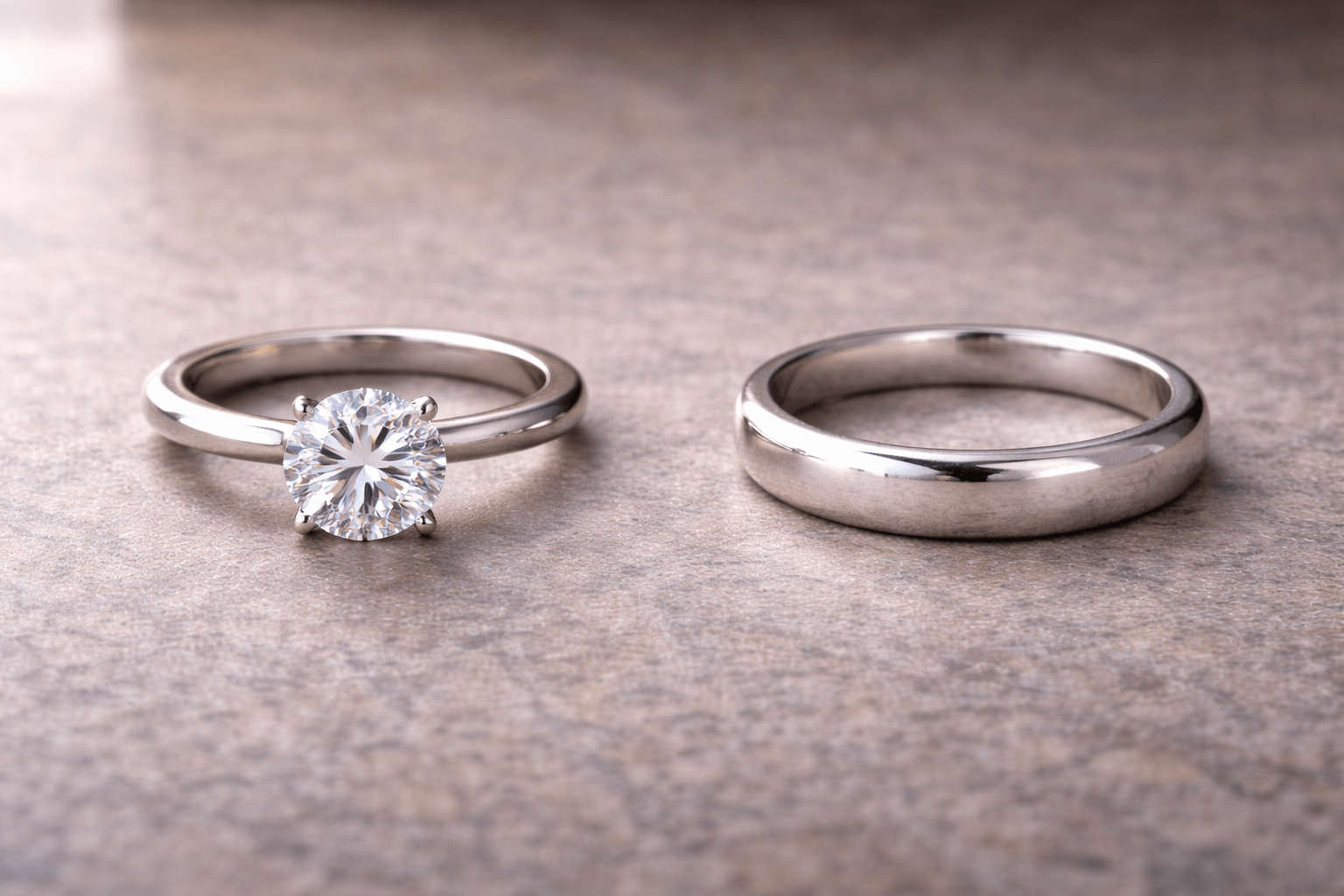
Traditionally, an engagement ring is given at the proposal and has a large gemstone (usually a diamond) on it to show that the couple plans to get married. During the wedding ceremony, the couple e...
Read moreEngagement Ring vs Wedding Ring
Traditionally, an engagement ring is given at the proposal and has a large gemstone (usually a diamond) on it to show that the couple plans to get married. During the wedding ceremony, the couple e...
Read more