
Engagement Ring vs Wedding Ring
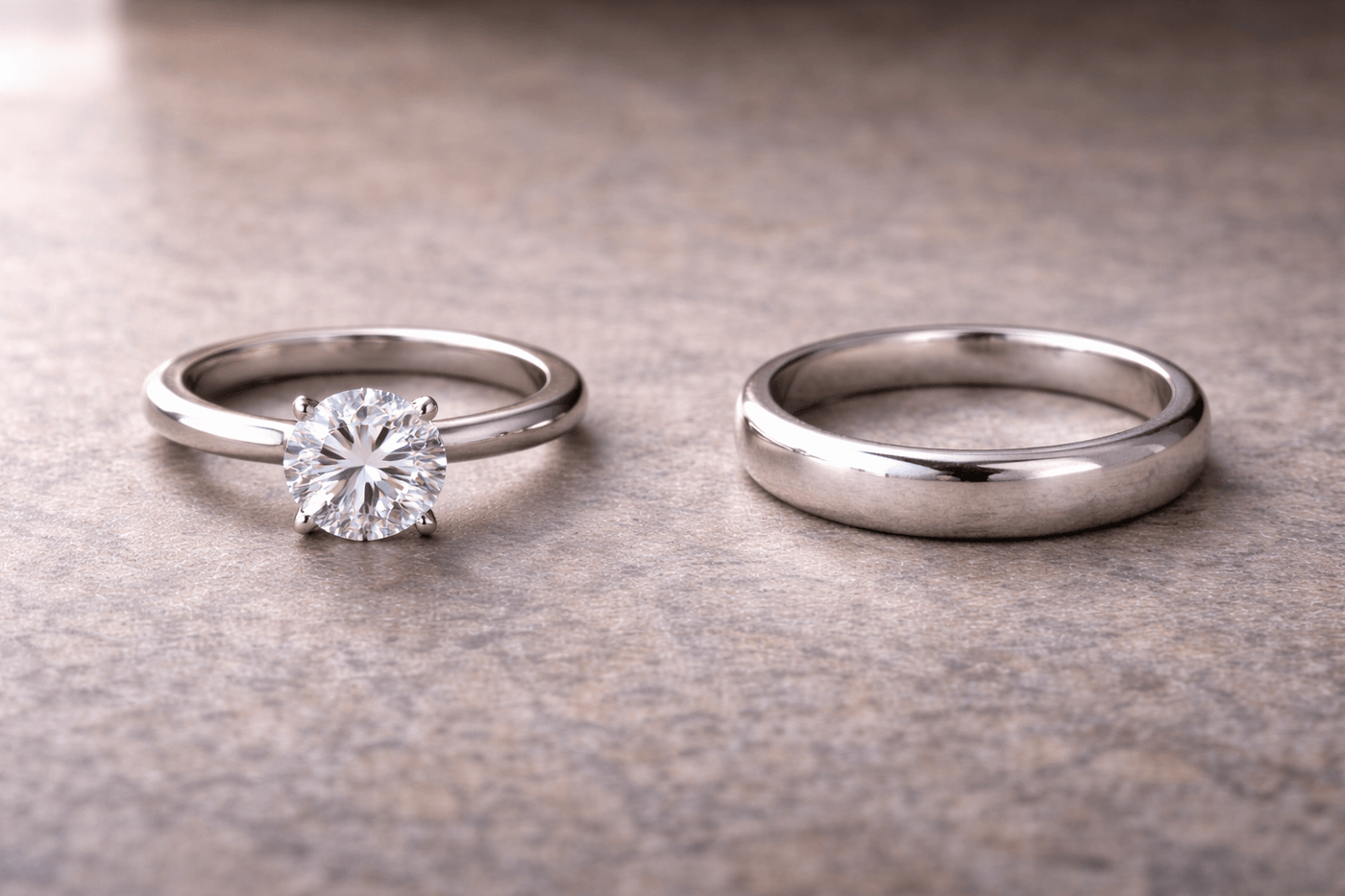

Getting engaged or married are two of life's most meaningful moments, and the rings exchanged at each will always carry that significance. Each of the rings has a special meaning: the engagement ring says "will you marry me?" and the wedding ring seals the vows. Each ring carries its own story, meaning, and style—and understanding the difference helps couples choose well. This guide will teach you the differences between engagement rings and wedding bands, the different styles available for each, what to look for in quality, and how to buy, care for, and choose the perfect ring for your budget and lifestyle (1).
What Is Engagement Ring vs Wedding Ring?
A proposal usually includes an engagement ring, which stands for the promise to get married. It usually has a precious metal band with a center gemstone, usually a diamond. Many modern engagement rings have design features like halos, side stones, or cluster settings that make the center stone look better. This custom has been around for hundreds of years. By the 12th century, the church had made marriage rules official. Engagement rings and wedding bands became separate items: the engagement ring showed that someone wanted to get married, and the wedding band was only for the ceremony itself (2). In this way, the engagement ring shows how serious a couple is about getting married.
During the wedding ceremony, the couple gives each other wedding rings, also called wedding bands. It usually has a simpler design, like a plain band made of yellow, white, or rose gold or platinum, and it goes on the ring finger. Wedding bands are usually more simple and focus on continuity, unity, and permanence. A lot of couples today choose classic bands or styles with small diamond accents to show that they are married.
The engagement ring and wedding band make a meaningful pair when worn together. In many cultures, both rings are worn every day as a sign of love, partnership, and a promise to be together for life. This is now a common practice for both spouses around the world (1) (2).
Types / Variations of Engagement & Wedding Rings
Solitaire Engagement Ring

On a simple metal band, a solitaire engagement ring has one big stone in the middle, usually a diamond. Solitaires are made of strong metals like 14K or 18K gold or platinum and show off the sparkle of the single gemstone. Because diamonds are the hardest gemstone (Mohs hardness 10), a well-set solitaire can last for generations. Both stone and metal make the bands strong. Platinum bands don't scratch easily and don't cause allergies. These rings are classic for proposals because the single stone stands for commitment and their simple elegance goes with a lot of different styles, from sleek modern to vintage-inspired settings. (1)
Vintage-Style Engagement Ring

An antique-style engagement ring is based on old designs, like those from Europe or the Art Deco era. It could have filigree, milgrain engraving, or diamonds cut in unusual shapes, like marquise or emerald cuts. "Old mine" and "Old European" diamond cuts are making a comeback in jewelry trends. These cuts are known for their hand-cut charm. These rings, which are often made of yellow or rose gold, remind us of a time long ago. They are made of gold or platinum and diamonds or colored stones. The durability of a piece depends on how well it is made. For instance, you should check intricate filigree often. People who want a unique, heirloom look that still benefits from modern craftsmanship often choose vintage-style rings for their engagement. (6)
Classic Wedding Band

A simple ring, usually a plain metal band made of gold, platinum, or palladium, is a classic wedding band. The look is simple, with a smooth band or a finish that is only slightly textured. The metal used to make it is solid, like 14K or 18K gold or platinum. These bands are very strong and can be worn every day. Many of them have hallmarks on them that show how pure they are. For instance, gold bands have marks like "750" for 18K gold. This has been done for hundreds of years to protect consumers (7). Most wedding ceremonies use classic bands, which are worn from the time the vows are exchanged and often passed down through the years. Because they are so simple, they don't need much care. Just polishing them now and then and checking the hallmark is enough to make sure they are of good quality (7).
Diamond Wedding Band

A diamond wedding band is both strong and shiny. It has a row or pave of small diamonds (or other gems) set into the metal band. Composition can include diamonds or even sapphires set in gold or platinum. Eight out of ten wedding bands in the U.S. have diamonds, which shows how popular this style is for women's bands. Durability is good, but you need to take care of it. Check the tiny stones to make sure none are loose. Brides often wear these kinds of bands to make their wedding ring shine brighter than their engagement ring. They also work for people who want their ring stack to have a constant circle of light. (6)
How to Identify Quality in Rings
Diamonds & Gemstones: Make sure the stones are real. The 4Cs of a diamond (cut, color, clarity, and carat) are confirmed by grading reports from well-known gem labs like GIA or IGI. A gem certificate is the best way to show that a gem is good. GIA says that a GIA Diamond Grading Report "states the identity of a diamond and its 4Cs... a trusted report" (1). Always ask the jeweler for a grading report on the diamond to make sure you're getting what you paid for.
Metal Purity: Check the metal stamps to see how pure the metal is. To show that they are pure, precious metals are hallmarked. The most common stamps are "585" for 14K gold and "950" for platinum. These marks show you how much metal is in the band. Gold hallmarking started in Europe as a way to protect consumers; it guarantees the ring's quality (7). Stay away from rings that don't have stamps or have marks that aren't clear. This could mean that the metal is of lower quality or that the alloys are not known.
Craftsmanship: Look at the details and how long it will last. Good rings have settings that are smooth and even, and edges that are well-polished. Prongs should hold gemstones tightly. Uneven prongs or finishes that don't match are often signs of bad craftsmanship. Hallmarking and certification are important checks, but you should also trust jewelers who offer a warranty on their work. To keep your jewelry in good shape, have the prongs and settings checked by a professional every so often (a loose stone can be lost).
Buying Guide: How to Choose the Right Ring
-
Budget: There is no set amount that you have to spend. Many couples in the U.S. spend between $5,000 and $7,500 on engagement rings, but many spend less than $3,000. The best thing to do is make a budget that you can stick to. Put the most important things first (stone size, cut quality, metal type) within your budget. Keep in mind that the price of metal may go up or down, and the ring's sentimental value isn't tied to its price. (1)
-
Lifestyle & Skin Sensitivity: Think about what you do every day and how often you wear it. Choose strong styles if you work with your hands or play a lot of sports. Platinum and high-purity palladium are good choices for people with sensitive skin because they are hypoallergenic. "Platinum doesn't cause allergies, so it's great for people with sensitive skin". Some people may have allergic reactions to gold alloys that contain nickel. If you have allergies, choose nickel-free alloys or platinum instead. (1)
-
Personal Style & Occasion: Choose a ring that fits your or your partner's style and the occasion. People who like classic styles will like traditional solitaires, while people who want something different will like unique cuts or colored stones like sapphires and emeralds. Many brides are choosing custom, design-forward rings to tell their story (5). You might also want to match the style of the ring to your wedding plans. For example, a simple band is good for an active lifestyle, while a more decorative ring is better for formal events. Plan for long-term wear: styles that never go out of style and metals that last will make sure the ring lasts as styles change.
Care, Cleaning & Maintenance

If you take care of your rings often, they will always look great. A simple daily routine, like washing your rings with a soft, lint-free cloth every night, will help get rid of skin oils, lotions, and other things that can make diamonds and metal dull over time (3). This one easy step can help keep the shine for a long time.
Once a week, soak your rings in warm water with a drop of mild dish soap to get them really clean. After soaking, use a soft toothbrush to carefully clean the area around the stones and any cracks where dirt likes to collect. After that, rinse well. It's best to close the drain ahead of time to avoid any problems. Don't use strong chemicals like bleach, acetone, or toothpaste. These can damage gems and wear down metal coatings. (4)
Taking care of things at home is just as important as having them professionally cleaned. Have a jeweler you trust check and clean your jewelry once or twice a year. A professional ultrasonic cleaning can bring back the shine, and regular checkups let the jeweler adjust the prongs, check the settings, and polish the metal. This keeps your jewelry from getting loose stones and makes it last longer. (4)
If you take good care of your engagement and wedding rings every day and have a professional check them every now and then, they can stay safe, beautiful, and important for a long time.
Common Myths & Misconceptions
-
“I should spend three months’ salary on an engagement ring.”
This idea comes from a marketing campaign in the 1950s, not from tradition or good financial sense. GIA directly addresses this myth by saying, "There is no hard and fast rule on how much you should spend..." "Find out what you can afford, make a budget, and stick to it" (1). The best ring is one that you can afford and really love, not one that follows an old formula.
-
“Lab-grown diamonds aren’t ‘real’ or have no value.”
This is another common mistake. In every way, lab-grown diamonds are real diamonds. They have the same crystal structure, hardness, and brilliance as diamonds that were mined. IGI says that lab-grown diamonds are "optically, chemically, and physically identical" to natural diamonds (3). Like mined stones, they can be graded and certified. The main difference is where they come from. That's why lab-grown diamonds are usually cheaper, not because they're not good.
-
“Only women wear engagement rings.”
Traditionally, engagement rings were mostly sold to women, but couples today are changing that. A lot of men wear engagement rings these days, and same-sex couples or partners who like things to be symmetrical can both choose rings. Engagement rings are now more personal and flexible, showing what each person likes instead of strict rules.
-
“Wedding bands must match.”
You don't have to wear matching bands anymore. A lot of couples now choose rings that go well together but aren't the same. Personal style is becoming more important in weddings these days. It's also becoming more common to see bands with mixed metals, different textures, or diamonds paired with simpler designs. According to one trend report, "many brides use diamonds in their wedding bands and mix metals and textures" (5). Today, the goal is not to be the same, but to be in harmony.
Pros & Cons of Engagement Ring and Wedding Ring
|
Engagement Ring |
Wedding Ring (Band) |
|
|
Pros |
Symbol of promise and commitment; often a spectacular center gemstone (e.g. 9 out of 10 US engagement rings feature diamonds). Can be a highly personal design reflecting the couple’s story. |
Symbolizes marriage vows and lifelong partnership; versatile styles from classic plain to modern diamond-set bands. Made for daily wear, often with comfort fit. Represents formal commitment in ceremony. |
|
Cons |
Generally more expensive (US couples average ~$5–7.5K) and may require careful maintenance (prongs, stones). Larger gems can snag on clothing or get damaged if not treated gently. |
Often less flashy (a classic band may seem plain compared to an engagement ring); simple designs have less sparkle. Adding diamonds or custom patterns increases cost. Still, plain bands are sturdy and low-maintenance. |
Trends & Modern Market Demand
Couples are moving away from strict traditions and toward more personal styles, which has changed engagement and wedding rings a lot in the last few years.
Engagement ring trends reflect a clear shift away from the classic round brilliant. Old European and Old Mine diamonds, which are inspired by vintage styles, are becoming more popular because they have character and will always be in style. Brides who want something different in 2025 are also choosing fancy shapes like marquise, pear, and rose cuts (6). Color is also gaining ground: sapphires, emeralds, and colored diamonds are increasingly chosen as center stones. Ethical sourcing remains important to many buyers, which is one reason lab-grown diamonds continue to grow in popularity. For traditionally minded buyers, our natural diamond rings offer a curated selection of certified mined stones.
The same desire for uniqueness is seen in wedding band trends. Couples are choosing chunkier profiles, textured finishes, and mixed-metal designs that look and feel modern and handmade (5). Hammered or matte finishes make things look more interesting, while engraving or small diamond accents let you make it your own. There is also a growing interest in styles that are not gender-specific and materials that are not common, like titanium or wood inlays. This shows a larger trend toward rings that feel more meaningful than traditional ones. The current market strongly favors wedding jewelry that tells a couple's individual story over any single prescribed style.
Investment & Resale Value

People buy most engagement and wedding rings for emotional reasons, not as investments. Gold and other precious metals can go up in value over time, but the amount of metal in a ring is usually too small to make a difference. Most of the time, only very rare, high-quality gemstones, like large fancy-color diamonds, go up in value a lot. (1)
Do not to think of rings as investments. Instead, they should be chosen based on love and personal meaning, not how much they could be sold for. In real life, most rings only keep a small part of what they cost when they were new. If you care about resale value, the materials you choose are important. But keep in mind that the sentimental value of an engagement or wedding ring is almost always more important than the money you get back. (1)
Who Should Buy These Rings?
Couples who are ready to make a serious promise to each other should get engagement and wedding rings. Someone who is going to propose usually buys an engagement ring and gives it to the person they are going to propose to. On the other hand, couples usually pick out their wedding bands together or swap them before or during the ceremony.
Anyone in a serious relationship who values this tradition can choose to celebrate it with rings. Couples today, though, are far less bound by traditional conventions than their predecessors. A lot of people these days choose completely custom designs, different gemstones, or even materials that aren't usually used in jewelry to better show who they are and what they believe in. Some couples don't even bother with matching sets and instead choose rings that feel right for them as individuals and as a couple (5).
Engagement and wedding rings are for anyone who wants to honor their bond in a way that feels right—whether that means following tradition closely, putting a personal spin on it, or creating something entirely new.
Frequently Asked Questions (FAQ)
Q: What is the difference between a wedding ring and an engagement ring?
A: An engagement ring is given when someone asks someone else to marry them and is a sign of the promise to do so. Most of the time, it has a diamond or another gemstone in the middle. During the wedding ceremony, the couple exchanges wedding rings, which are also called bands. These rings represent the vows they made to each other. In the past, the engagement ring was a sign of intent, and the wedding band was part of the official ceremony (2). One is for the proposal, and the other is for the wedding.
Q: When and how should I wear my wedding and engagement rings?
A: Tradition says that the wedding band goes closest to the heart, and the engagement ring goes on top of it on the left ring finger. The wedding band is usually put on first, and then the engagement ring. Some people wear both rings stacked on top of each other every day, while others switch them out or only wear one. Most men only wear a wedding band, but how you wear your rings is up to you. (1)
Q: I am allergic to metals. What metals are best for skin that is sensitive?
A: Platinum and palladium with a high purity level are great choices for skin that is sensitive. Platinum is naturally hypoallergenic and has a purity level of about 95%, which makes it great for people who are allergic to nickel (1). Another good choice is white gold made with palladium. If you get irritated easily, you should stay away from low-karat white gold that may have nickel in it. Instead, you should look into platinum, yellow gold, or rose gold, which usually don't have nickel in them.
Q: Do I need to get insurance for my wedding and engagement rings?
A: Yes, insurance is highly recommended. You can lose, steal, or break rings, and many homeowners' or renters' insurance policies let you add jewelry coverage for a low cost. A separate jewelry insurance policy may give better protection for more valuable items. You will usually need an appraisal to find out how much the ring is worth as a replacement. GIA says that getting insurance for your ring is a good way to protect both its financial and sentimental value. (1)
Q: How often do I need to clean my rings?
A: Cleaning your rings often will help them look their best. GIA says that you should soak your diamond rings in warm water with mild dish soap once or twice a week and then brush them gently with a soft toothbrush (4). Cleaning your rings with a soft cloth every day also helps get rid of oils and dirt (3). Also, have a jeweler clean and check your rings about twice a year to make sure the prongs and settings are still secure.
Q: Why do people like diamonds in engagement rings so much?
A: Diamonds became popular because they are both beautiful and long-lasting. Diamonds are the hardest natural gemstone, with a Mohs scale score of 10. They don't scratch easily and can last a lifetime (1). Their shine and fire have also made them strong symbols of love that lasts. Marketing campaigns, like De Beers' "A diamond is forever," made them a part of tradition. Today, diamonds are still popular because they are strong, shiny, and timeless.
Expert Jeweler Tips
Experienced jewelers consistently stress a few key points. Always seek a trustworthy gemstone certification. A grading report from a reliable lab like GIA will make sure you get what you paid for. It will give you an honest look at the diamond's cut, color, clarity, and carat weight. (1)
Insurance is another important thing to think about. People wear rings all the time, and things can go wrong. GIA says that having the right insurance can help keep you from losing, having something stolen, or getting damaged that you didn't expect. This can give you peace of mind for such a valuable item.
If you're getting a custom ring, make sure you give yourself enough time. It might take longer than you think to get custom work done, and rush orders might cost more than they should. Lastly, make sure you check often. You can be sure that your ring will stay safe, comfortable, and beautiful for years to come if a professional jeweler checks it for loose stones or worn prongs.
Conclusion
A couple's journey includes both an engagement ring and a wedding ring. The engagement ring, which usually has a pretty jewel in it, means that the couple is going to get married. The wedding band, on the other hand, is a simple ring that they wear to show that they are married. They both have the same idea of love and commitment, but they happen at different times, look different, and mean different things. If couples know about these differences, they can choose rings that better fit their story and style. Whether you want a traditional diamond solitaire or a ring with a unique design, make sure the stones and metals are of good quality and have personal meaning. If you know how to spot good craftsmanship and take care of your rings, they will stay shiny for years to come.
Ready to find the rings that feel right for you? Explore our thoughtfully curated selection of diamond engagement rings and wedding bands, with styles to suit every taste and budget. Learn more about materials, gemstone certifications, and craftsmanship, or let our team guide you through the process. We’re here to help you choose rings that you’ll love wearing—and cherishing—for a lifetime.
Two rings. One unforgettable story.
Explore perfectly matched engagement and wedding rings at Diamond and Sapphire.
Read more
Engagement Ring Styles: A Complete Guide
There are many different styles of engagement rings, from classic solitaires and vintage three-stones to modern bezel and pavé settings. Each style has its own look, strength, and meaning. When you...
Read moreEngagement Ring Styles: A Complete Guide
There are many different styles of engagement rings, from classic solitaires and vintage three-stones to modern bezel and pavé settings. Each style has its own look, strength, and meaning. When you...
Read more