
Engagement Ring Vs Promise Ring: What's the Difference?
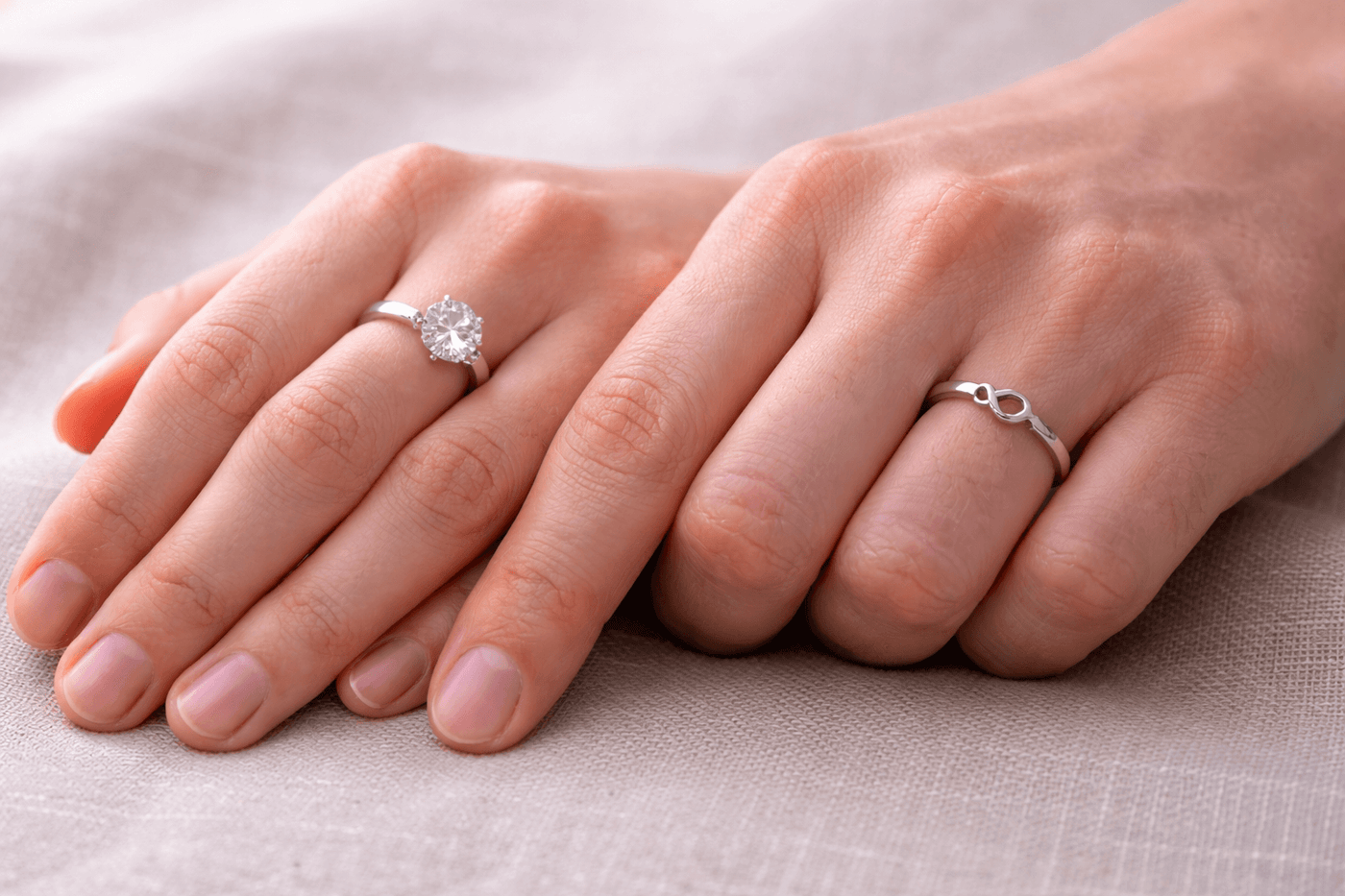
Rings have signaled love and loyalty for centuries. The Romans, for instance, used a ring to formalize a marriage commitment (2). The engagement ring and the promise ring are two popular types of rings that couples use at different times. Both celebrate love, but they carry different meanings and expectations. Choosing the right ring is a personal and emotional decision. This guide explains the real meaning of each, their differences in style and symbolism, and how to select the one that fits. By the end, you will understand what each ring represents and how to care for these important symbols of love.
What Are Engagement Rings and Promise Rings?

An engagement ring is a ring given during a marriage proposal that shows the promise to marry. In the past, it was a legal token; for instance, in Roman times, the engagement ring meant that the couple had made a promise to marry. Today, everyone sees it as a sign of lasting love and a promise to stay married. Engagement rings usually have a diamond or other precious stone set in gold or platinum, which shows how important the promise is. (2)
A promise ring, on the other hand, is a sign of a promise of love between two people (or even between friends or family members). It shows commitment and exclusivity without the need for marriage right away. Promise rings show that you are committed to a special relationship and your hopes for the future, but they don't guarantee a proposal or wedding (1). Couples today often give promise rings early in a relationship to signal seriousness and exclusivity. An engagement ring, on the other hand, is given when the partners are ready to start planning a wedding. So, the two rings are different mostly because of what they promise: a lifelong marriage versus just love and commitment.
Types of Engagement Rings
Engagement rings come in various styles, each with distinct appearance and characteristics:

Solitaire Engagement Rings: Solitaire engagement rings—the most enduring style in our diamond engagement rings collection—feature a single gemstone, usually a diamond, at the center of a plain band. To make the single stone shine more, it is usually set in prongs. The solitaire ring is usually made of strong metals like platinum or 18K gold. People like it because of its simple design and how it makes the diamond's sparkle stand out (4). Diamonds are the hardest known gemstones, and the settings are strong, which makes it last a long time. This style is popular because its simple design works with any lifestyle and can stand for pure, undiluted love.

Halo Engagement Rings: Halo engagement rings surround a central gemstone with a ring of smaller diamonds or gems, making the center stone appear larger and adding brilliant sparkle. Accent stones can also run along the band. Like solitaires, halo rings are typically set in white gold or platinum. Buyers who want a glamorous, vintage-inspired statement often choose these rings. The small stones are set securely, giving the design strong durability. Halos are popular when the goal is maximum visual impact without requiring a very large center stone (5).

Three-Stone (Trilogy) Engagement Rings: This meaningful style, available across our rings collection, features a large center stone flanked by two smaller stones on either side. The smaller stones can be diamonds or colorful stones. The look is balanced and has a meaning, which is often "past, present, future." In terms of design, it's like other rings with a gold or platinum band and diamonds or sapphires. If the three-stone ring is well-made, it will last a long time. Each stone is held in place by prongs or a bezel setting. A lot of couples like this style because it lets them include colored gems like sapphires or emeralds along with diamonds. It's also a popular choice for people who want each stone to stand for a milestone (5).
Types of Promise Rings
Promise rings tend to be simpler and more varied in design, reflecting their flexible meaning. Two common promise ring styles include:

Infinity or Heart Motif Rings: These rings have designs that mean something, like an engraved infinity symbol or heart shape. They usually have a simple band (in yellow, white, or rose gold) with the design on top. The composition can be 10K–18K gold or sterling silver, and it can or can't have small accent stones. They are moderately durable. Gold and silver are softer than platinum, but they can still last a long time if you take care of them. Couples often use these rings as pledge tokens. The infinity or heart design literally means "forever" love. They stress sentiment over luxury because of their symbolic design (1).

Birthstone or Colored-Gem Promise Rings: The rings have a gemstone in them that could be a birthstone or just a color you like. The look is often simple, with a stone set in a bezel on a plain band. They can be made of sterling silver, gold with a lower karat, or even metals that are not common, which makes them less expensive. The durability of a gemstone depends on the type you choose. For example, sapphires and rubies are very hard, while pearls and opals need more gentle care. Couples often use these rings to make the gift more personal, like choosing a partner's birthstone. The ring is meant to be a sentimental keepsake, not a fashion statement.
How to Identify Quality in Rings
Discerning quality is essential for either ring type. Reputable certifications and metal markings are your primary guide:

-
Diamond & Gemstone Certification: A grading report from an independent lab is a good way to check the quality of a diamond. A GIA Diamond Grading Report, for example, gives an objective description of the gem's 4Cs: cut, color, clarity, and carat. Buying a diamond with a report "makes sure you know exactly what you're buying, so you don't have to guess". Jewelry schools like IGI also offer jewelry reports that list all the gemstones and metal purity, which helps prove the ring's authenticity and quality (1). Before you buy a diamond ring, always ask to see any grading report that is available.
-
Metal Purity & Hallmarks: Look for hallmarks that show how pure the metal is. Stamps on gold, like "10K," "14K," or "18K," (or "750," "900" in other systems) show how much of the alloy is pure gold. For instance, 14K gold is 58.3% pure gold that has been mixed with other metals to make it stronger. These marks tell you what the ring is made of and if it is real. These marks on gold jewelry show how pure and high-quality it is. You can tell that a platinum ring is 95% pure because it has the letters "PLAT" or "950" on it. This makes it very strong and safe for people with allergies. Learning these stamps will help you make sure you're getting real precious metal.
-
Craftsmanship & Finish: Look at the ring's craftsmanship. Good rings have settings that are smooth and even, prongs that are secure, and bands that are well-polished. The International Gemological Institute (IGI) says that their jewelry reports have close-up pictures of craftsmanship that you can't see with the naked eye (4). When you go shopping, you won't get a report, but you can look for clues: the prongs should hold the stones tightly (not loosely), and any engravings or patterns should be clear. The band should fit well and not have any rough edges. In high-quality rings, the metalwork and stone settings show that they were made by professionals (4). A ring that is well-made will last for years, but one that is poorly made may snag or lose stones.
Buying Guide: How to Choose the Right Ring
The choice between an engagement ring and a promise ring turns on several practical factors:
-
Budget: Set a realistic limit early. The "two months' salary" rule is a marketing myth with no basis in tradition; there is no required amount (1). You can find beautiful engagement rings at any price point, so make a budget and stick to it. Promise rings are usually much cheaper than engagement rings because the focus is on the meaning behind the ring rather than the cost (3). Choose what feels right for your situation—a smaller promise ring now with a more substantial engagement ring later is a perfectly sensible path.
-
Personal Style & Lifestyle: Think about the person's daily life and taste. Does she follow the rules or set them? Choose a style for the engagement ring that fits her wardrobe and personality because she will wear it every day. If she is active or works with her hands, a lower-profile setting (like a bezel) made of a hard metal (like platinum) might be a good idea. Look at the other jewelry she wears to see what color metal she likes best (yellow gold, rose gold, white gold, or platinum). For instance, if she wears a lot of gold, a yellow or rose gold engagement ring might go perfectly with her style. Choose a design for a promise ring that fits her style, like a simple band or an infinity symbol, so she will love wearing it every day.
-
Occasion & Purpose: Think about the meaning and timing of the occasion. An engagement ring is a good choice if you're ready to ask someone to marry you. A promise ring might be better if you just want to show your commitment (maybe because you're still young or live far away). People often give promise rings on special occasions like birthdays, anniversaries, and holidays, but they can also be given "just because" in a mature relationship (1). There are no hard and fast rules, so pick a time that means something to both of you.
-
Metal Allergy/Sensitivity: If the person has sensitive skin, pick metals that won't cause an allergic reaction. Pure platinum, high-karat golds, and palladium are all naturally hypoallergenic. Some white gold, on the other hand, is mixed with nickel, which can make skin feel bad. Look for clues on the metal purity stamp: Higher karats (like 18K gold) have more pure gold and fewer alloys, which means they usually don't react as much. A hallmark stamp, like 750 for 18K gold, shows how much metal is in the item (7). Platinum and palladium are safe bets if you're not sure because they don't usually cause allergies.
-
Longevity & Value: Think about how long it will last. You can keep a beautiful ring forever, but remember that diamonds and gold don't sell for very much. Diamonds, in particular, often sell for much less than what they were bought for (6). So, instead of thinking about how much money you could make, think about what will make you both happy. But if you're worried about resale, keep in mind that metals like gold and platinum always have at least scrap value, and bigger, better diamonds are worth more than smaller, lower-quality ones.
Care, Cleaning & Maintenance

Proper care keeps rings looking their best for years. Most jewelry professionals recommend gentle, regular cleaning. Soaking rings in warm water with a small amount of mild dish soap, then brushing the settings and crevices with a soft-bristled brush, is a reliable method (8). Don't use harsh chemicals or cleaners that scratch, like bleach or ammonia, because they can hurt both metals and gemstones. After cleaning, rinse well and dry with a soft cloth that doesn't leave any lint.
Remove rings before showering, swimming, exercising, or using cleaning products. Chlorine, harsh chemicals, and impacts cause gradual damage. Store rings separately in a lined jewelry box or soft pouch to prevent scratching.
Along with taking care of your rings at home, you should also have them professionally cleaned and checked every now and then. A jeweler can check for loose stones, tighten settings, and polish the metal to make it shine again. If you take care of your rings and wear them carefully, they can last for many years in great shape. (8)
Common Myths & Misconceptions
There are misconceptions about both rings.
Myth: A promise ring and an engagement ring are the same thing.
Fact: They are different on purpose. GIA says that a promise ring "does not promise marriage" like an engagement ring does (1). Promise rings are usually given earlier in a relationship to show that the couple is exclusive, while engagement rings make it clear that the couple plans to get married.
Myth: Promise rings have to be cheap or weak.
Fact: A promise ring can be just as meaningful and well-made as any other ring. According to Vogue, promise rings can be made to order and have special meanings. The price depends on the materials and symbols used (3). The ring's meaning is more important than its price.
Myth: Engagement rings have to be diamonds all the time.
Fact: Diamonds are traditional for engagement rings, but many modern couples choose colored gemstones or custom styles that fit their values or budget. Vogue says that ring styles for 2025 will include colored stones and unique cuts (5). There is no such thing as a "one size fits all" ring; both rings should fit the couple's story and tastes.
Pros & Cons of Engagement Rings and Promise Rings
|
Feature |
Engagement Ring |
Promise Ring |
|
Symbolism |
A formal promise to marry; a clear sign of intent and lifelong commitment. (Often shared at proposal) |
A pledge of love, faithfulness, or future intent without a set marriage date. Indicates a serious relationship but not a marriage vow. |
|
Timing |
Given at a marriage proposal, typically shortly before the wedding. Shows that marriage plans are underway. |
Often given earlier in a relationship (or any meaningful stage) to mark commitment. No strict timeline can precede engagement by years. |
|
Cost |
Usually higher. Commonly features diamonds or high-quality gemstones in precious metals. Can be a major investment. |
Generally lower. Often simpler designs and smaller stones. The emphasis is on the sentiment, not on luxury or extravagance. |
|
Flexibility |
Style trends can be more traditional (e.g. solitaire, classic settings), though modern couples personalize them. |
Highly versatile in design (infinity symbols, birthstones, engravings, etc.) to reflect personal meaning. |
|
Pressure/Expectations |
High. The next step is marriage, with societal or personal expectations of wedding planning. |
Lower. Acts as a marker of commitment or milestone without immediate pressure to set a wedding date. |
Trends & Modern Market Demand
The jewelry market is evolving rapidly. Lab-grown diamonds represent one of the biggest shifts: Millennials and Gen Z are buying them at record rates. Industry reports indicate that lab-grown diamonds now account for nearly half of all U.S. engagement ring sales, driven by younger buyers seeking more affordable, ethically sourced options (9). Because lab-grown diamonds are competing with natural diamonds, prices are changing. This makes rings more affordable.
Personalization is the dominant aesthetic. Vogue notes that couples are choosing engagement rings with distinctive, story-driven features. Colored diamonds, mixed metals, and unusual cuts are all gaining popularity. Platinum and mixed-metal bands are coming back because they look modern. At the same time, more people than ever want to buy ethically and sustainably sourced goods, so many people ask about conflict-free diamonds and recycled metals. (5)
Promise rings are also getting a lot of attention again, especially from younger couples. Modern promise rings come in custom shapes with special messages that can mean different things, not just pre-engagement (3). Because the promise ring market is less structured, designers say that sales of custom commitment rings and friendship bands are steadily rising. In short, the current market favors customization, ethical choices, and the mixing of tradition with personal values. This has an effect on both engagement and promise ring designs (9).
Investment & Resale Value

Most fine jewelry, including engagement rings, is not a sound financial investment. Industry experts note that a diamond ring loses much of its retail value the moment it leaves the store—a ring purchased for $2,000, for instance, may fetch only around $600 from a wholesaler. (6) This gap exists because retail prices include branding, craftsmanship, and overhead costs that disappear on resale. However meaningful an engagement ring is personally, it should not be purchased with expectations of financial gain.
Promise rings usually don't sell for as much as they cost. They are usually easier to make and cost a lot less than engagement rings to start with. Because of this, it's best to think of them as sentimental keepsakes instead of things that will go up in value or be sold later. It's important to have realistic expectations in both cases. Precious metals may still have some scrap value, but gemstones, especially used diamonds, often sell for much less than they were worth when they were new. In the end, the real value of these rings is not how much they can be sold for, but what they mean to the person who owns them. (3)
Who Should Buy Each Ring?
Which ring is right depends on where a couple stands in their relationship. An engagement ring is appropriate when marriage is the clear intention—traditionally given by one partner to the other during a proposal, after serious conversations about their shared future.
On the other hand, a promise ring is better for couples who want to show they are committed but aren't quite ready to get married. Younger couples, long-distance partners, or people who just want to move at their own pace often choose it. Experts say that a promise ring can mean that you might get engaged one day, but it is not as formal (1).
Promise rings are more about intention and connection than wedding plans. These days, people of all genders give and wear them. An engagement ring makes sense if one partner is ready to get married. A promise ring can be a meaningful choice if both partners want to honor their bond but aren't ready to plan a wedding yet (1).
Frequently Asked Questions
Q: What is the main difference between an engagement ring and a promise ring?
A: An engagement ring is a formal symbol of a marriage proposal and promise to wed, whereas a promise ring signifies commitment and love without an immediate plan for marriage. A promise ring “does not promise marriage” like an engagement ring does (1).
Q: Can a promise ring substitute for an engagement ring?
A: No. A promise ring is a distinct gift given at a different stage. It shows you take the relationship seriously, but it isn’t a marriage proposal. Engagement rings explicitly represent the intent to marry (1), while promise rings are more about devotion and future hope.
Q: Which finger should I wear a promise ring on?
A: You can wear a promise ring on any finger. Commonly, people choose the ring finger or middle finger of the left or right hand. Some even wear it on a chain. Promise rings are often placed on the left ring or middle finger, but there are no hard rules (1).
Q: Are promise rings only for young couples?
A: Not at all. Promise rings can be exchanged by any couple who wants to celebrate commitment. Originally often given by men to women, modern couples give them to each other. Nowadays many couples (and even men) exchange promise rings as mutual tokens of devotion (1). Age is less important than the relationship’s meaning.
Q: When should I give a promise ring?
A: Promise rings are typically given on meaningful occasions like birthdays, anniversaries, or holidays, but they can be given any time to mark a relationship milestone (1). There’s no required timeline – for example, Vogue Arabia suggests waiting a few months into a relationship before giving one, but ultimately the timing is personal.
Q: Can a promise ring be replaced by a wedding band later?
A: Yes. Some couples design promise rings so they can be later used as wedding bands or stacked with an engagement ring. Popular promise ring styles include simple bands or eternity rings (full of small diamonds), which pair well with wedding sets (1).
Q: Do promise rings have to feature gemstones or diamonds?
A: No. Promise rings can be plain bands or include symbols. Unlike engagement rings, there’s no expectation of a diamond. A promise ring “can be made of any metal and any gemstone,” and styles often include hearts, infinity symbols, or even personalized engravings (1).
Q: Does buying a higher-priced ring show more commitment?
A: Not necessarily. Experts emphasize that the sentiment behind the ring matters more than its cost. In fact, engagement rings should not be treated as investments. Promise rings focus on meaning over luxury, and they "typically fall well below engagement ring prices" (3). A modest ring with heartfelt intention can be more meaningful than an expensive one.
Expert Jeweler Tips
1. Get a Certified Diamond: For engagement rings, always ask for a diamond grading report from GIA, IGI, or another lab. This report confirms the stone's quality and features. GIA says that buying a diamond with an independent report "makes sure you know exactly what you're buying, so you don't have to guess" (1).
2. Make a firm budget and think about a placeholder: Set a budget ahead of time and stick to it. If you can't afford the dream ring right now, think about getting a simple ring or a fake diamond as a "placeholder" ring for the proposal. You can buy the real ring later. GIA says that placeholder rings are a good choice for couples who want time to choose or save (1).
3. Make it your own: Add a personal touch to promise rings, like your initials, a special date, or a favorite symbol (like a heart or infinity). These things make the ring one of a kind. Jewelers also say that the metal should match the wearer's taste (for example, yellow gold vs. white gold) so that the ring feels like it really belongs to them.
4. Check the Fit and Finish: Make sure the ring is the right size and fits well. If you need to, have a professional size ring. Check the finish: the prongs should be tight, the surfaces should be smooth, and the stones should be firmly in place. The jeweler should fix any rough edges or loose stones. If the ring is well-made, it will last for many years of wear.
5. Ask About Insurance: Think about getting insurance for your engagement ring (or promise ring). A lot of insurance companies want a gemologist's report as proof of value. For a small fee, you can protect yourself against loss or damage, which will make you feel better about this special purchase.
Conclusion
Both promise rings and engagement rings are beautiful symbols of love and commitment, but they serve different purposes at different stages. Engagement rings carry the formal weight of a marriage promise; promise rings offer a more flexible, personal expression of devotion. Each carries deep meaning for the person who wears it. Understanding the distinction helps couples choose the right ring at the right moment. With proper certification, thoughtful care, and attention to craftsmanship, either ring can remain a treasured symbol for a lifetime. Whether given as "I will marry you" or "I will always choose you," the true value of these rings lies in the love they represent.
Every promise deserves meaning.
Discover promise and engagement rings designed with intention, beauty, and craftsmanship at Diamond and Sapphire.
Read more
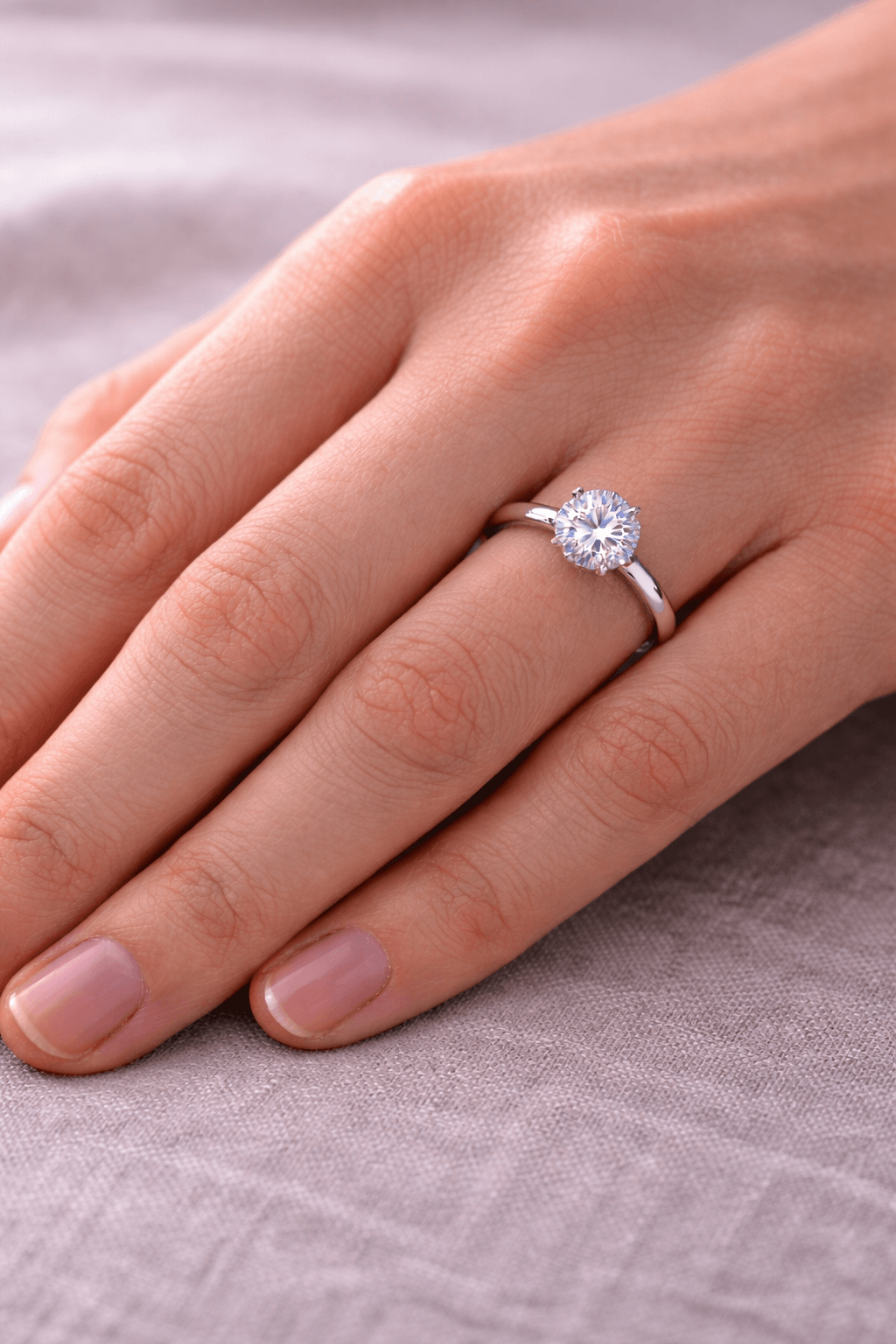
Engagement rings are the cherished symbols of a marriage proposal, with roots in ancient Rome and a rich Western tradition. Learn how these rings evolved—from simple gold betrothal bands to today’s...
Read moreEngagement rings are the cherished symbols of a marriage proposal, with roots in ancient Rome and a rich Western tradition. Learn how these rings evolved—from simple gold betrothal bands to today’s...
Read more