
How Much Should a Wedding Ring Cost?
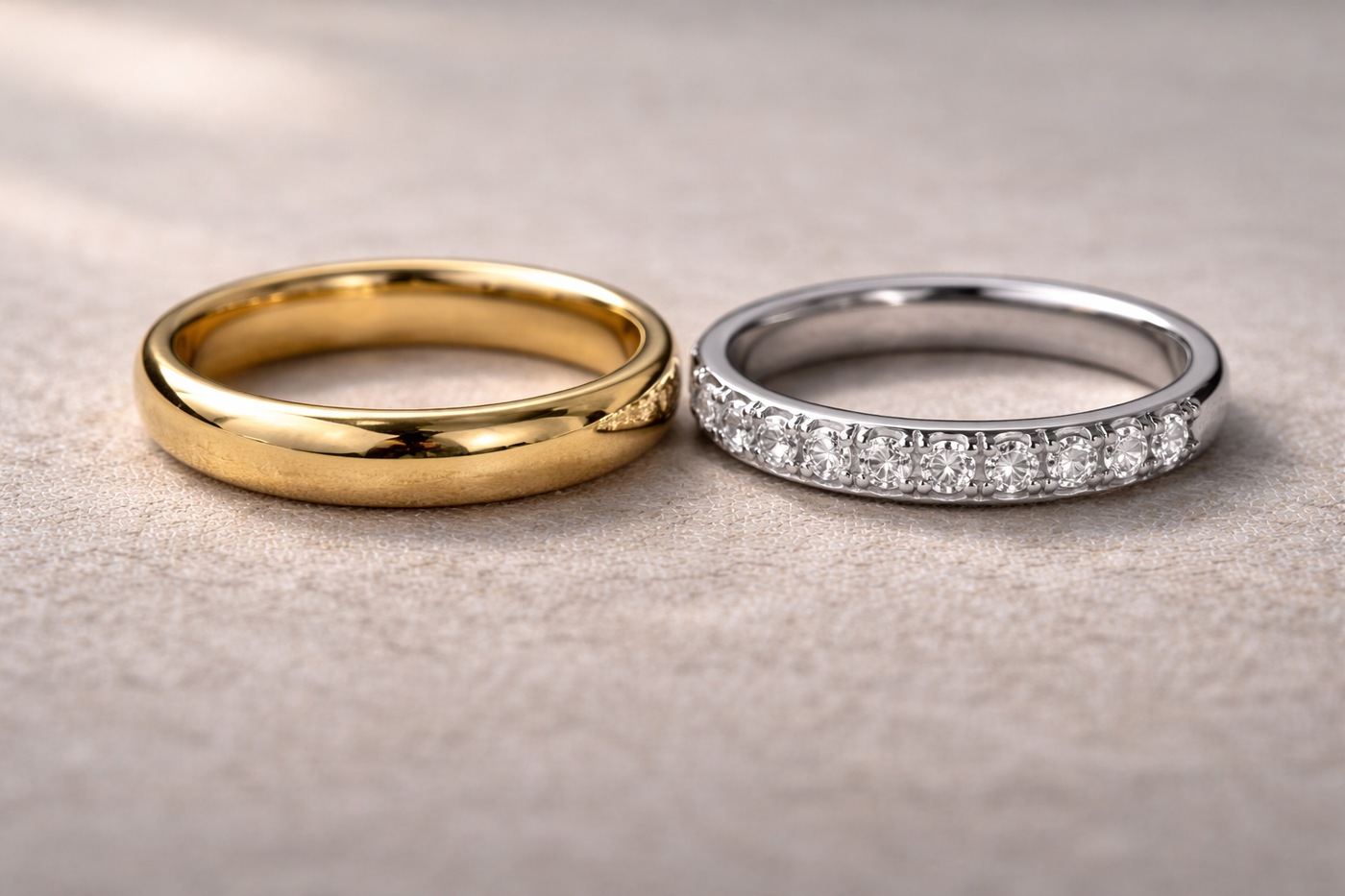

Few pieces of jewelry carry as much emotional weight as a wedding ring. It’s worn every day as a symbol of love, commitment, and the promises two people share. Still, deciding how much to spend can feel overwhelming. Today’s couples are often met with mixed advice, some are told to follow old salary-based rules, while others are encouraged to spend very little or go all out on a custom design (1).
This guide is meant to clear up that confusion. I’ll walk you through the history of wedding rings, explain the most common metals and gemstones, and offer practical guidance on budgeting, quality, care, and current market trends (2). With a better understanding of these factors, you’ll be able to choose a ring that truly represents your relationship while staying within a budget that feels right to you (1).
What Is a Wedding Ring?
During a marriage ceremony, the couple gives each other a wedding ring, which is a round band that symbolizes their eternal union. The design and meaning of a wedding ring are often different from those of an engagement ring (2). Wedding bands are usually simpler than engagement rings, which often have a diamond or other gemstone in the center. Both partners wear them every day. They can be made of gold, platinum, or other metals, and they can have diamonds or engravings on them. The price depends on the type of metal, how pure it is, how well it is made, and any stones that are set into the band. When choosing wedding rings, comfort and durability are very important. (1)
History & Cultural Significance
In ancient Rome, rings served as legal symbols of marriage and property ownership for women. Wealthy Romans gave engraved gold rings for public wear and iron rings for home. The Catholic Church made engagement and wedding rings official parts of marriage ceremonies in the 12th century. In the Middle Ages, Jewish wedding rings were often elaborate communal pieces featuring miniature temple roofs, representing community ownership rather than individual property. Maximilian I's 1477 proposal helped establish diamond engagement rings as a romantic custom, a trend De Beers amplified with their 1947 "A diamond is forever" campaign. Men's wedding bands, by contrast, did not become widely popular until World War II, when soldiers wore them as a reminder of home. (2)
Types / Variations of Wedding Rings
Gold Wedding Rings

Gold rings will always be in style because they are warm and easy to shape. Because pure 24k gold is too soft to wear every day, alloys like 18k (75% gold) and 14k (58.5% gold) add copper, silver, or other metals to make it harder (3). Yellow gold has a classic look, while white gold is made with palladium or nickel and is often covered with rhodium for a shiny finish. Rose gold gets its pink color from having more copper in it (3). Gold is not very easy to scratch and is easy to resize, but prices vary: 18k is more expensive than 14k, and gold is in the middle of the price range between silver and platinum (1). Couples choose gold because it never goes out of style and can be set with diamonds or detailed engravings (3).
Platinum Wedding Rings

Platinum is a heavy, naturally white metal that is known for being rare and long-lasting. Platinum rings are great for people with sensitive skin because they are heavy and don't irritate the skin. This metal doesn't wear down as quickly as gold does, and instead of getting scratched, it develops a matte "patina," which some couples like because it looks old-fashioned. Platinum rings used to cost a lot more than gold rings, but changes in the markets for precious metals have made the difference smaller. However, labor costs are still high because platinum is so dense. Platinum is a popular choice for eternity bands and diamond-encrusted rings because it is beautiful and expensive. (1)
Silver Wedding Rings

Sterling silver (92.5% silver alloyed with copper) is an affordable option with a bright white sheen. It is softer than gold and platinum, making it prone to scratches and tarnish; regular polishing and careful wear are necessary for longevity. Because of its lower price and ease of casting, silver is widely used for casual wedding bands or stackable rings, though some couples upgrade to sturdier metals over time. Its cool color pairs nicely with gemstones like turquoise or opals that aren’t usually set in more expensive metals. (1)
Titanium, Tungsten, and Alternative Metals


More and more couples today are choosing alternative metals because they last longer and look different. Titanium is light, doesn't cause allergies, and is very strong. It's great for people who are active, but it's hard to resize. Tungsten carbide is harder and heavier, which makes it scratch-resistant. However, it can crack when hit and can't be resized. Cobalt chrome and stainless steel rings are also cheap and scratch-resistant, but their hardness makes it hard to resize them. Ceramic rings come in bright colors and are cheap, but they can chip. Couples who want something different or who are on a budget like these materials. (1)
Palladium and Other White Metals

Palladium is a member of the platinum group and has a white color that is similar to platinum but costs less. It doesn't cause allergies and is lighter than platinum, so you can wear it every day. But after demand went up, palladium became harder to find, which caused prices to go up and down. Stainless steel and cobalt alloys look similar but cost a lot less. However, they may be hard to resize and could conduct electricity. Couples choose these metals for a sleek, industrial look or when they work in places where rings can get scratched. (1)
Two-Tone and Mixed-Metal Rings

Two-tone rings combine metals—for example, a yellow gold band with a white gold inlay—allowing couples to blend different colors and metals to symbolize dual heritage or personal style. Mixed-metal designs can also be practical: a durable platinum interior for comfort and a decorative gold exterior for warmth. These rings often feature contrasting textures or hammered finishes and may include diamond or colored-gemstone accents. They suit couples who appreciate artistic craftsmanship and want a ring that stands out. (1)
How to Identify Quality in Wedding Rings

For rings with diamonds or other gems, grading reports from independent labs like GIA or IGI confirm carat weight, color, clarity, cut, and authenticity—so you know precisely what you are buying. Certified stones offer the assurance of quality and fair value (1).
For gold, karats are used to measure metal purity. For platinum and other alloys, percentages are used. The band has hallmarks on the inside that show how much metal it has. For example, "18K" means it has 75% gold, and "PT950" means it has 95% platinum(3). Some countries require hallmarks to prove that the metal is real and that it is as pure as it says it is (3). When looking at a ring, check the hallmark and ask for proof of the metal's composition.
The design and structure of a ring also affect its quality. Look at the setting: prongs should hold stones tightly and be evenly spaced, bezels should fit tightly around the stone's girdle, and channel or pave settings should keep smaller diamonds from dropping out (1). Skilled craftsmanship is shown by smooth finishes, shapes that are symmetrical, and the right finishing. Make sure the edges are sharp and well-defined for detailed engravings or filigree. If you rush or don't pay attention to the details, they can snag or wear out faster (1).
You should be able to wear your wedding ring every day. The inside of comfort-fit bands is slightly domed, which relieves pressure on the finger and makes it easier to put on or take off the ring(1). You can resize metals like gold and platinum later, but it's not easy to change harder materials like titanium or tungsten (1). Check the sizing policies before you buy, and make sure there is room to resize if your finger size changes.
Nickel and copper are two metals that some people are allergic to. These metals are often found in white gold alloys and lower-karat gold. Choose metals that are less likely to cause allergic reactions, like platinum, palladium, or titanium. To avoid irritation and make sure you stay comfortable for a long time, ask your jeweler about the alloy. (1)
Buying Guide: How to Choose the Right Wedding Ring
There is no universal rule for how much to spend. According to GIA, a simple gold band can cost less than $500, while an elaborate diamond and platinum ring can cost tens of thousands of dollars (1). According to IGI's research, the average amount spent on an engagement ring in 2019 was about $5,900. About a third of couples spent between $1,000 and $3,000, and about 10% spent less than $1,000 (5). National Jeweler reports the average engagement ring cost in 2019 was $5,900, with some markets averaging as low as $5,300. Men's wedding bands carry a much lower price point—Forbes places the average around $572, though some grooms opt for rings under $50 in alternative metals (6). When making your budget, think about how much money each partner has, how much the wedding will cost, and what your plans are for the future.
Daily routines should inform your ring choice. Active wearers or those who work with their hands should consider scratch-resistant metals like platinum, titanium, or tungsten (1). People who work with water or chemicals a lot should stay away from softer metals like silver, which can tarnish or pit (1). Look for rings with no raised diamonds or high prongs that could get caught on things if you plan to wear them while working out or using machinery.
Some couples keep different rings for different settings—a simple band for daily wear and a more elaborate anniversary ring for special occasions. Men who work with heavy tools or around electrical equipment might wear a silicone or ceramic ring at work and reserve a precious-metal band for formal events (1). Couples might also choose to wear different rings when they travel so they don't lose an expensive one while they're away.
People who are allergic to metals should choose metals that are less likely to cause problems, like platinum or titanium (1). It's also important to make sure that any plating, like rhodium on white gold, doesn't wear off quickly and show a reactive alloy underneath. Talk to your jeweler about any allergies you know you have so they can find a good match.
Natural diamonds and gold are valuable in and of themselves, but most wedding rings shouldn't be seen as investments. Wedding rings are not investments; they are sentimental symbols. You shouldn't buy one expecting it to go up a lot in value (1). If you care about how much the item might be worth when you sell it, look for classic styles and high-quality diamonds with well-known certifications. It might be harder to sell custom or very ornate designs, and alternative metals usually don't have much resale value (4).
Care, Cleaning & Maintenance

To keep your wedding ring in great shape, you need to take care of it. To keep gold and platinum bands shiny, you should clean them often with a soft brush, warm water, and mild soap. This will get rid of oils and dirt that can dull their shine. Over time, platinum develops a patina. Some couples like this old look, while others may choose to have their ring professionally polished to bring back its shine. When silver rings come into contact with sulfur in the air or on the skin, they tarnish. To keep them from tarnishing, polish them with a soft cloth and put them in anti-tarnish pouches. You don't have to do much to keep titanium and tungsten rings in good shape, but you can't resize them, so they have to fit well. To avoid scratches or damage, always take off your ring when using harsh chemicals, lifting heavy things, or using tools. (1)
Common Myths & Misconceptions
One of the most common myths is that you have to spend two or three months' worth of pay on a wedding ring. GIA and other experts in the field have shown that this is not true. They say that marketers came up with the rule in the middle of the 20th century and that it is not a standard today. Some people think that a ring with more karats is always better. While higher-karat gold has more pure gold, it is softer and may wear out faster (3). Some people think that platinum is always the most expensive choice, but the price can be similar to that of high-karat gold because of changes in the market and labor costs. Finally, not all gemstones are good for everyday wear. Softer stones like pearls and opals can break easily, so they might not be good for wedding rings. (1)
Pros & Cons of Wedding Ring Materials
|
Material |
Advantages |
Considerations |
|
Gold (14k/18k) |
Classic appeal; wide range of colors; relatively easy to resize; durable for daily wear. |
24k is too soft; alloy metals may cause allergies; price varies by karat. |
|
Platinum |
Naturally white color; very durable; hypoallergenic; retains diamond securely. |
Heavier and more expensive than gold; develops a patina that some may dislike. |
|
Silver |
Affordable; bright white shine; easy to cast into intricate designs. |
Soft and prone to scratches and tarnish; not ideal for heavy wear. |
|
Titanium |
Lightweight; strong; hypoallergenic; modern look. |
Difficult or impossible to resize; limited design flexibility. |
|
Tungsten Carbide |
Extremely hard and scratch-resistant; offers a weighty feel. |
Can crack under impact; cannot be resized. |
|
Palladium and Cobalt |
White metal options with a platinum-like look at lower cost; hypoallergenic. |
Availability and price can fluctuate; resizing may be challenging. |
Trends & Modern Market Demand
Changes in society and the economy often happen quickly in the world of jewelry. National Jeweler reports that the average engagement ring price fell to $2,048 in 2024, reflecting growing interest in more accessible options and non-bridal fine jewelry (4). In response, retailers like Brilliant Earth have expanded their sub-$1,000 and sub-$5,000 offerings (4).
This change is also being driven by lab-grown diamonds. National Jeweler notes that one in four couples now chooses a lab-grown engagement ring, drawn by larger sizes, lower prices, and environmental considerations. Many couples are also moving away from traditional styles and choosing rings that feel more personal instead. Vintage-inspired styles, colored diamonds, and unusual cuts are all drawing renewed interest (6).
Rings for men are also changing. More men are choosing rings with diamonds or custom features and trying out different metals that are both comfortable and stylish (1). These trends reflect that couples today place ethical sourcing, individuality, and practicality above rigid spending formulas. Browse our full selection of rings to compare styles at every price point (6).
Investment & Resale Value
Wedding rings hold far greater personal worth than market value. A ring is a sentimental symbol; its value lies in what it means, not what it might fetch at resale (1). Wedding rings, unlike other assets, are affected by changing fashion and market demand. Natural diamonds and gold can keep some of their value, but stores often buy them back for much less than they paid because of the markup and the fact that the market is always changing (1). Rings with unusual stones or custom designs may not sell as well as classic designs or certified diamonds. If you're worried about the cost, think about a simple design that can be used again or reset later (6). Keep in mind that lab-grown diamonds and rings made of other metals usually don't sell for as much because they are easy to find and not seen as rare (4).
Who Should Buy Wedding Rings?

Couples who want to mark their commitment with a physical symbol can wear wedding rings. For those drawn to diamond-centered designs, exploring our diamond engagement rings collection offers a range of certified options. There is a ring for everyone, from young couples on a budget to long-married couples who want to replace or upgrade their rings. Minimalists or people saving for other things will love simple bands that cost less than $500. Collectors and luxury buyers will love custom platinum and diamond rings; our natural diamond rings collection features hand-selected stones for discerning tastes (1). Men who want materials that last and won't cause allergies might choose platinum, titanium, or tungsten. On the other hand, men who want something that looks different might choose wood, meteorite, or ceramic inlays (1). Couples who care about the environment and want to save money might choose lab-grown diamonds or vintage rings. Couples who want a mix of tradition and personal style often choose mixed metals or rings with engraved messages. Wedding rings are deeply personal purchases. There is no "right" price or style—only the ring that speaks to your love and values (1).
Frequently Asked Questions – FAQ
How much should I spend on a wedding ring?
Spend what you can comfortably afford; average engagement ring spending in the U.S. ranges from $3,670 for basic rings to $5,900 for more elaborate designs, but many spend less than $1,000 (4).
Is the two-month salary rule still valid?
No. Gemologists and wedding industry experts state that the two- or three-month salary rule is outdated marketing; buyers should set a personal budget that suits their financial circumstances (1).
How does metal choice impact cost?
Precious metals like platinum and high-karat gold cost more due to purity and weight, whereas silver and alternative metals like titanium or tungsten are more budget-friendly (1).
Are lab-grown diamonds cheaper than mined diamonds?
Yes. Lab-grown diamonds typically cost 30–40% less than comparable natural diamonds and appeal to buyers seeking ethical and affordable options, with one in four couples choosing them (4).
What if my partner has metal allergies?
Choose hypoallergenic metals such as platinum, palladium, titanium, or ceramic, and avoid alloys that contain nickel or copper (1).
Can I upgrade or change my ring later?
Absolutely. Many jewelers offer upgrade programs where you can trade in your original ring toward a larger diamond or different design; some couples also add anniversary bands or reset inherited stones (6).
Expert Jeweler Tips
- Prioritize what matters most. Identify whether your top priority is size, metal quality, ethical sourcing, or design detail. On a tighter budget, a smaller high-quality diamond or a lab-grown stone delivers excellent sparkle (5).
- Shop together when possible. Choosing rings jointly ensures both partners feel comfortable and excited. This is especially helpful for men's rings, as many grooms are exploring diamond or alternative-metal options for the first time (1).
- Leave room for resizing or upgrades. Choose a band that can be resized, particularly if your finger size may change. Avoid tungsten or ceramic if resizing may be needed down the line (1).
- Ask about warranties and maintenance. Many jewelers offer lifetime cleaning, inspection, or diamond replacement at no charge. Confirm these services are included before you buy (1).
- Consider insurance for higher-value rings. Personal jewelry insurance—or adding coverage to your homeowner's policy—is worth the modest cost. Rings are sentimental rather than financial assets, but they are still worth protecting (1).
- Embrace individuality. Colored gemstones, vintage settings, or mixed metals can make your ring feel genuinely personal. Trends today celebrate a wide range of styles rather than a single standard (6).
Conclusion
Determining how much a wedding ring should cost is both a practical and emotional decision. There is no single answer. Rings can be as simple as gold bands that cost less than $500 or as fancy as diamond-studded platinum masterpieces that cost tens of thousands of dollars. In the past, the tradition started as a sign of property and grew into what we now think of as a sign of everlasting love. Couples today choose rings based on their values, way of life, and budget instead of old ways of spending money. Many choose lab-grown diamonds, alternative metals, or custom designs. The most important thing is that the ring fits your budget and tells the story of your relationship—whether that is a classic gold band or a one-of-a-kind mixed-metal design.
Are you ready to pick out the perfect wedding ring? Check out our hand-picked collections of gold, platinum, and alternative-metal rings, or make a one-of-a-kind piece that tells your story. You can compare metals, gemstones, and styles that fit your budget and lifestyle by visiting our store or shopping online. Sign up for our newsletter to get expert advice on how to buy and special deals. Find your forever piece with us and let your ring show how much you love them.
An investment in forever deserves perfection.
Browse Diamond and Sapphire’s wedding rings—where exceptional craftsmanship meets refined luxury at every budget.
Read more
Cubic zirconia and moissanite are sparkling, ethical diamond alternatives with key differences. Discover how they compare in appearance, durability, and value—plus expert tips on choosing, caring f...
Read moreCubic zirconia and moissanite are sparkling, ethical diamond alternatives with key differences. Discover how they compare in appearance, durability, and value—plus expert tips on choosing, caring f...
Read more