
Radiant Vs Emerald Cut Diamonds

Every detail of an engagement ring tells a story—and the diamond's shape tells most of it. Radiant and emerald cuts are two of the most compelling alternatives to the classic round brilliant, each with a genuinely distinct character. The radiant is modern and luminous, built for fire; the emerald is architectural and serene, built for depth. This guide covers what sets them apart, how to evaluate quality in each, which cut is likely to suit your budget and lifestyle, and what care each requires over time.
What Is a Radiant Cut vs. Emerald Cut Diamond?

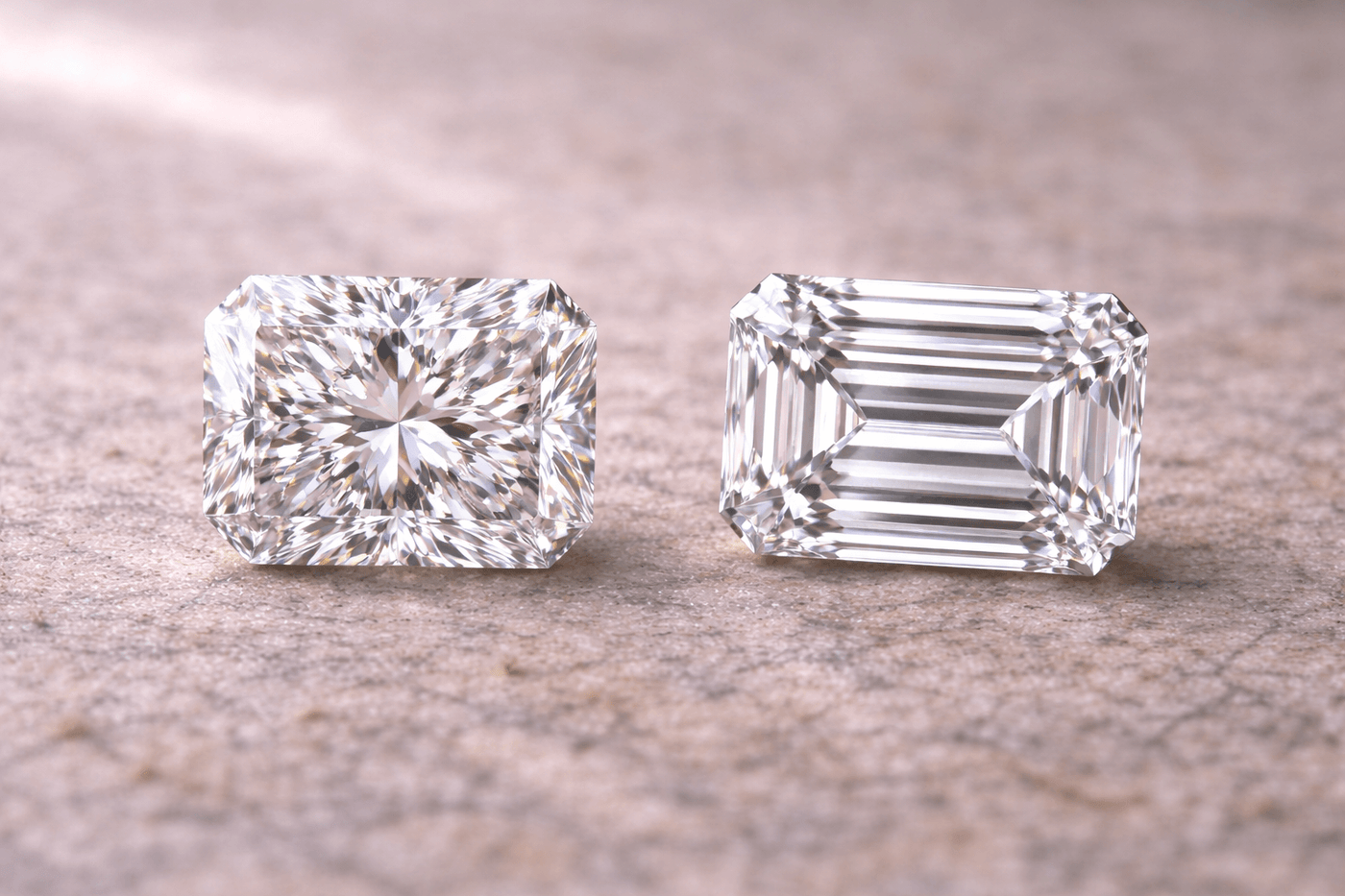
A radiant cut diamond blends elements of the brilliant and emerald cuts. Rectangular or square with trimmed corners, it carries roughly 70 brilliant-style facets—the same underlying pattern that gives round diamonds their signature fire. The GIA notes that this cut "exudes vibrant brilliance" (1), which explains the radiant's energetic, almost electric sparkle. Those clipped corners also reduce the risk of chipping, making radiant-cut stones well suited to everyday rings.
An emerald cut diamond, by contrast, features long, straight sides and cropped corners in a classic step-cut arrangement. Its broad, open facets produce the celebrated "hall of mirrors" effect—a play of depth and clarity rather than scattered sparkle (2). Light moves through an emerald cut in slow, wide flashes, lending the stone a composed, refined glow. Put simply: radiant cuts maximize fire, emerald cuts prioritize elegance and optical transparency.
Radiant Cut Diamond (Mixed Brilliant-Cut Style)

Appearance:
Square or rectangular with beveled corners, radiant cuts carry approximately 70 brilliant-style facets that create a lively, scintillating "crushed ice" texture across the face. They are often described as combining "the brilliance of a round cut with the clean lines of a square or rectangle" (2). The result is a shape that reads bold and modern in almost any setting.
Durability:
The trimmed corners protect the stone from chipping—a common vulnerability in shapes with sharp points, like princess or marquise cuts. Gemologists routinely recommend radiant cuts for everyday rings for exactly this reason (1). The beveled profile distributes impact more evenly across the girdle, reducing the chance of damage from an accidental knock.
Common Uses:
Radiant cuts are popular in diamond engagement rings, particularly halo and pavé settings that amplify their natural fire. They also work well in three-stone rings where the center stone needs presence without overwhelming the side stones.
Emerald Cut Diamond (Step-Cut Elegance)

Appearance:
Rectangular with parallel step-cut facets running along the edges, emerald cuts produce long, gliding flashes of light rather than the scattered brilliance of brilliant-cut diamonds. The look has deep ties to Art Deco design and prizes "clarity, symmetry, and quiet sophistication" (1). There is an openness to an emerald cut that invites the eye in rather than deflecting it with sparkle.
Durability:
A stable shape with fewer, larger facets makes emerald cuts inherently resilient. Gemologists classify them as structurally sound for everyday wear, provided the corners are protected with appropriate prong placement.
Common Uses:
Emerald cuts pair beautifully with clean, minimal settings—solitaires, east-west mounts, and bezel settings all complement the shape's geometry. The elongated silhouette creates the illusion of a longer, more slender finger (1), a quality many buyers find appealing. Browse our natural diamond rings for emerald and radiant options across a range of settings and price points.
How to Identify Quality in Radiant and Emerald Diamonds
Neither radiant nor emerald cuts receive an official cut grade from the GIA, so assessment requires a bit more care than with round brilliants. A laboratory certificate from GIA or IGI remains the starting point—it confirms color, clarity, carat weight, and overall quality, giving you an objective foundation for comparison.
For both cuts, examine symmetry and polish first. Well-aligned facets and smooth surfaces are reliable signs of skilled craftsmanship. A radiant's approximately 70 facets should produce consistent, even brilliance across the entire face. A poorly cut radiant may show dull patches or a pronounced bowtie shadow—a dark, bow-shaped zone running across the center—that significantly dulls its sparkle. Tilt the stone slowly in person to confirm that fire distributes evenly rather than pooling unevenly.
Emerald cuts demand particularly close attention to color and clarity. Their large, open facets function like windows—inclusions and color tint that would disappear inside a brilliant cut's facet structure become clearly visible here. Many gemologists advise selecting an emerald cut with at least VS2 clarity and a color grade of G or higher to ensure the stone looks clean and bright under everyday light conditions. For stones above 1.5 carats, moving up one clarity grade is often worth the added investment, since the larger table makes quality more visible.
The practical summary: always insist on a GIA or IGI certificate. For emerald cuts, prioritize color and clarity over all else. For radiants, assess facet evenness, overall brilliance, and visual balance before committing (1).
Buying Guide: How to Choose the Right Cut
Budget & Value: Fancy shapes like radiant and emerald typically cost less per carat than round brilliants, which command a premium because of demand and cutting waste. An emerald cut can save buyers "35–40%" compared to a round diamond with identical grades—or allow a meaningful size upgrade for the same budget (4). Radiant cuts often appear larger than squares of equal carat weight thanks to their elongated face-up area. Keep in mind that emeralds require higher clarity and color grades, which pushes the price back up; radiant cuts are more forgiving of minor inclusions, so some buyers redirect that budget toward carat weight.
Lifestyle & Style: Think about what daily life looks like for the ring's wearer. Beveled corners make the radiant cut especially durable—an active lifestyle that involves frequent hand use suits radiant better than most rectangular shapes. Its energetic sparkle reads beautifully in modern and evening settings. The emerald cut suits formal, vintage, and Art Deco aesthetics; its measured, gliding flashes offer composure over constant shimmer. The elongated form flatters longer fingers; square or slightly rectangular radiants look balanced on virtually any hand shape (1).
Occasion & Preference: Radiant works well for an engagement ring that commands attention—a cut for someone who enjoys the drama of a diamond. Emerald is the right choice for a partner who gravitates toward classic, understated elegance or a vintage sensibility. Consider the setting and side stones as well: emerald cuts pair naturally with tapered baguettes or channel-set rectangles given their step-cut geometry, while radiants look striking as solitaires, inside a halo, or flanked by rounds.
Care, Cleaning & Maintenance

Diamonds are the hardest natural material, but the oils, lotions, and residue of daily life gradually reduce their brilliance by coating the facets. A simple weekly routine keeps both radiant and emerald cuts looking their best: soak the ring in warm water with a few drops of mild dish soap or an ammonia-based jewelry cleaner, then gently scrub with a soft toothbrush (5). Work carefully around the underside of the stone, where grime and product residue collect most readily, and take care not to snag prongs with the bristles.
Rinse the piece thoroughly under warm running water and dry with a lint-free cloth. Bleach and abrasive cleaners damage metal settings and weaken prongs over time—avoid both entirely (5). Professional ultrasonic and steam cleaning are safe for both radiant and emerald cuts; having a jeweler perform this annually also provides an opportunity to inspect prongs and confirm the setting is secure. Loose prongs are the leading cause of lost stones—routine checks prevent that outcome.
Common Myths & Misconceptions
-
Myth: Emerald cut diamonds are only for emerald gemstones.
Fact: "Emerald cut" describes a cutting style, not a stone type. The technique developed as a way to reduce chipping during the shaping of actual emeralds (1), then was adopted for diamonds because of the elegant geometry it produces. Applied to a diamond, the name simply refers to the rectangular step-cut facet pattern. New buyers sometimes find the terminology confusing, but the emerald cut is one of the most classic choices in fine diamond jewelry. -
Myth: Step cuts like emeralds are fragile and reveal every flaw.
Fact: Emerald cuts do make inclusions easier to spot, but they are structurally sound. Gemologists describe the emerald cut as "highly durable" because of its "stable shape" and fewer delicate facets (2). The reputation for fragility comes from confusion with sharp-cornered shapes. Radiant cuts, with their many small facets, mask inclusions more effectively—but both shapes hold up well when set with correct prong coverage at the corners.
Pros & Cons of Radiant vs Emerald
The table below summarizes the key trade-offs between radiant and emerald cuts. (Source: GIA.org)
Aspect |
Radiant Cut Diamond |
Emerald Cut Diamond |
Pros |
High brilliance and fire from ~70 facets. Trimmed corners resist chipping effectively. Often less expensive per carat than round while delivering more sparkle. |
Elegant, elongating silhouette with refined "hall of mirrors" effect. Highly durable step-cut construction. Vintage appeal; tends to appear larger face-up for the carat weight. |
Cons |
More facets can reveal body color (though inclusions still hide better than in step cuts). Square form may look smaller per carat if not elongated. |
Lower overall brilliance; less fire and scattered sparkle. Shows inclusions and color readily—higher clarity and color grades are usually necessary. Its composed aesthetic suits specific tastes rather than universal appeal. |
Trends & Modern Market Demand
Long, rectangular diamond shapes have gained significant ground over the past several years. Industry data and consumer research both point to rising demand for radiant and emerald cuts, with the radiant now ranking as "one of the most popular rectangular diamond engagement ring options" alongside the emerald (1). This reflects a broader shift away from traditional round diamonds—many retailers now report that emerald, radiant, and oval shapes together account for a growing share of bridal sales (6).
Celebrities and editorial fashion have accelerated the trend. Emerald cuts appear regularly in magazine spreads for their architectural proportions and composed elegance; bridal trend reports confirm renewed enthusiasm for the shape among couples who want something more understated than a round solitaire. Radiant cuts attract buyers who want modern fire in a non-round silhouette. Both shapes have moved from niche to mainstream without losing the sense of intentionality that made them appealing. Our colored diamond collection also features radiant and emerald cuts in fancy hues for those drawn to something truly distinctive (6).
Investment & Resale Value
No diamond shape guarantees investment returns, but both radiant and emerald cuts carry qualities that support lasting appeal. The emerald cut has long attracted buyers who prize classic design and optical clarity (2). The radiant, introduced in the 1970s, marries modern brilliance with a clean geometric outline—a combination that has kept it relevant across decades rather than cycling in and out of fashion.
Round brilliants typically command the highest resale prices, but high-quality emerald and radiant diamonds hold their value well in the secondary market. A certified emerald cut with strong clarity—or an eye-clean radiant with even facet distribution—carries more appeal to future buyers than a lesser stone of the same shape. Both cuts tend to outperform trend-driven or novelty shapes over time because their aesthetics are rooted in tradition rather than a particular moment (2).
Who Should Buy Radiant vs Emerald?

Radiant Cut: The right choice for someone who wants a modern, high-energy ring. Seventy facets deliver maximum fire, beveled corners provide durability, and the shape works on virtually any finger or hand proportion. Radiants suit contemporary settings—solitaire, halo, pavé—and hold up well to the demands of an active life. The cut reads confidently without veering into excess. Choose radiant if bold sparkle, everyday resilience, and a contemporary silhouette are what matter most (1). Explore our full range of diamond rings to see radiants across a variety of settings and scales.
Emerald Cut: A natural fit for someone who gravitates toward understated luxury. The emerald cut's clean lines and broad facets create an air of quiet confidence that suits Art Deco, minimalist, and heirloom-inspired aesthetics equally well. Its stepped geometry flatters slender fingers and pairs exquisitely with tapered baguette side stones or a simple bezel mount. Buyers who invest in higher clarity will find the emerald rewards it in a way brilliant cuts simply cannot—there is nowhere for a beautiful VS1 stone to hide in an emerald cut, and that transparency is itself part of the appeal (1).
Frequently Asked Questions – Radiant vs Emerald Cut Diamonds FAQ
Q: What is the main difference between a radiant cut and an emerald cut diamond? Radiant cuts use brilliant-style facets—roughly 70 in total—to scatter light into intense fire and sparkle, all within a rectangular outline with clipped corners (2). Emerald cuts use parallel step-cut facets to produce slow, wide flashes of light that emphasize depth and clarity over brilliance. The visual difference is substantial and immediately apparent in person.
Q: Which cut is more durable and practical for everyday wear?
Both hold up well in the right setting. Radiant cuts resist chipping effectively thanks to their trimmed corners (1). Emerald cuts are described as "highly durable" by gemologists because of their stable form and simpler facet structure (2). Provided each is set with proper corner prongs, neither cut is fragile—though the radiant's beveled edges give it a marginal advantage for particularly demanding daily use.
Q: Which cut shows diamond imperfections more?
The emerald cut's large open table makes inclusions and body color noticeably more visible; VS2 clarity or better is strongly advisable. A radiant cut's many small facets scatter light and interrupt clear viewing paths through the stone, masking minor inclusions effectively (1).
Q: Which cut best flatters long or short fingers?
The emerald cut creates an impression of "longer, more slender" fingers, especially when set traditionally on longer hands. A rectangular radiant with a length-to-width ratio of 1.20 or above produces a comparable slimming effect; square radiants around 1.00 look more compact and proportional (1).
Q: Do radiant and emerald cuts require different diamond grades?
Yes. Emerald cuts require higher clarity and color—VS1 or better, with F or G color for larger stones—because any tint or inclusion reads clearly through those wide, open facets. Radiant cuts can tolerate one grade lower in clarity (VS2 is typically eye-clean) without the difference being visible. For an emerald cut, always prioritize grade quality within your budget (1).
Q: What are the origins of the radiant and emerald cuts?
The emerald cut traces back centuries as a technique developed to reduce chipping during gem shaping. Its proportions were later adopted for diamonds because the step-cut structure highlighted clarity and elegance rather than raw sparkle. The radiant cut is much more recent: cutter Henry Grossbard introduced it in the 1970s as a "cut-cornered modified brilliant" that brought brilliant-cut fire to a traditionally step-cut rectangular format. The emerald belongs to vintage tradition; the radiant is a modern invention born from a desire to have both shape and sparkle (1).
Expert Jeweler Tips
-
Inspect Corners and Bowties: For radiant cuts, verify that all corners are trimmed evenly—uneven truncation distorts the shape's proportions and affects how light exits the stone. Scan the face for a bowtie shadow. A well-cut radiant glows consistently across the entire table with only the faintest bow-tie at most; a strong bowtie suggests a shallow or poorly proportioned cut (3).
-
Prioritize Clarity for Emerald Cuts: Emerald facets act as mirrors—minor inclusions that would disappear inside a brilliant cut are clearly visible here. Stay within the colorless range (D–H) and choose VS1 clarity or better. A halo or channel-set side stones can add perceived sparkle around the center stone without raising its grade requirement.
-
Stretch Your Budget with Step Cuts: Emerald cuts typically run 35–40% less than rounds with comparable specifications, giving buyers room to step up in carat or quality. Radiant cuts also deliver more apparent size per carat than many square shapes. For radiant cuts, a length-to-width ratio of 1.15–1.35 delivers the characteristic elongated look; for emerald cuts, 1.30–1.40 is the classic rectangular proportion (4).
Closing Thoughts
Radiant and emerald cuts each embody a distinct vision of luxury. Radiants are bold and resilient—bright, fire-forward diamonds whose beveled corners suit an active life as naturally as a formal occasion. Emerald cuts lean the other direction: long, serene step-facets create a play of light and shadow that feels quietly sophisticated, rooted in Art Deco proportion and classic craft.
There is no universal "better" choice. The right cut is the one that resonates with you—shaped by your budget, how you wear jewelry, and what you want to feel every time you glance at your hand. A properly certified stone, chosen with clear priorities, will reward that attention for years to come.
Ready to explore? Browse our classic diamond rings, or visit our natural diamond rings collection to compare radiant and emerald cuts side by side.
Brilliance or refinement? Why not both.
View Diamond and Sapphire's radiant and emerald cut diamonds to find your perfect match.
Read more
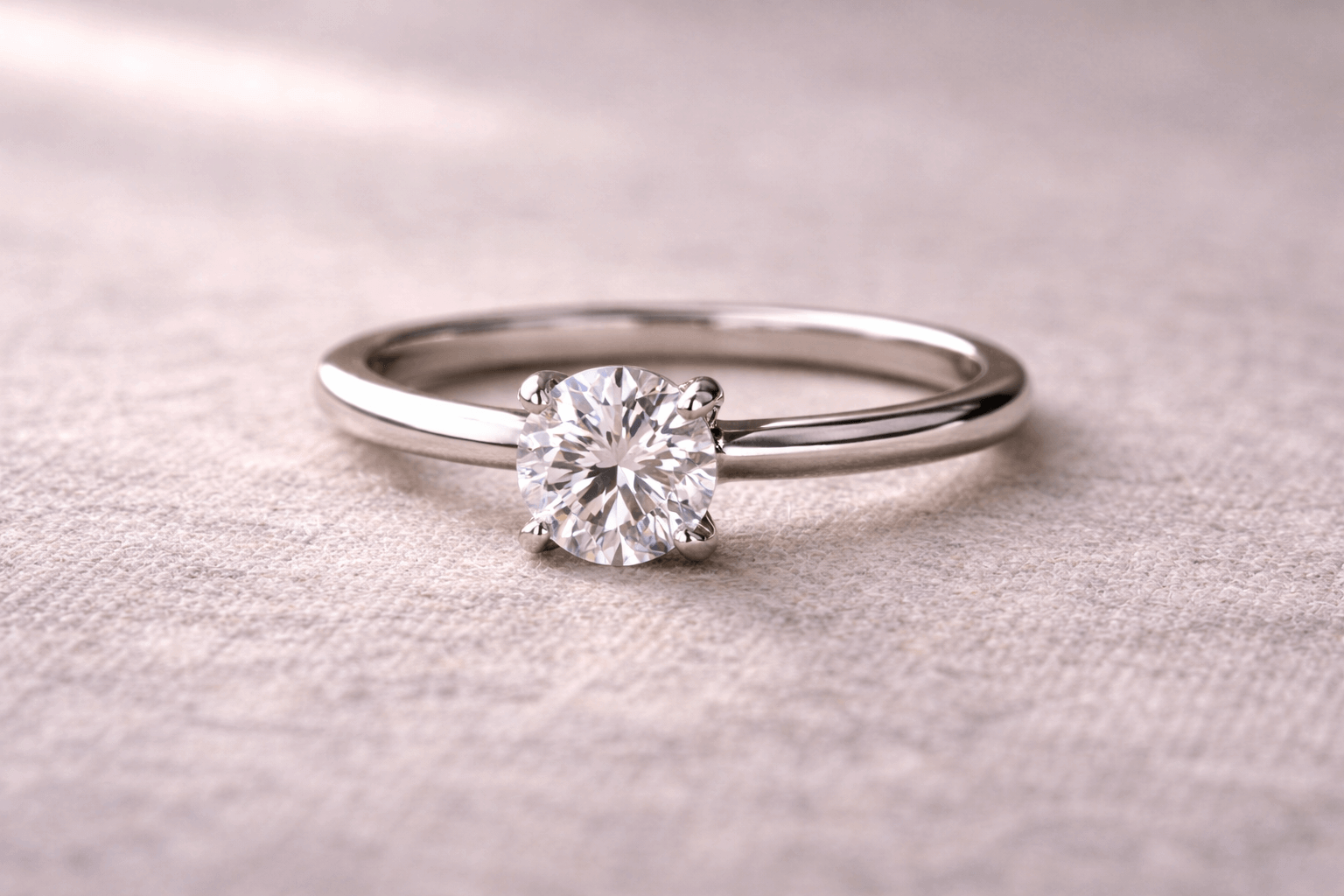
The shank (band) goes around the finger, the head (setting) holds the center gem, and the prongs or bezel hold the stone in place. A lot of rings also have extra features like a halo or side stones...
Read moreThe shank (band) goes around the finger, the head (setting) holds the center gem, and the prongs or bezel hold the stone in place. A lot of rings also have extra features like a halo or side stones...
Read more