
Cubic Zirconia vs Lab Diamonds
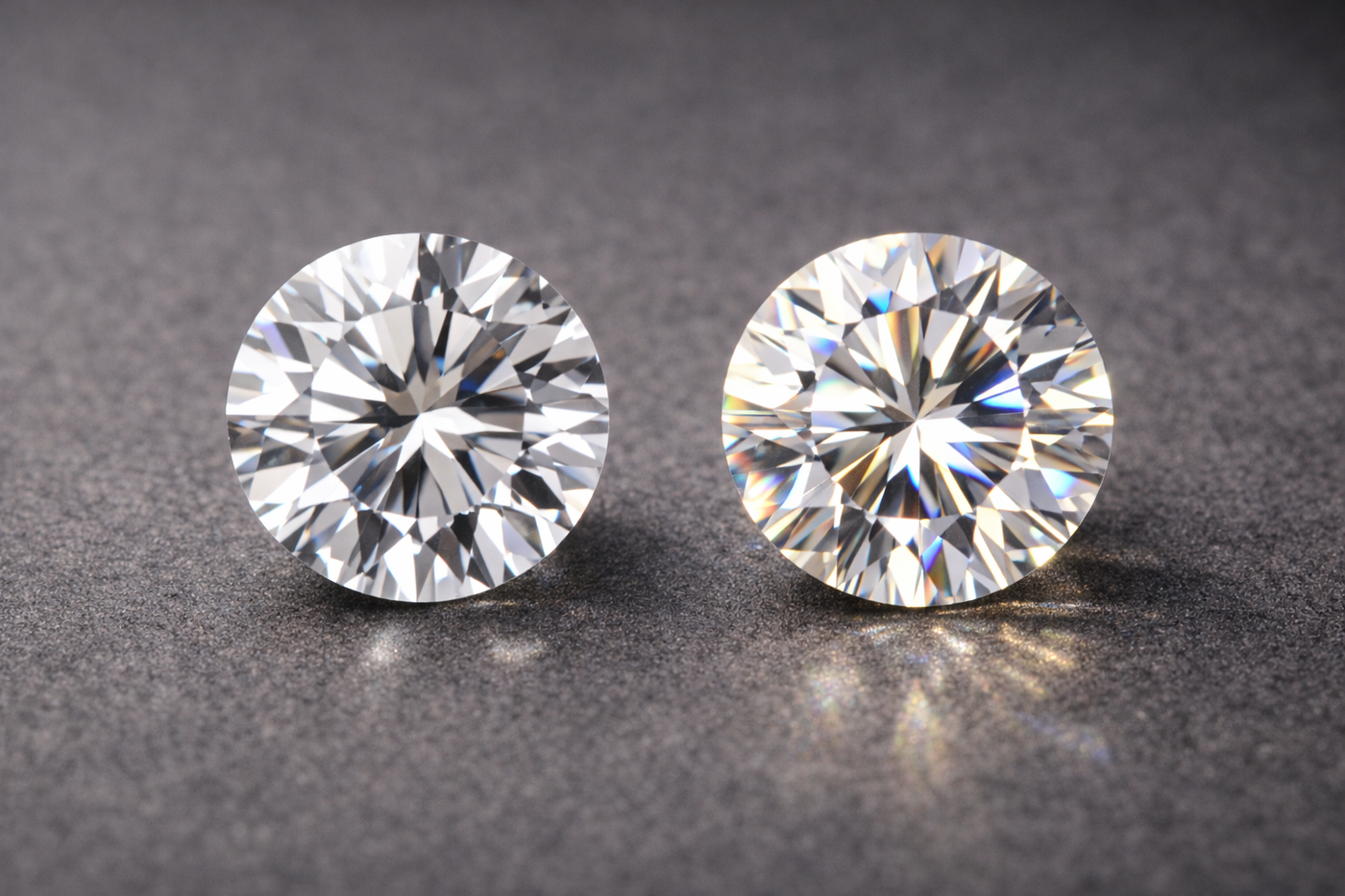
Shiny stones have held human attention for centuries, but today's shopper faces a broader set of choices than any previous generation. Cubic zirconia and lab-grown diamonds are two of the most common alternatives to mined diamonds. They may look similar in a display case, yet they differ fundamentally in composition, durability, worth, and meaning. The rapid rise of lab-grown diamonds and the continued presence of CZ reflect how tastes and budgets in the jewelry market keep shifting. A clear grasp of what separates these stones helps you choose one that aligns with your values and the way you actually live. This guide covers how each material is made, how to assess quality, and the practical trade-offs — so you can settle on the right stone for your collection (1).
What Is Cubic Zirconia and Lab Diamond?

Cubic Zirconia
Cubic zirconia (CZ) is a man-made crystal composed primarily of zirconium dioxide (ZrO₂), stabilized with small amounts of calcium oxide, magnesium oxide, or yttrium oxide. These stabilizers hold the zirconia in its cubic crystal form at room temperature, allowing the growth of large, clear crystals (3). The mineral form, baddeleyite, was identified in 1937; gem-quality synthetic CZ became commercially available in the late 1970s through a skull-melting technique that heats powdered zirconia to very high temperatures then cools it slowly to produce facetable crystals (3). CZ quickly became the most common diamond simulant — colorless, inexpensive to manufacture, and still widely used today (3).
Lab‑Grown Diamond
Lab-grown diamonds, also called synthetic or cultured diamonds, are genuine diamonds grown in a controlled laboratory environment. Unlike CZ, lab diamonds are composed of the same tightly bonded carbon atoms as natural diamonds, and only advanced gemological instruments capable of detecting atomic-scale defects can reliably distinguish them from mined stones (2). The two primary production methods — High Pressure High Temperature (HPHT) and Chemical Vapor Deposition (CVD) — both replicate the extreme conditions under which natural diamonds form, producing crystals with identical optical, physical, and chemical properties to their mined counterparts (3).
Types / Variations of Cubic Zirconia and Lab Diamonds

Cubic Zirconia Varieties
Appearance: CZ is most often cut as a brilliant or step-cut gem and can be shaped to mimic many diamond silhouettes. Its refractive index of approximately 2.15–2.18 and dispersion of 0.058–0.066 — slightly higher than diamond — produce vivid color flashes, though the overall visual effect has a glassy quality rather than the crisp sparkle characteristic of diamond (3).
Composition: CZ is synthetic zirconium dioxide stabilized with oxides like calcium or yttrium. Doping the material with metallic oxides produces colored varieties that mimic pink, blue, or yellow diamonds and other gemstones (3).
Durability: At approximately 8.5 on the Mohs scale, CZ is hard but measurably softer than diamond (10) or even moissanite. Over time it scratches and wears down, dulling the polish and giving the stone a cloudy appearance (1).
Common Uses: CZ is a low-cost substitute for gold and silver in rings, earrings, and fashion pieces. Its affordability makes it popular for costume jewelry, travel rings used in place of valuable diamonds on vacation, and temporary engagement rings. Because it typically shows wear within a few years, it is rarely used for heirloom-quality pieces (1).
HPHT Lab Diamonds
Appearance: HPHT diamonds develop both cubic and octahedral crystal faces. When faceted, they display the same brilliance, fire, and scintillation as mined diamonds, sharing the same refractive index (2.42) and dispersion (0.044). They are visually indistinguishable from natural diamonds (3).
Composition: The HPHT process places high-purity carbon and a molten metal flux — typically iron, nickel, or cobalt — inside a press that applies more than 870,000 psi at temperatures between 1,300 and 1,600 °C. The carbon dissolves in the metal, then crystallizes on a diamond seed over days or weeks, producing genuine carbon diamonds (3).
Durability: As real diamonds, HPHT stones rank 10 on the Mohs scale — the hardest natural material known. They resist scratching and hold their finish for generations, making them suitable for lifelong daily wear (2).
Common Uses: HPHT diamonds appear in high-end jewelry including diamond engagement rings and fine watches. Their hardness and thermal conductivity also support industrial uses in cutting tools and semiconductor heat sinks (4).
CVD Lab Diamonds
Appearance: CVD diamonds grow as flat, layered crystals. Once polished, they share natural diamond's optical properties — brilliance and fire — though some crystals develop a brown tint during growth that is removed by post-growth HPHT annealing (3).
Composition: In the CVD process, diamond seed plates are placed in a vacuum chamber filled with a carbon-containing gas (typically methane) at near-atmospheric pressure. Microwave energy or other sources break the gas into carbon radicals that deposit on the seeds atom by atom over several weeks, building up a diamond layer (3).
Durability: CVD diamonds match HPHT and natural diamonds in hardness and toughness, making them well-suited for everyday wear (2).
Common Uses: CVD diamonds are preferred in jewelry for their ability to grow large, high-clarity crystals with fewer metallic inclusions than HPHT. Their purity also makes them useful in optical windows, electronics, and scientific instruments (3).
How to Identify Quality in Cubic Zirconia vs Lab Diamonds
Knowing what to evaluate in each material ensures you get what you're paying for. Cubic zirconia lacks a standardized grading system. Some retailers assign marketing grades like AAAAA, but these have no scientific basis, and most CZ stones are produced to fairly consistent quality levels (1). When assessing CZ, focus on cut quality, symmetry, and polish clarity.
Reputable labs including GIA and IGI grade lab-grown diamonds by the same 4Cs used for natural stones: cut, color, clarity, and carat weight. GIA reports for lab diamonds carry a laser engraving on the girdle with the report number and the phrase "LABORATORY-GROWN" to ensure full transparency (2). Because lab diamonds are indistinguishable from natural diamonds to the naked eye, a professional certificate is essential to confirm their value and origin (5).
Buying Guide: How to Choose the Right Stone

Budget: If price is the primary consideration, CZ has a decisive advantage. A 2-carat CZ costs approximately $30, while a 2-carat natural diamond costs roughly $15,000 and a lab-grown diamond comes in around $2,620 (1). The gap widens at higher carat weights. Lab diamonds carry a higher price than CZ but typically run 50–70% below natural diamond prices — a 3-carat lab diamond costs approximately $10,000 versus roughly $40,000 for a mined equivalent (7).
Lifestyle: Consider how often you'll wear the piece. CZ dulls and scratches with daily use, making it best suited for occasional or travel wear. Lab diamonds are real diamonds — they maintain their brilliance for decades and handle daily wear without issue (1). For a ring worn every day, a lab-grown diamond is the practical choice.
Occasion: CZ suits temporary engagement rings, prom jewelry, or situations where losing a costly stone would be a concern. Lab diamonds make sense for engagement rings, wedding bands, and milestone gifts — pieces that carry lasting sentimental and material value (1).
Skin Sensitivity: Both CZ and lab diamonds are hypoallergenic, but metal settings can cause reactions. Nickel in some white gold alloys triggers allergies, so those who wear rings constantly may want to consider hypoallergenic metals like platinum or palladium (3).
Long‑Term Value: CZ has negligible resale value — its appeal is the look, not the long-term return. Lab-grown diamonds hold more value than CZ because they are genuine diamonds with verifiable 4Cs, though industry observers note that retail prices are declining as supply increases (6). Natural or lab diamonds are the better choice if resale or inheritance matters to you.
Care, Cleaning & Maintenance

Regular cleaning keeps both CZ and lab diamond pieces looking their best. Soak the jewelry in warm water with a few drops of mild dish soap, then gently scrub with a soft toothbrush around prongs and facets. Rinse well and dry with a lint-free cloth. Ultrasonic cleaners work well for lab diamonds but can loosen CZ stones in settings that have already experienced some wear, so hand-cleaning is safer for CZ pieces. Avoid abrasive compounds and harsh chemicals such as chlorine bleach, which can degrade metal settings. CZ benefits from more frequent cleaning — even once every few days for pieces worn daily — since skin oils accumulate faster on its surface and accelerate cloudiness. Store pieces individually in padded compartments or soft pouches to prevent contact scratches, and keep lab diamond and CZ jewelry separated to avoid the harder diamond inadvertently scratching the CZ. Have prongs and settings checked periodically — lab diamond settings should hold the stone securely to prevent loss, and CZ settings can loosen with extended wear.
Common Myths & Misconceptions
A common myth holds that lab-grown diamonds are the same as cubic zirconia. They are not. Lab diamonds have the same atomic structure as mined diamonds; only advanced instruments can tell them apart from natural stones (2). CZ is an entirely different material. Another belief is that CZ will last indefinitely. At 8.5 on the Mohs scale, CZ scratches readily, absorbs oils, and can yellow with time — its brilliance fades after a few years of regular wear (1). Some people also assume lab diamonds are fake or inferior to natural diamonds. IGI confirms that lab diamonds share the same physical, chemical, and optical properties as mined diamonds — a fundamentally different proposition from CZ (5). Finally, the idea that all diamond simulants are more eco-friendly than real diamonds oversimplifies the picture. Lab diamonds avoid mining, but both HPHT and CVD are energy-intensive processes. Any environmental claim is only as strong as the energy source behind it.
Pros & Cons of Cubic Zirconia and Lab Diamonds
Attribute |
Cubic Zirconia |
Lab‑Grown Diamond |
Composition |
Zirconium dioxide stabilized with oxides |
Pure carbon grown by HPHT or CVD |
Hardness |
8.5 on Mohs scale; susceptible to scratching |
10 on Mohs scale; extremely hard |
Brilliance & Fire |
More dispersion (fire) but less brilliance, glassier luster |
Identical brilliance and fire to natural diamond |
Cost |
~$30–$50 for 2–3 ct stone |
50–70% less than natural diamond; ~$10,000 for 3-ct |
Durability |
Prone to scratches and clouding; lifespan a few years |
Permanent; withstands daily wear for generations |
Resale Value |
Minimal; considered costume jewelry |
Some resale value; declining but more than CZ |
Grading & Certification |
No standardized grading; marketing grades only |
Certified by GIA/IGI with laser inscription |
Best Use |
Budget/travel/temporary rings |
Engagement rings, heirloom jewelry, high-tech uses |
Trends & Modern Market Demand
The lab-grown diamond market is expanding quickly. According to National Jeweler, lab diamonds accounted for 14% of the U.S. jewelry market in 2024 — strong consumer demand even as retail prices fell (6). High retailer margins of approximately 70% suggest prices may compress further as competition intensifies (6). Cubic zirconia, by contrast, has held steady as an inexpensive alternative without developing the cachet or value retention of lab diamonds. Forbes reports that budget-conscious couples increasingly turn to lab-grown diamonds over simulants like CZ — drawn by the combination of authentic diamond properties at 50–70% below mined diamond prices (7). As lab technology advances and awareness grows, lab diamonds are solidifying their place as the responsible, affordable choice for fine jewelry. CZ remains confined to costume and temporary use (6). Browse our full ring collection to see how these materials translate into finished pieces.
Investment & Resale Value
Cubic zirconia carries almost no investment value; its worth is purely visual, not a function of rarity (6). CZ costs little to produce and depreciates immediately. Lab-grown diamonds hold more value than CZ because they are genuine stones backed by verifiable 4Cs, but industry experts caution that rising supply and improving production technology are pushing prices down — lab diamonds may lose value faster than natural diamonds over time (6). Natural diamonds remain the strongest long-term investment. For buyers who want both durability and some resale upside, a lab diamond is a better choice than CZ (6).
Who Should Buy Cubic Zirconia or Lab Diamonds?
Cubic zirconia suits buyers on very tight budgets, those who need a travel or costume ring, or anyone who wants the visual impact of a large stone without the cost. It is not suited to daily wear or heirloom pieces, since it shows signs of use relatively quickly (1).
Lab-grown diamonds are the right fit for buyers who want genuine diamond hardness, brilliance, and durability with a lower price tag and a reduced environmental footprint compared to mined stones. They hold up to daily wear over a lifetime and suit engagement rings, weddings, and fine jewelry well. Shoppers who prioritize ethical sourcing find lab diamonds a natural fit, and the GIA or IGI certificate that accompanies each stone gives them the same confidence a mined diamond report would. For those who want to maximize value while staying in the true diamond category, it is difficult to find a more practical solution at today's lab diamond prices.
Frequently Asked Questions (FAQ)
1. Are lab diamonds real diamonds? Yes. Lab diamonds are composed of pure carbon and share the same physical, chemical, and optical properties as natural diamonds. GIA confirms that only advanced instruments can distinguish them from mined diamonds (2).
2. How is cubic zirconia made? CZ is produced by melting powdered zirconium oxide with stabilizers such as calcium or yttrium oxide in a skull-melting furnace, then cooling the mixture slowly to grow clear cubic crystals (3).
3. Does cubic zirconia last as long as a diamond? No. CZ ranks approximately 8.5 on the Mohs scale and scratches easily, causing it to cloud and lose brilliance within a few years of wear (1).
4. Do lab diamonds require certification? Yes. Lab-grown diamonds should be accompanied by grading reports from GIA or IGI, which include a laser inscription identifying them as laboratory-grown (2).
5. Can you tell the difference between lab diamonds and cubic zirconia with the naked eye? Generally, yes. CZ tends to show more rainbow fire and a glassy appearance, while lab diamonds display the same crisp brilliance and scintillation as natural diamonds (3). Professionals use thermal or electrical conductivity tests to confirm.
6. Are lab‑grown diamonds eco‑friendly? They avoid the environmental impacts of mining, but HPHT and CVD both require significant energy. The overall ecological footprint depends directly on the energy source used in production.
Jewelry Tips from Experts
-
Match expectations to lifespan. Choose CZ for short-term wear or oversized statement pieces. Expect replacement within a few years as it scratches and loses brilliance (1). Choose lab diamonds for pieces you intend to keep.
-
Demand proper certification. When purchasing lab diamonds, obtain a GIA or IGI grading report and verify the laser inscription. Certification protects authenticity and supports resale value (2).
-
Prioritize cut and setting. A well-cut CZ or lab diamond maximizes light return and minimizes visible flaws. For CZ, look for symmetry and a high polish; for lab diamonds, cut grade and prong integrity take precedence (1).
-
Consider metal allergies. Nickel in some white gold settings can irritate sensitive skin. Platinum or palladium avoids this problem entirely (3).
-
Maintain consistently. Clean both stone types regularly with mild soap and water; avoid harsh chemicals and abrasives. Professional cleaning helps lab diamonds maintain peak sparkle; proper storage extends the presentable life of CZ (3).
Conclusion
Cubic zirconia and lab-grown diamonds fill different roles in the jewelry market. CZ delivers visual sparkle at a low price point — a reasonable trade-off for temporary or statement pieces, though its lower hardness means visible wear within a few years and negligible resale value. Lab diamonds produced by HPHT or CVD share natural diamond's atomic structure exactly, offering identical beauty and durability at a fraction of mined diamond prices. As sustainability and value continue to drive purchasing decisions, lab diamonds are steadily claiming more of the fine jewelry market. CZ remains a practical, low-cost option for the right context. Understanding the science, quality indicators, and market dynamics behind each material puts you in a position to choose the stone that genuinely fits your style, values, and budget. If long-term wearability matters, a lab-grown diamond set in a quality metal will outlast CZ by decades and remain as beautiful as the day you bought it. View our curated selection of natural diamond rings and lab-grown options to find where your next piece begins.
Ready to find the right stone? Explore our carefully curated selection and speak with our team for guidance on the piece that suits you best.
When clarity, value, and ethics align.
View Diamond and Sapphire's lab diamond designs — luxury without compromise.
Read more
Do Lab Grown Diamonds Pass a Diamond Tester?
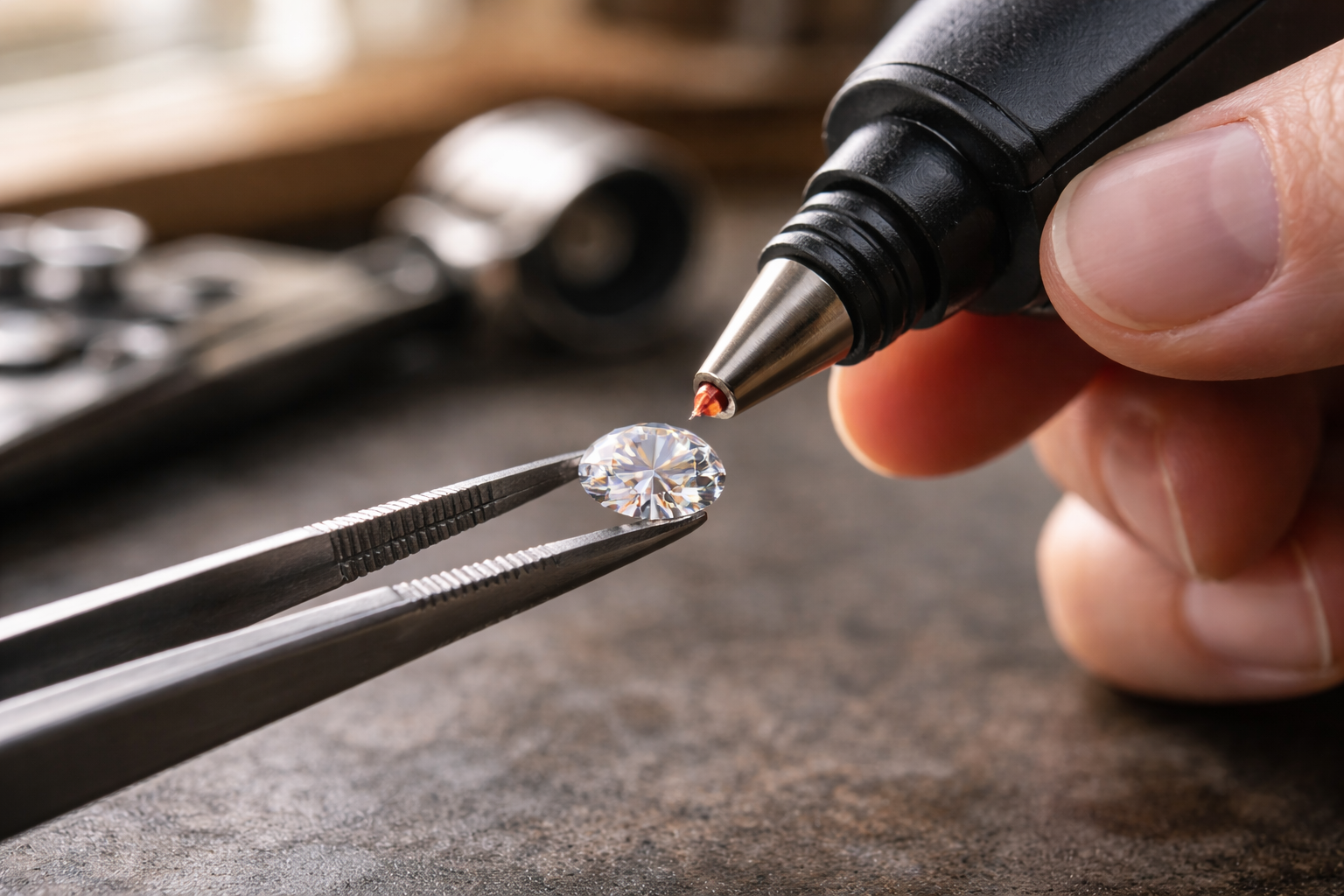
Lab-grown diamonds have the same hardness, thermal conductivity, and optical properties as diamonds mined from the earth. This means that simple thermal or electrical testers will identify them as ...
Read moreDo Lab Grown Diamonds Pass a Diamond Tester?
Lab-grown diamonds have the same hardness, thermal conductivity, and optical properties as diamonds mined from the earth. This means that simple thermal or electrical testers will identify them as ...
Read more