
What are colored diamonds?
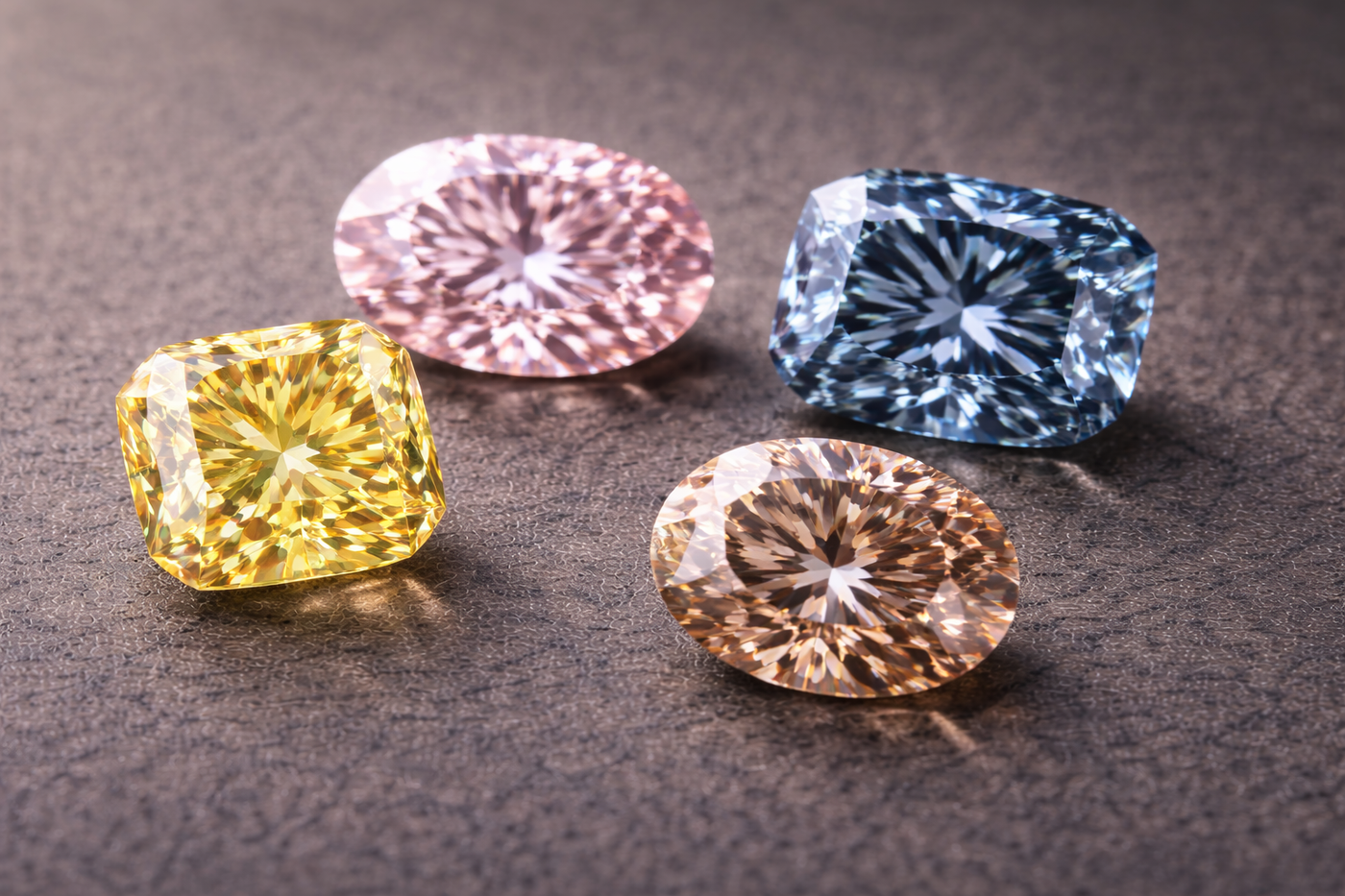

Collectors and connoisseurs have long been drawn to gems that move beyond colorless perfection—stones that arrive in sunshine yellow, ocean blue, or blush pink. Fancy color diamonds occupy a singular position: their saturated hues trace the geological forces that shaped them, and the cultures that have prized them for centuries. From the legendary Hope Diamond to today's auction headlines, these rare stones carry emotional weight, cultural significance, and genuine scarcity. This guide covers how color forms in diamonds, how stones are graded and cut, which varieties exist, what to look for when buying, how to keep a colored diamond in excellent condition, and why these gems can represent both a personal treasure and a sound long-term asset (1).
What Is a Colored Diamond?
Standard diamonds are graded on a scale running from D (perfectly colorless) to Z (light yellow or brown). Any stone whose color falls outside that range earns the designation fancy color diamond. Rich pinks, vivid blues, and deep greens rank among the rarest—and most valuable—of all. Even subtle shifts in color intensity can swing a price dramatically, sometimes by multiples rather than percentages (2).
Natural fancy colors arise from specific conditions within the diamond's crystal structure. Nitrogen produces yellow; boron produces blue; natural radiation yields green; extreme pressure on the lattice produces pink and red (1). GIA grades these stones by evaluating hue, tone, and saturation, assigning descriptors such as Faint, Fancy Light, Fancy Vivid, Fancy Dark, or Fancy Deep (2).
Fancy color stones represent only a tiny fraction of all diamonds mined. Gem curator Gabriela Farfan of the Smithsonian notes that just one in 10,000 diamonds carries enough natural color to qualify as a natural color diamond (1). That scarcity is a key driver of their enduring appeal—and one reason seasoned collectors treat them as a distinct category from the broader diamond market.
Origins of Color
Every fancy diamond carries a story that began miles beneath the Earth's surface. Nitrogen atoms embedded in the carbon lattice give yellow diamonds their warm glow. Specific arrangements of those atoms push the color past the Z threshold and into a Fancy grade, ranging from Fancy Light to Fancy Vivid (1).
Blue diamonds owe their color to boron. Remarkably, a single boron atom among millions of carbon atoms is enough to produce a clearly visible blue hue (1). Green diamonds form differently—natural radiation displaces carbon atoms in the crystal structure, creating voids that absorb red and yellow light so green wavelengths dominate (1).
Pink and red diamonds form through plastic deformation: extreme heat and pressure physically distort the crystal lattice, altering how light passes through the stone and producing those characteristic warm hues (1). Brown diamonds arise through analogous structural changes—distinct atomic configurations that yield champagne or cognac tones. Black diamonds appear opaque due to dense concentrations of inclusions, though some undergo treatment to achieve a uniform color (2).
Understanding these origins helps clarify why certain fancy diamonds command such extraordinary prices—and why no two stones of the same color are ever truly identical.
Types of Colored Diamonds

Fancy color diamonds span the full spectrum, each variety defined by a distinct combination of appearance, chemistry, durability, and typical use. Below is a closer look at the key color categories, from the most accessible to the extraordinarily rare.
Yellow Diamonds

Yellow diamonds range from light pastel to deep gold. Nitrogen impurities drive their color by absorbing blue light and allowing yellow wavelengths to dominate (1). Graded from Fancy Light to Fancy Vivid, these Type Ia stones are the hardest natural material on earth (Mohs 10) and hold up well for daily wear. Radiant cuts tend to intensify their color most effectively. Yellow is the second most popular fancy color, making stones relatively accessible—and a practical choice for engagement rings and fashion jewelry alike. A Fancy Vivid Yellow can command significant premiums over a Fancy Light of the same carat weight, so intensity grade matters considerably when comparing prices (2).
Blue Diamonds

Blue diamonds rank among the rarest found in nature. Higher boron concentrations produce deeper blues; most fall into the Type IIb category and often carry grayish secondary modifiers. The Hope Diamond is the most celebrated example. Blues are not as saturated as sapphires, yet their combination of rarity and diamond hardness makes them exceptionally sought after. Explore our blue diamond rings to see how they translate into fine jewelry. Stones with deep, even color command stratospheric prices—especially in larger carat weights, where they become extraordinarily difficult to source (2).
Pink and Red Diamonds


Pink and red diamonds are extraordinarily rare. GIA research confirms that 99.5% of pink diamonds derive their color from crystal structure distortions—not trace elements (2). These plastic-deformation bands absorb light around 550 nm, creating the characteristic pink tone. Red diamonds are rarer still: over a thirty-year period, GIA issued no report in which "red" stood as the sole descriptive term (3). Most pink and red stones are small and show lamellae (internal graining) under magnification (2). Hardness is identical to other diamonds, though improper cutting can cause fracturing along internal stress planes. Vivid examples consistently set auction records, and the closure of the Argyle mine has made new supply even scarcer (3).
Green Diamonds

Natural green diamonds acquire their color through radiation—either from proximity to radioactive rock formations deep underground, or from controlled laboratory exposure. Because the color typically penetrates only the surface layer, cutters deliberately preserve a section of natural "skin" around the girdle to retain the hue (2). Fully saturated natural greens are uncommon, and advanced lab testing is required to confirm whether a stone's color is truly natural or the result of treatment. Collectors prize examples with uniform color distribution, since radiation rarely affects the stone evenly. Their scarcity limits their presence in fine jewelry collections, making each confirmed natural green an object of genuine fascination for serious collectors.
Brown Diamonds

Brown diamonds are the most prevalent of all fancy colors, running from champagne to deep cognac. Structural imperfections—plastic deformation and lattice distortions formed during crystal growth—produce their warm tones. Long classified as industrial grade, brown diamonds gained mainstream appreciation in the 1980s through Australian producer marketing campaigns (2). Secondary hues of yellow, orange, or pink are common. Durability matches any other diamond, and their availability keeps prices relatively accessible, making them a popular choice for contemporary natural diamond jewelry with a warm, organic aesthetic.
Black Diamonds

Black diamonds appear opaque due to dense concentrations of dark inclusions—graphite, hematite, or similar minerals. Some stones undergo irradiation or high-temperature annealing to achieve a uniform black color throughout the stone. Surface hardness equals that of any diamond, but heavy inclusions can make them more brittle. Black diamond jewelry often features pavé settings paired with colorless stones for striking graphic contrast (2). Their accessible price point draws buyers who appreciate a bold, modern aesthetic without the premium attached to rarer fancy colors.
White and Gray Diamonds


Fancy white diamonds have a milky, opalescent appearance created by microscopic particles that scatter light and produce a soft inner glow. Gray diamonds take their color from elevated hydrogen concentrations (2). Both are relatively uncommon, and their distinctive luminosity—quiet and diffuse rather than brilliant in the traditional sense—attracts buyers looking for something genuinely understated. Secure settings are advisable given the internal features these diamonds often carry.
How to Identify Quality in Colored Diamonds
Grading colored diamonds differs meaningfully from grading colorless stones. The four Cs—color, clarity, cut, and carat—still apply, but color carries the greatest weight by far. A stone with strong, pure saturation, such as a Fancy Vivid Pink, commands the highest prices (2). Hue describes the dominant visible color; tone refers to how light or dark it reads; saturation measures the color's intensity and purity. All three must be evaluated together.
Colored Diamond Grading Reports from established laboratories—GIA and IGI chief among them—document a stone's color, whether it is natural or lab-grown, and any treatments applied. IGI uses advanced screening technology to classify diamonds as natural, treated, or synthetic and incorporates all findings into its reports (4). GIA offers several colored diamond reports, including the Grading Report, the Origin Report, and the Identification & Origin Report, each providing a different level of detail depending on the stone and its intended purpose (2).
Clarity still matters, though color typically takes precedence. Many collectors accept visible inclusions if the color is exceptional—but inclusions that compromise structural integrity reduce value. Cut shapes the way color appears: cutters favor fancy shapes like radiant and cushion to maximize saturation, sometimes deepening the pavilion to concentrate color within the stone. Carat weight significantly affects pricing, as larger fancy color stones are exponentially harder to source and their value rises non-linearly with size (2).
Any reputable purchase should be accompanied by current laboratory documentation. Ask detailed questions about provenance and treatment history before committing to a stone.
Buying Guide: How to Choose the Right Colored Diamond
Buying a colored diamond calls for balancing personal taste, lifestyle, and budget. Start by setting a realistic price range, because costs vary enormously across color varieties. Fancy yellow diamonds are the most accessible; blue, pink, and especially red stones can reach millions of dollars per carat (2).
Lifestyle is equally relevant. For daily wear, colors such as yellow or brown—combined with secure, inclusion-resistant settings—tend to perform best over time. Color can also carry personal meaning: yellow is associated with optimism, pink with romance, blue with calm and clarity, black with a bold modern sensibility. If you have sensitive skin, platinum or palladium settings are worth considering regardless of which color draws you in.
Long-term value deserves consideration as well. Data from the Natural Diamond Council and the Fancy Color Research Foundation shows that fancy color diamonds have appreciated at approximately 5.7% annually over the past two decades. In 2024, the wholesale value of fancy color diamonds entering the market exceeded $4.5 billion (5). The 2020 closure of Australia's Argyle mine—historically the source of over 90% of the world's pink and red diamonds—has tightened supply and pushed prices higher (5). Treated or lab-grown colored diamonds typically hold less resale value and may not appreciate meaningfully over time.
Regardless of budget, insist on certification from a trusted laboratory and confirm the return policy before any purchase. Examine each stone under multiple lighting conditions—color can shift noticeably from daylight to incandescent to fluorescent light, and some hues read quite differently in each setting.
Care, Cleaning & Maintenance

Colored diamonds are among the most durable gemstones on earth, and a straightforward care routine keeps them at their best. Clean with warm soapy water, a soft brush, and a lint-free cloth to dry (2). Ultrasonic cleaners are generally safe for untreated stones, though surface-fractured or filled stones need gentler handling—vibration can dislodge or worsen vulnerable areas over time.
Avoid rapid temperature changes. Thermal shock from sudden heat or cold can introduce hairline fractures (2). Radiation-treated diamonds—common among green stones—should be kept away from high heat sources, as elevated temperatures risk reversing the color treatment. When the stone is not being worn, store it in a fabric-lined compartment separate from other jewelry to prevent surface scratches on both pieces. Schedule professional setting inspections periodically—annually for pieces worn frequently—to confirm that prongs and bezels remain secure, particularly for pavé-style and fancy-cut designs.
Common Myths & Misconceptions
One persistent belief is that all colored diamonds are either synthetic or treated. In reality, the great majority of fancy color diamonds owe their hues to naturally occurring impurities or crystal lattice distortions (1). Laboratory treatments—irradiation and annealing among them—can alter or enhance color, and such treatments must be disclosed on grading reports. Treated stones typically carry lower valuations than their natural counterparts (2).
Another common assumption is that colored diamonds are softer or more fragile than colorless ones. All diamonds score 10 on the Mohs hardness scale regardless of color, placing them at the absolute top of the hardness chart (4). The idea that colored diamonds are always prohibitively expensive is equally off base—vivid blue and red examples reach extraordinary prices, but brown and certain yellow diamonds remain beautiful and budget-friendly (2).
Some buyers also assume colored diamonds have weak resale prospects. Rare fancy colors have demonstrated consistent long-term price appreciation over the past two decades, backed by a strong record at major international auction houses (5).
Pros & Cons of Colored Diamonds
|
Aspect |
Pros |
Cons |
|
Uniqueness & Beauty |
Each colored diamond carries a distinctive hue and geological story; saturated pinks, blues, and greens are exceptionally rare and visually striking. |
Unique colors can limit compatibility with other jewelry; aesthetic preferences may evolve over time. |
|
Value & Investment |
Fancy color diamonds—particularly vivid pinks and blues—have appreciated at roughly 5.7% annually over the past 20 years, positioning them as credible long-term assets. |
High entry cost; treated or lower-intensity colors may not hold value; liquidity is limited compared with traditional investments. |
|
Durability |
All diamonds rate Mohs 10 and are well-suited to daily wear. |
Structural characteristics that cause color can make some stones mildly prone to cleavage; high inclusion density (as in black diamonds) can reduce overall toughness. |
|
Accessibility |
The spectrum spans affordable browns and yellows all the way to ultra-rare reds, allowing buyers to select according to their budget. |
Truly rare colors are scarce and may require extended searches or auction access; red and blue stones command premium prices and often come in small sizes. |
|
Maintenance |
Care requirements mirror those of colorless diamonds—straightforward cleaning and sensible wear habits. |
Treated stones may require special handling; green diamonds should be kept away from heat to preserve their color. |
Trends & Modern Market Demand
The fancy color diamond market has expanded rapidly in recent years. A 2025 Natural Diamond Council report placed the wholesale value of fancy color diamonds entering the market in 2024 at more than $4.5 billion, reflecting a compound annual growth rate of 5.7% over two decades. High-profile auction results—including the sale of the Marie-Thérèse Pink for nearly $14 million—have amplified public attention. Sustained media coverage of celebrities and technology leaders wearing significant pink and yellow diamonds has broadened collector interest well beyond traditional fine-jewelry circles (5).
Supply constraints are a central driver of this demand. Rio Tinto's Argyle mine in Australia closed in 2020, eliminating the source of more than 90% of the world's pink and red diamonds. Production today is scattered across a handful of mines in South Africa, Botswana, Canada, and Sierra Leone, each yielding limited quantities of blue and yellow stones (5).
The growth of lab-grown diamonds has raised general awareness of colored gemstones, but it has not diminished appetite for natural fancy color diamonds. Industry specialists consistently identify rarity, traceable provenance, and rich, saturated color as the factors sustaining collector demand and long-term valuations—qualities that lab-grown stones cannot replicate in any meaningful sense.
Investment & Resale Value
Natural fancy color diamonds have proven themselves as credible investment assets—particularly for buyers who understand how the market works. Industry data shows steady price appreciation over time, with performance in some categories outpacing traditional commodities (5). Vivid pinks and blues attract the most attention: at a 2024 Bonhams auction, a 30.10-carat very light pink diamond sold for $2.6 million—approximately $87,163 per carat. Rings set with pink, yellow, and yellow-green diamonds have routinely exceeded pre-sale estimates at major auction houses (6).
Success in this market requires knowledge and patience. Only stones with natural, untreated color and documentation from a recognized grading laboratory are likely to hold or gain value over time. Liquidity can be constrained—the rarest colors sell best through major auction houses or specialist dealers rather than general retail channels. The Argyle closure and shifting consumer tastes will continue to shape long-term resale dynamics (5).
Consult a qualified gemologist before purchasing colored diamonds with investment intent. Frame any single stone as one component of a broader strategy rather than a standalone financial instrument, and ensure every investment-grade stone is accompanied by fresh, current laboratory documentation at the time of purchase.
Who Should Buy Colored Diamonds?

Collectors and long-term investors tend to be drawn in by rarity, visual impact, and the potential for appreciation over time (5). Others use colored diamonds as a form of self-expression: yellow for optimism, pink for romance, blue for tranquility, black for a bold contemporary edge.
Personal associations also guide many purchases. Buyers are often drawn to a color that mirrors a favorite shade, a birthstone, or a meaningful life event—our birthstone collections offer curated options organized along exactly those lines. Buyers who prioritize ethical sourcing may favor natural colored diamonds from mines with strong environmental and responsible labor standards.
Classic white diamonds may be better suited to buyers who prioritize exceptional brilliance or a traditional, colorless look. Ultimately, colored diamonds resonate most with those who value individuality, narrative, and emotional resonance over convention (2).
Frequently Asked Questions – FAQ
1. Are colored diamonds natural or treated?
Most colored diamonds occur naturally due to trace elements or structural distortions. Some colors can be produced or enhanced through irradiation and annealing. GIA grading reports disclose all treatments, allowing buyers to distinguish natural from treated stones (2).
2. How rare are red diamonds compared to other colors?
Red diamonds are the rarest of all fancy colors. Over a thirty-year span, GIA did not issue a single report in which "red" was the sole descriptive term—underscoring just how few genuine reds exist in the world (3).
3. What causes a diamond to be pink?
GIA research confirms that 99.5% of pink diamonds derive their color from crystal structure distortions—specifically plastic deformation—rather than trace elements (2).
4. Do colored diamonds require special care?
Basic care is identical to that of colorless diamonds: warm soapy water and avoidance of sudden temperature changes. Treated or structurally sensitive stones—surface-irradiated green diamonds in particular—should be kept away from heat and ultrasonic cleaners (2).
5. Are fancy yellow diamonds good investments?
Fancy yellow diamonds are more widely available and therefore more affordable, making them practical for everyday jewelry. They can appreciate in value, though rarer hues like vivid pink and blue have historically shown stronger investment returns (5).
6. How does cut influence color in fancy diamonds?
Unlike colorless diamonds—where cut is optimized for light return—fancy color diamonds are cut primarily to maximize color saturation. Radiant and cushion cuts intensify yellow and brown hues; deeper pavilions concentrate color within the stone (2).
Expert Jeweler Tips
-
Prioritize Certification: Always insist on a Colored Diamond Grading Report from GIA or IGI. These documents verify whether color is natural, identify any treatments, and provide hue, tone, and saturation descriptions (4).
-
View in Different Lights: Examine colored diamonds under daylight, incandescent, and fluorescent lighting. Colors can shift noticeably across light sources, and seeing a stone in multiple conditions ensures you genuinely love what you are buying.
-
Choose Complementary Settings: Select metals that work with the stone's color. Yellow gold amplifies warm hues; platinum and white gold suit cooler tones. Halo settings frame and visually enlarge smaller colored diamonds.
-
Consider Hue over Size: In fancy diamonds, color intensity typically outweighs carat weight as a value driver. A smaller stone with vivid, saturated color is often more desirable—and more valuable—than a larger pale one (2).
-
Consult Specialists: Work with jewelers who have specific experience in colored diamonds. They understand how cut, color, and clarity interact, and can identify stones with genuine long-term potential (5).
-
Secure Insurance: Given the value these stones can carry, arrange a professional appraisal and insurance coverage. Provide your insurer with current laboratory reports and updated valuations whenever the stone changes hands or market conditions shift significantly.
Conclusion
Colored diamonds are among nature's most remarkable creations. Each stone carries the record of immense geological forces—some glowing in warm yellow, others in ocean blue, soft pink, or deep black. Only one in every 10,000 diamonds earns a fancy color grade, placing them in a category defined by genuine rarity. Knowing how impurities, radiation, and crystal distortions produce these hues gives collectors a real advantage when evaluating stones. Prioritize hue, tone, and saturation; trust documentation from reputable laboratories; and work with specialists who understand both the gemology and the market. Treated with care, a colored diamond can serve as a family heirloom, a wearable object of beauty, and a considered long-term investment.
Ready to explore further? Browse our colored diamond collection to discover certified fancy color stones across every hue and intensity grade.
Rare color. Remarkable character.
Discover Diamond & Sapphire's collection of natural and fancy-colored diamonds—where individuality shines brightest.
Read more
The Complete Guide to Diamond Shapes: Meaning, Types, Buying Tips & Care
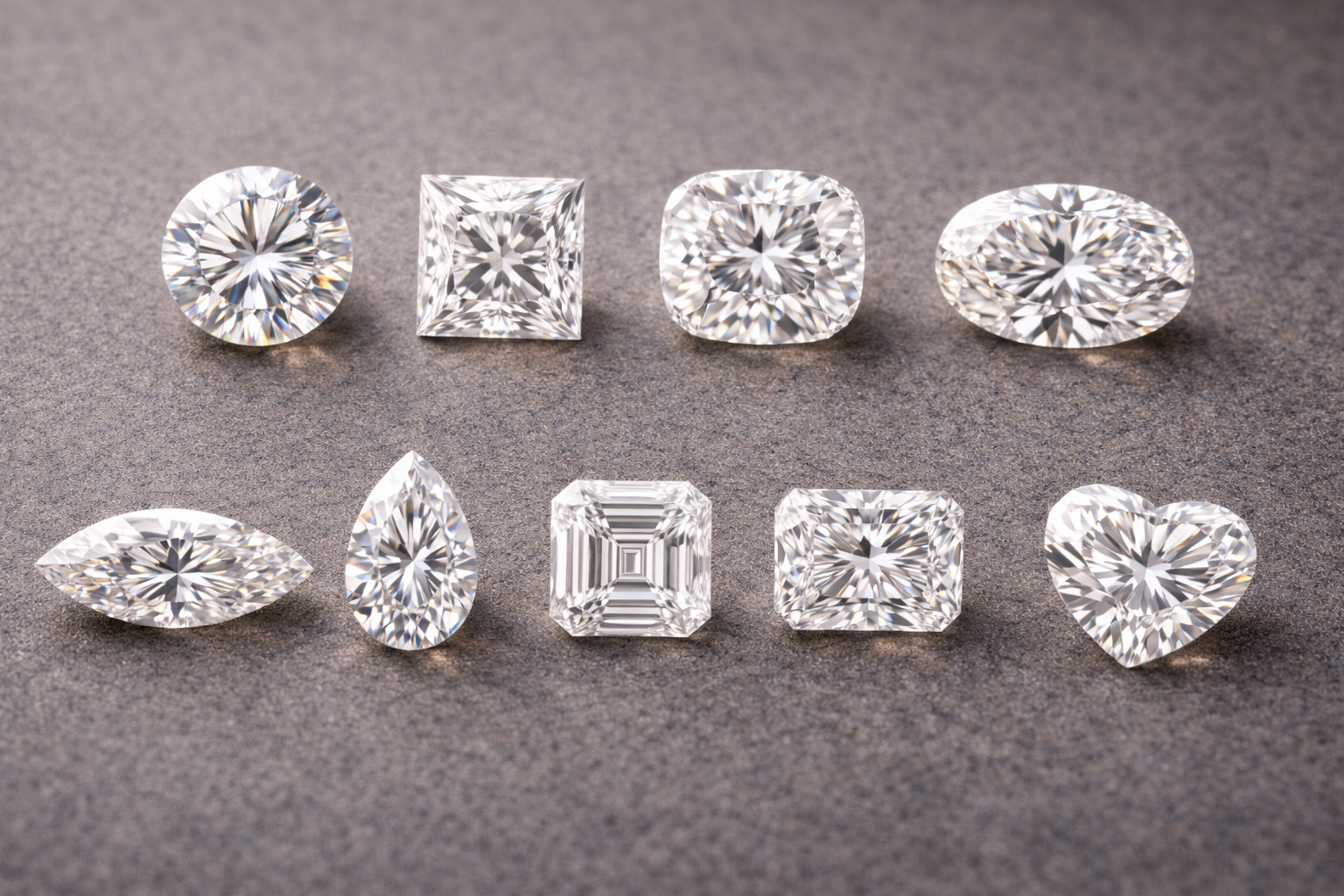
Diamond shapes refer to a diamond’s outline form (round, oval, princess, etc.), each offering a unique look. The classic round brilliant is famed for maximum sparkle, while fancy shapes (any shape ...
Read moreThe Complete Guide to Diamond Shapes: Meaning, Types, Buying Tips & Care
Diamond shapes refer to a diamond’s outline form (round, oval, princess, etc.), each offering a unique look. The classic round brilliant is famed for maximum sparkle, while fancy shapes (any shape ...
Read more