
Frequently Asked
Pearl Bracelets FAQ
Are these real pearls, and what does cultured mean?
Yes, every pearl in this collection is a real, genuine pearl. Cultured describes how it was grown, not whether it is real. A technician places a small nucleus inside a live freshwater mussel, and the animal coats it with layer after layer of nacre, the same material that lines its shell, over many months. The result is a true pearl in every sense, farmed rather than found by chance. Almost every fine pearl sold anywhere today is cultured, because natural wild pearls are vanishingly rare and priced to match. What you are buying is the genuine article, grown under care.
What size pearl bracelet should I buy, and how should it fit?
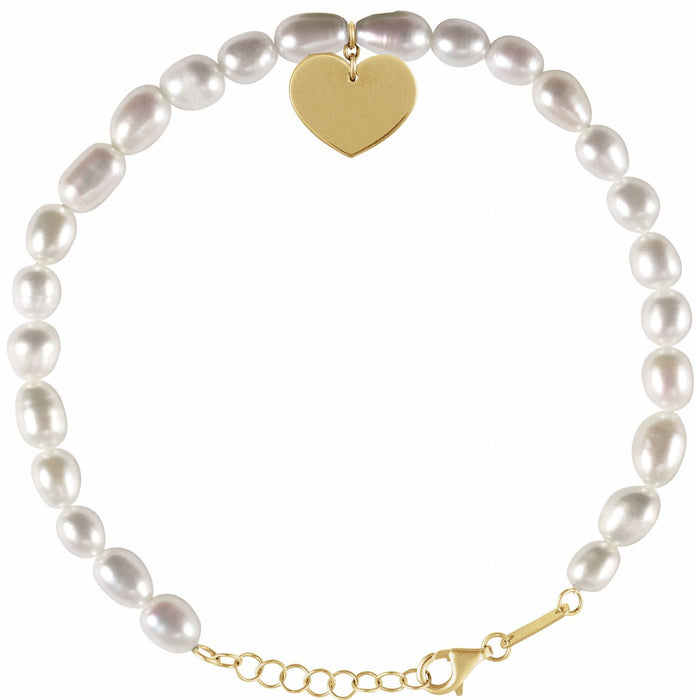
A pearl bracelet should have a little room to move without sliding over your hand. Most women wear a seven to seven and a half inch bracelet, which leaves about a finger of space at the wrist. If your wrist is slim, look at the shorter or adjustable designs; the heart station here adjusts from seven to eight inches, and a petite six-inch bracelet is scaled for a young or very slim wrist. To measure, wrap a tape or a strip of paper around your wrist just below the bone and add half an inch to three quarters of an inch for comfort. A station or line bracelet drapes, while a cuff holds its shape, so the fit feel differs between the two.
Freshwater pearls in a line, a station, or a cuff: which style is right for me?
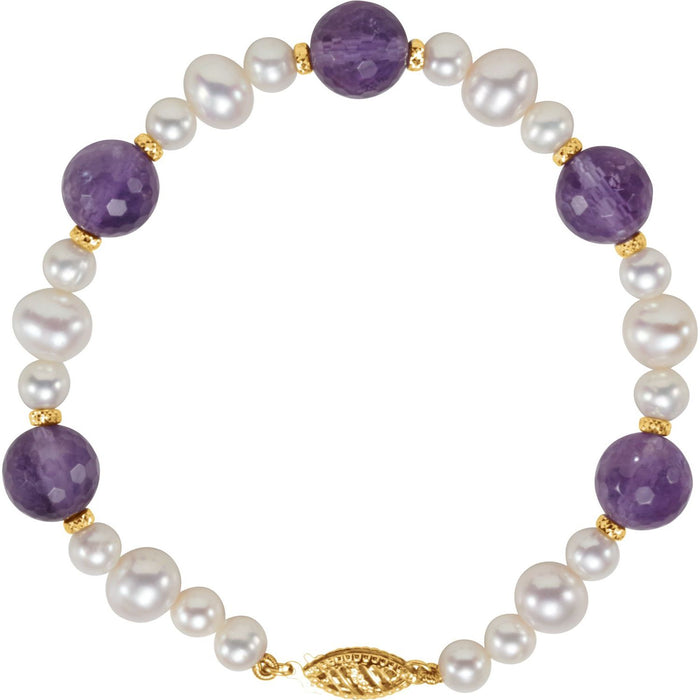
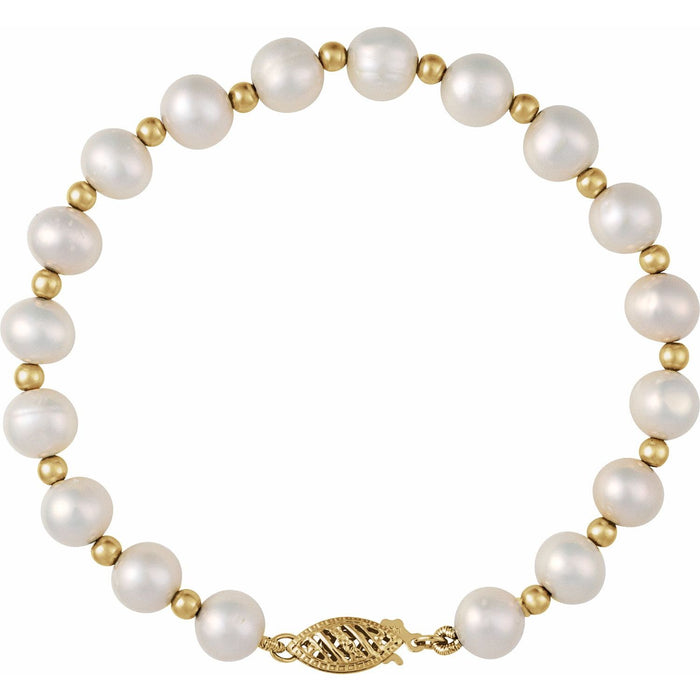
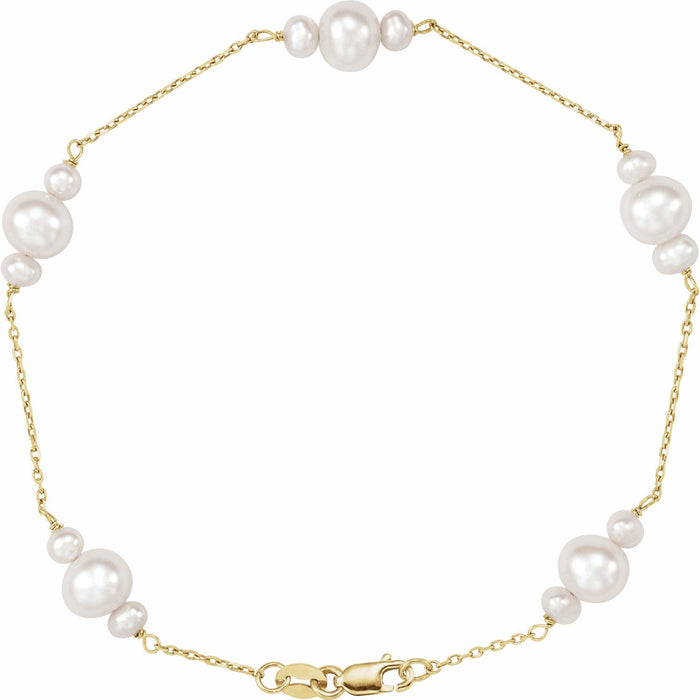
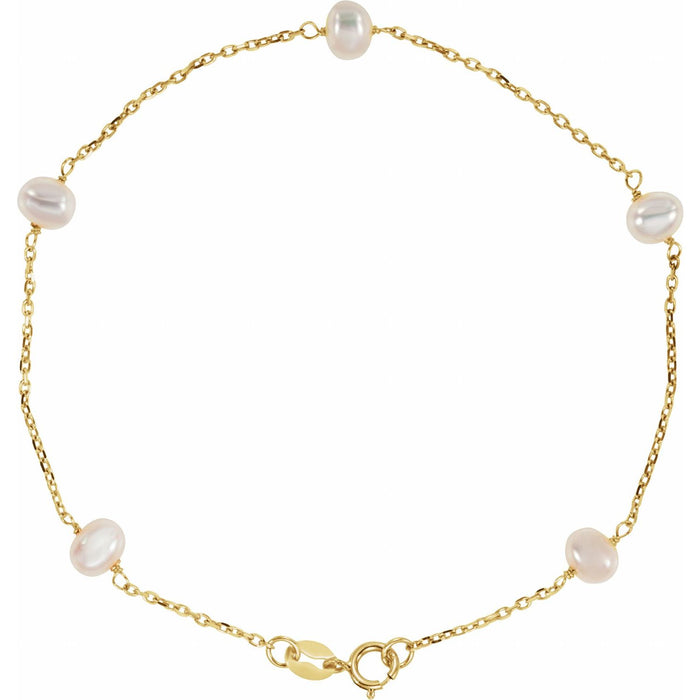
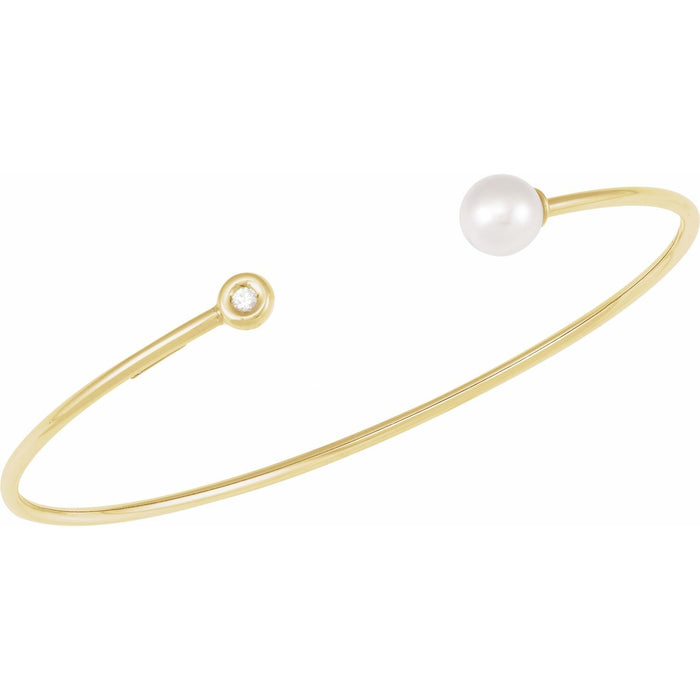
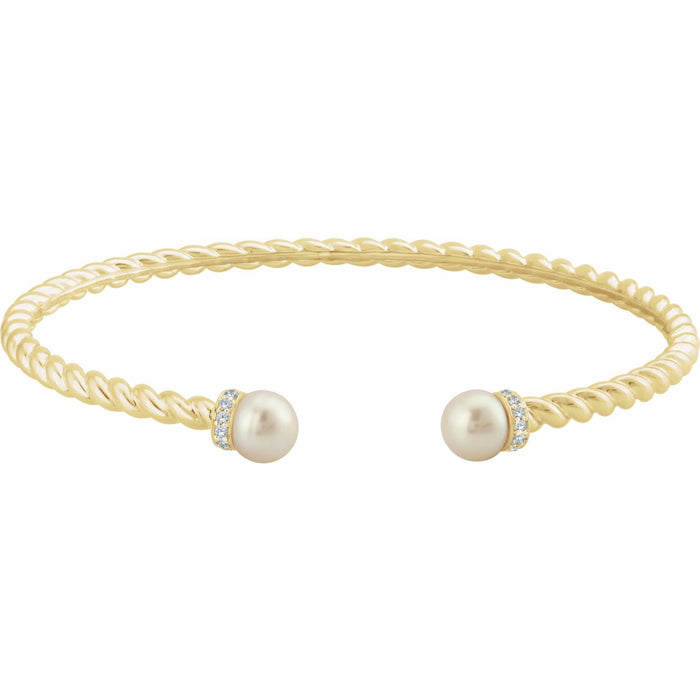
It comes down to how much pearl you want on the wrist. A classic line bracelet strings matched pearls all the way around and reads the most traditional, the wrist version of a pearl strand. A station bracelet spaces a few pearls along a fine gold chain so skin shows between them, which feels lighter and layers well with a watch or a bangle. A cuff keeps its shape and makes more of a statement, especially the pearl-and-diamond designs here. If you want one everyday piece, a station or line bracelet is the easy pick. If you want the wrist to be the point, reach for a cuff.
Can I wear a pearl bracelet every day?
Pearls are more wearable than their formal reputation suggests, though the wrist asks for a little more thought than the neck because your hands touch everything. A simple station or line bracelet is completely at home with jeans and a sweater, and many people wear one daily. Just take it off before washing dishes, gardening, or the gym, since grit and harsh soap are hard on nacre. The dressier cuffs, especially the diamond pieces, are better saved for evenings and occasions. Match the design to your day and a genuine gold pearl bracelet holds up beautifully.
What metals do these pearl bracelets come in?
Solid precious metal only. Depending on the design you can choose 14K yellow or white gold, and every clasp and chain is solid karat gold rather than plated or filled. We do not use gold-plated, gold-filled or sterling silver in this collection, because a genuine pearl deserves a mount that lasts as long as it does. Yellow gold gives a warm, traditional frame that flatters white pearls, and white gold keeps the look cool and modern. Where a design offers both, the metal is yours to pick at no change to the price of the piece.
Are the pearl-and-diamond cuffs worth it over a plain pearl bracelet?
They are a different tier, and whether that is worth it depends on the moment you are buying for. A plain pearl line or station bracelet is the versatile everyday choice. A pearl-and-diamond cuff adds natural diamonds worked into solid gold and holds its shape on the wrist, so it photographs and dresses up in a way a soft strand cannot. Think of the rope cuff as an heirloom or anniversary piece rather than a daily one. If you already own a simple pearl bracelet and want the version people notice, the cuff is where the collection goes next.
How do I care for a pearl bracelet?
Pearls are softer than gemstones and want gentle handling, and a wrist piece takes more knocks than a necklace. Put your bracelet on last, after lotion and perfume, because those can dull the nacre over time. After wearing, wipe the pearls with a soft, slightly damp cloth to lift skin oils and hand cream. Never soak a strand or use jewelry dips or ultrasonic cleaners, which can harm both the pearl and the knots on a strung bracelet. Store it flat and apart from harder jewelry so nothing scratches the surface. Treated this way, a good pearl bracelet keeps its glow for decades.
Is a pearl bracelet a good gift or heirloom?
Few pieces suit gifting better. A pearl bracelet is soft, flattering and universally understood, which makes it an easy choice for a bridesmaid, a graduation, a milestone birthday or a new mother. Because these are solid gold rather than plated, they hold up as the kind of jewelry someone keeps and passes on. The petite freshwater design is made for a young wrist and a first real piece of fine jewelry, while a pearl-and-diamond cuff reads as a serious anniversary gift. A well-kept pearl bracelet easily outlives the occasion it marks.
How much should a good pearl bracelet cost?
It depends on the pearls, the amount of gold and any diamonds. A petite or five-station freshwater bracelet on a fine gold chain is the most accessible way in, while a bold pearl strand or a design with natural diamonds sits higher because it carries more value in both the pearls and the metal. Everything here is solid 14K gold with genuine cultured pearls, so the price reflects real materials rather than a plated shortcut. Across this collection you will find pieces from under three hundred dollars up into the low thousands for the diamond cuffs, which lets you match a genuine gold pearl bracelet to almost any budget.