
Diamond Size Chart: Carat to MM for Every Shape
A well-cut 1 carat round diamond measures about 6.5 mm across. Carat measures weight, and a diamond's width grows with the cube root of that weight, so a 2 carat round is about 8.2 mm wide, not double, and a 3 carat is about 9.4 mm. At 1 carat, other shapes measure roughly: oval 7.7 × 5.7 mm, princess 5.5 mm, cushion 5.9 × 5.6 mm, emerald 7.0 × 5.0 mm, radiant 6.7 × 5.2 mm, asscher 5.6 mm, pear 8.6 × 5.5 mm, marquise 10.3 × 5.2 mm and heart 6.5 mm.
Round

Real diamond photograph, enlarged. See true size on the hand below.
A 1.00 ct round diamond measures about 6.5 mm across, roughly the width of a pencil eraser.
See it true to scale on a hand
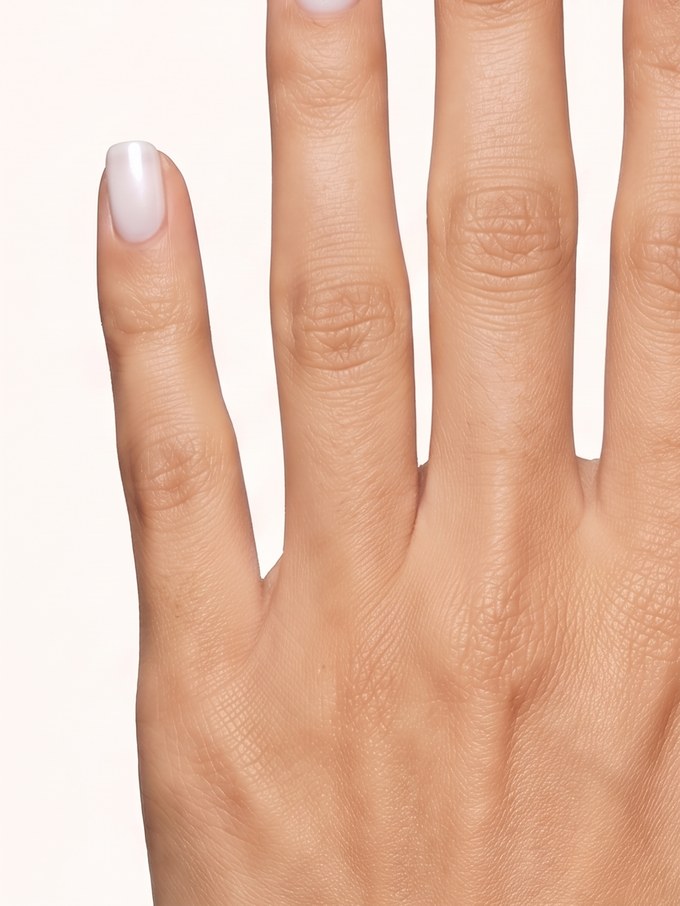
Real diamonds, true to scale. Every stone shown is a photograph of a real, graded diamond, sized to the millimeter for the carat you choose, on a hand measured at ring size 6.
For exact size, calibrate your screen:
A 1.00 ct round (6.5 mm) at true relative size on a size 6 finger (16.5 mm wide). Real diamond photograph, scaled to the chart.
Diamond Size Chart in MM by Shape
Face-up length × width in millimeters for a well-cut diamond of each shape, from 0.25 to 5 carats. Choose a shape, or compare all ten at once.
| Carat | Round | Oval | Princess | Cushion | Emerald | Radiant | Asscher | Pear | Marquise | Heart |
|---|---|---|---|---|---|---|---|---|---|---|
| 0.25 ct | 4.1 | 4.9 × 3.6 | 3.5 | 3.7 × 3.6 | 4.4 × 3.2 | 4.2 × 3.3 | 3.5 | 5.4 × 3.5 | 6.5 × 3.3 | 4.1 |
| 0.50 ct | 5.2 | 6.1 × 4.5 | 4.4 | 4.7 × 4.5 | 5.6 × 4.0 | 5.3 × 4.1 | 4.5 | 6.8 × 4.4 | 8.2 × 4.1 | 5.2 |
| 0.75 ct | 5.9 | 7.0 × 5.2 | 5.0 | 5.4 × 5.1 | 6.4 × 4.6 | 6.1 × 4.7 | 5.1 | 7.8 × 5.0 | 9.4 × 4.7 | 5.9 |
| 1.00 ct | 6.5 | 7.7 × 5.7 | 5.5 | 5.9 × 5.6 | 7.0 × 5.0 | 6.7 × 5.2 | 5.6 | 8.6 × 5.5 | 10.3 × 5.2 | 6.5 |
| 1.25 ct | 7.0 | 8.3 × 6.2 | 6.0 | 6.4 × 6.1 | 7.6 × 5.4 | 7.2 × 5.6 | 6.1 | 9.2 × 6.0 | 11.1 × 5.6 | 7.0 |
| 1.50 ct | 7.4 | 8.8 × 6.5 | 6.3 | 6.8 × 6.5 | 8.0 × 5.7 | 7.7 × 5.9 | 6.4 | 9.8 × 6.3 | 11.8 × 5.9 | 7.5 |
| 2.00 ct | 8.2 | 9.7 × 7.2 | 7.0 | 7.5 × 7.1 | 8.8 × 6.3 | 8.5 × 6.5 | 7.1 | 10.8 × 7.0 | 13.0 × 6.5 | 8.2 |
| 2.50 ct | 8.8 | 10.5 × 7.8 | 7.5 | 8.0 × 7.7 | 9.5 × 6.8 | 9.1 × 7.0 | 7.6 | 11.6 × 7.5 | 14.0 × 7.0 | 8.9 |
| 3.00 ct | 9.4 | 11.1 × 8.2 | 8.0 | 8.5 × 8.1 | 10.1 × 7.2 | 9.7 × 7.5 | 8.1 | 12.4 × 8.0 | 14.9 × 7.4 | 9.4 |
| 4.00 ct | 10.3 | 12.2 × 9.1 | 8.8 | 9.4 × 9.0 | 11.1 × 8.0 | 10.7 × 8.2 | 8.9 | 13.6 × 8.8 | 16.4 × 8.2 | 10.4 |
| 5.00 ct | 11.1 | 13.2 × 9.8 | 9.4 | 10.1 × 9.6 | 12.0 × 8.6 | 11.5 × 8.9 | 9.6 | 14.7 × 9.5 | 17.7 × 8.8 | 11.2 |
Length × width in mm. Round, princess, asscher and heart show one figure because length and width are equal. On a phone, swipe the table sideways to see every shape.
| Carat | Diameter (mm) | Face-up area (mm²) |
|---|---|---|
| 0.25 ct | 4.1 | 13 |
| 0.50 ct | 5.2 | 21 |
| 0.75 ct | 5.9 | 27 |
| 1.00 ct | 6.5 | 33 |
| 1.25 ct | 7.0 | 38 |
| 1.50 ct | 7.4 | 43 |
| 2.00 ct | 8.2 | 53 |
| 2.50 ct | 8.8 | 61 |
| 3.00 ct | 9.4 | 69 |
| 4.00 ct | 10.3 | 84 |
| 5.00 ct | 11.1 | 97 |
Round modeled at L:W 1.00 and 61% depth. Typical range L:W 1.00.
| Carat | Length × width (mm) | Face-up area (mm²) |
|---|---|---|
| 0.25 ct | 4.9 × 3.6 | 14 |
| 0.50 ct | 6.1 × 4.5 | 22 |
| 0.75 ct | 7.0 × 5.2 | 29 |
| 1.00 ct | 7.7 × 5.7 | 35 |
| 1.25 ct | 8.3 × 6.2 | 40 |
| 1.50 ct | 8.8 × 6.5 | 45 |
| 2.00 ct | 9.7 × 7.2 | 55 |
| 2.50 ct | 10.5 × 7.8 | 64 |
| 3.00 ct | 11.1 × 8.2 | 72 |
| 4.00 ct | 12.2 × 9.1 | 87 |
| 5.00 ct | 13.2 × 9.8 | 101 |
Oval modeled at L:W 1.35 and 64% depth. Typical range L:W 1.30–1.50.
| Carat | Width (mm) | Face-up area (mm²) |
|---|---|---|
| 0.25 ct | 3.5 | 12 |
| 0.50 ct | 4.4 | 19 |
| 0.75 ct | 5.0 | 25 |
| 1.00 ct | 5.5 | 30 |
| 1.25 ct | 6.0 | 35 |
| 1.50 ct | 6.3 | 39 |
| 2.00 ct | 7.0 | 47 |
| 2.50 ct | 7.5 | 55 |
| 3.00 ct | 8.0 | 62 |
| 4.00 ct | 8.8 | 75 |
| 5.00 ct | 9.4 | 87 |
Princess modeled at L:W 1.00 and 73% depth. Typical range L:W 1.00–1.05.
| Carat | Length × width (mm) | Face-up area (mm²) |
|---|---|---|
| 0.25 ct | 3.7 × 3.6 | 12 |
| 0.50 ct | 4.7 × 4.5 | 19 |
| 0.75 ct | 5.4 × 5.1 | 25 |
| 1.00 ct | 5.9 × 5.6 | 31 |
| 1.25 ct | 6.4 × 6.1 | 36 |
| 1.50 ct | 6.8 × 6.5 | 40 |
| 2.00 ct | 7.5 × 7.1 | 49 |
| 2.50 ct | 8.0 × 7.7 | 57 |
| 3.00 ct | 8.5 × 8.1 | 64 |
| 4.00 ct | 9.4 × 9.0 | 77 |
| 5.00 ct | 10.1 × 9.6 | 90 |
Cushion modeled at L:W 1.05 and 67% depth. Typical range L:W 1.00–1.20.
| Carat | Length × width (mm) | Face-up area (mm²) |
|---|---|---|
| 0.25 ct | 4.4 × 3.2 | 13 |
| 0.50 ct | 5.6 × 4.0 | 21 |
| 0.75 ct | 6.4 × 4.6 | 27 |
| 1.00 ct | 7.0 × 5.0 | 33 |
| 1.25 ct | 7.6 × 5.4 | 38 |
| 1.50 ct | 8.0 × 5.7 | 43 |
| 2.00 ct | 8.8 × 6.3 | 52 |
| 2.50 ct | 9.5 × 6.8 | 61 |
| 3.00 ct | 10.1 × 7.2 | 69 |
| 4.00 ct | 11.1 × 8.0 | 83 |
| 5.00 ct | 12.0 × 8.6 | 97 |
Emerald modeled at L:W 1.40 and 69% depth. Typical range L:W 1.30–1.50.
| Carat | Length × width (mm) | Face-up area (mm²) |
|---|---|---|
| 0.25 ct | 4.2 × 3.3 | 13 |
| 0.50 ct | 5.3 × 4.1 | 21 |
| 0.75 ct | 6.1 × 4.7 | 27 |
| 1.00 ct | 6.7 × 5.2 | 33 |
| 1.25 ct | 7.2 × 5.6 | 38 |
| 1.50 ct | 7.7 × 5.9 | 43 |
| 2.00 ct | 8.5 × 6.5 | 53 |
| 2.50 ct | 9.1 × 7.0 | 61 |
| 3.00 ct | 9.7 × 7.5 | 69 |
| 4.00 ct | 10.7 × 8.2 | 83 |
| 5.00 ct | 11.5 × 8.9 | 97 |
Radiant modeled at L:W 1.30 and 70% depth. Typical range L:W 1.00–1.40.
| Carat | Width (mm) | Face-up area (mm²) |
|---|---|---|
| 0.25 ct | 3.5 | 11 |
| 0.50 ct | 4.5 | 18 |
| 0.75 ct | 5.1 | 23 |
| 1.00 ct | 5.6 | 28 |
| 1.25 ct | 6.1 | 32 |
| 1.50 ct | 6.4 | 36 |
| 2.00 ct | 7.1 | 44 |
| 2.50 ct | 7.6 | 51 |
| 3.00 ct | 8.1 | 58 |
| 4.00 ct | 8.9 | 70 |
| 5.00 ct | 9.6 | 81 |
Asscher modeled at L:W 1.00 and 72% depth. Typical range L:W 1.00–1.05.
| Carat | Length × width (mm) | Face-up area (mm²) |
|---|---|---|
| 0.25 ct | 5.4 × 3.5 | 13 |
| 0.50 ct | 6.8 × 4.4 | 20 |
| 0.75 ct | 7.8 × 5.0 | 27 |
| 1.00 ct | 8.6 × 5.5 | 32 |
| 1.25 ct | 9.2 × 6.0 | 37 |
| 1.50 ct | 9.8 × 6.3 | 42 |
| 2.00 ct | 10.8 × 7.0 | 51 |
| 2.50 ct | 11.6 × 7.5 | 59 |
| 3.00 ct | 12.4 × 8.0 | 67 |
| 4.00 ct | 13.6 × 8.8 | 81 |
| 5.00 ct | 14.7 × 9.5 | 94 |
Pear modeled at L:W 1.55 and 65% depth. Typical range L:W 1.45–1.75.
| Carat | Length × width (mm) | Face-up area (mm²) |
|---|---|---|
| 0.25 ct | 6.5 × 3.3 | 15 |
| 0.50 ct | 8.2 × 4.1 | 24 |
| 0.75 ct | 9.4 × 4.7 | 31 |
| 1.00 ct | 10.3 × 5.2 | 37 |
| 1.25 ct | 11.1 × 5.6 | 43 |
| 1.50 ct | 11.8 × 5.9 | 49 |
| 2.00 ct | 13.0 × 6.5 | 59 |
| 2.50 ct | 14.0 × 7.0 | 69 |
| 3.00 ct | 14.9 × 7.4 | 78 |
| 4.00 ct | 16.4 × 8.2 | 94 |
| 5.00 ct | 17.7 × 8.8 | 109 |
Marquise modeled at L:W 2.00 and 64% depth. Typical range L:W 1.85–2.10.
| Carat | Width (mm) | Face-up area (mm²) |
|---|---|---|
| 0.25 ct | 4.1 | 12 |
| 0.50 ct | 5.2 | 19 |
| 0.75 ct | 5.9 | 25 |
| 1.00 ct | 6.5 | 31 |
| 1.25 ct | 7.0 | 36 |
| 1.50 ct | 7.5 | 40 |
| 2.00 ct | 8.2 | 49 |
| 2.50 ct | 8.9 | 57 |
| 3.00 ct | 9.4 | 64 |
| 4.00 ct | 10.4 | 78 |
| 5.00 ct | 11.2 | 90 |
Heart modeled at L:W 1.00 and 62% depth. Typical range L:W 0.90–1.10.
Approximate figures for well-cut stones with typical proportions. Individual diamonds vary by a few tenths of a millimeter; the measurements on a diamond's grading report are authoritative.
How Big Is a 1, 1.5, 2 or 3 Carat Diamond?
Because weight rises with volume, a round diamond's diameter follows the cube root of its carat weight. Doubling from 1 to 2 carats adds only 1.7 mm of width.
diameter ≈ 6.5 mm × ∛carat
-
1 carat6.5 mm
About the size of a pencil eraser. Spans about 39% of the width of a size 6 finger.
-
1.5 carat7.4 mm
14% wider than 1 carat, with 31% more face-up area. About 45% of a size 6 finger.
-
2 carat8.2 mm
26% wider than 1 carat. Covers about half the width of a size 6 finger.
-
3 carat9.4 mm
44% wider than 1 carat. About 57% of a size 6 finger: a bold, statement stone.
For context, a 0.5 carat round measures about 5.2 mm, a 4 carat about 10.3 mm and a 5 carat about 11.1 mm. In an oval, the same weights stretch longer: about 7.7 × 5.7 mm at 1 carat, 8.8 × 6.5 mm at 1.5 carats and 9.7 × 7.2 mm at 2 carats.
A buying note: prices step up at popular weights such as 0.50, 0.70, 0.90, 1.00, 1.50 and 2.00 carats. A 0.90 carat round measures about 6.3 mm, a difference from 1 carat that is very hard to see on the hand.
Diamond MM to Carat Conversion
Know the millimeter size and need the weight? For a round brilliant, carat ≈ (diameter ÷ 6.5)³. A 7 mm round is about 1.25 carats; an 8 mm round is about 1.9. Very small accent stones run slightly heavier than the formula; a 1.5 mm melee diamond weighs about 0.015 ct.
For fancy shapes, enter the length. The converter scales from that shape's 1 carat size in the chart above. This assumes a typical length-to-width ratio; for an exact estimate use length × width × depth from the grading report.
A 6.5 mm round is about 1.00 carat.
| Diameter | Carat |
|---|---|
| 1.5 mm | 0.015 ct |
| 2.0 mm | 0.03 ct |
| 2.5 mm | 0.06 ct |
| 3.0 mm | 0.10 ct |
| 3.5 mm | 0.16 ct |
| 4.0 mm | 0.23 ct |
| 4.5 mm | 0.33 ct |
| 5.0 mm | 0.46 ct |
| 5.5 mm | 0.61 ct |
| 6.0 mm | 0.79 ct |
| Diameter | Carat |
|---|---|
| 6.5 mm | 1.00 ct |
| 7.0 mm | 1.25 ct |
| 7.5 mm | 1.5 ct |
| 8.0 mm | 1.9 ct |
| 8.5 mm | 2.2 ct |
| 9.0 mm | 2.7 ct |
| 9.5 mm | 3.1 ct |
| 10.0 mm | 3.6 ct |
| 11.0 mm | 4.8 ct |
| 12.0 mm | 6.3 ct |
Diamond Shapes and How Big Each Looks at 1 Carat
All ten diamonds below are real stones photographed face-up and shown at the same scale, so you can compare true face-up spread at 1 carat. Shape changes how the same weight is spent: spread across the surface, or held in depth. For styles, history and buying tips, read our complete guide to diamond shapes.
-

Round
6.5 mm
33 mm² · baseline
The 57–58 facet round brilliant returns the most light and fire, and it is the shape every size chart is built on.
-

Oval
7.7 × 5.7 mm
35 mm² · +4%
A brilliant-cut ellipse. It faces up about 4% larger than a round of the same weight and lengthens the finger. Look for a faint bow-tie, not a dark one.
-

Princess
5.5 mm
30 mm² · −10%
A square brilliant with pointed corners. Much of its weight sits in a deep pavilion, so it faces up about 10% smaller than a round. Protect the corners with V-prongs.
-

Cushion
5.9 × 5.6 mm
31 mm² · −7%
Square to softly rectangular with rounded corners and broad facets, for a candlelit, antique sparkle.
-

Emerald
7.0 × 5.0 mm
33 mm² · same as round
A rectangular step cut with clipped corners. Long, parallel facets give a hall-of-mirrors effect and show clarity plainly.
-

Radiant
6.7 × 5.2 mm
33 mm² · same as round
The outline of an emerald cut with brilliant faceting: bright, lively and forgiving of small inclusions.
-

Asscher
5.6 mm
28 mm² · −16%
A square step cut with wide corners and a deep pavilion. It has the smallest face-up spread per carat of the ten.
-

Pear
8.6 × 5.5 mm
32 mm² · −3%
Half round, half marquise. Worn point toward the fingertip, it slims the hand.
-

Marquise
10.3 × 5.2 mm
37 mm² · +13%
A long, pointed navette. It has the largest face-up area per carat of any shape here, about 13% more than a round.
-

Heart
6.5 mm
31 mm² · −7%
A brilliant-cut heart. It reads best at 0.70 ct and above, where the cleft and lobes are distinct.
Area is the stone's face-up outline seen from above. Percentages compare each 1 carat shape with a 1 carat round (33 mm²).
Radiant vs Emerald Cut
Both are rectangles with clipped corners, and at 1 carat they cover almost the same area. The difference is the faceting. A radiant uses about 70 brilliant facets for lively, crushed-ice sparkle that hides small inclusions. An emerald cut uses long, parallel step facets for broad, calm flashes of light, and its open table shows clarity plainly, so we suggest VS2 or better.
| Radiant | Emerald | |
|---|---|---|
| Faceting | Brilliant, about 70 facets | Step cut, about 57 facets |
| Look | Bright, sparkling | Glassy, architectural |
| 1 ct size | 6.7 × 5.2 mm | 7.0 × 5.0 mm |
| Face-up area, 1 ct | 33 mm² | 33 mm² |
| Typical L:W | 1.00–1.40 | 1.30–1.50 |
| Shows inclusions | Less | More |
Why the Same Carat Can Look Different
Cut depth. Weight hidden in a deep pavilion adds carats without adding width. A 1 carat round cut at 59% depth faces up about 6.6 mm across; the same weight at 64% depth measures about 6.4 mm. A thick girdle hides weight the same way.
Spread. Jewelers call a stone's face-up size for its weight its spread. Among shapes, a marquise shows about 13% more surface than a round of equal weight, while an asscher shows about 16% less.
Outline. Elongated shapes such as oval, pear and marquise run along the finger, so they read larger than their area alone suggests.
Lab-Grown vs Natural Diamond Size
Identical. Lab-grown and natural diamonds are the same crystal of carbon with the same density, 3.52 g/cm³, so a 1 carat lab-grown round measures the same 6.5 mm as a natural one of equal cut. The difference is price, which lets many buyers choose a larger lab-grown diamond engagement ring for the same budget as a smaller natural diamond engagement ring.
This chart applies to diamonds only. Other gems weigh differently: sapphire is denser, at about 4.0 g/cm³, so a 1 carat round sapphire is about 6.0–6.2 mm. Explore the full range of sapphire colors.
Finger Size and Setting Effects
Finger size. A 1 carat round covers about 41% of the width of a size 5 finger and about 36% of a size 8. The same stone looks larger on a slimmer hand. Not sure of your size? Use our ring size chart.
Band width. A slim band of about 1.8 to 2 mm makes the center stone look bigger by contrast.
Halo. A ring of small accent diamonds typically adds 2 to 3 mm to the overall face-up width, so a 6.5 mm center can read closer to 9 mm.
Prongs and bezels. Fine prongs show the most of the stone. A bezel frames the outline in metal, which enlarges the footprint slightly but covers the edge of the diamond.
Diamond Size FAQ
How many millimeters is a 1 carat diamond?
A well-cut 1 carat round diamond is about 6.5 mm in diameter. Other shapes at 1 carat measure roughly 7.7 × 5.7 mm (oval), 5.5 mm (princess), 5.9 × 5.6 mm (cushion), 7.0 × 5.0 mm (emerald), 6.7 × 5.2 mm (radiant), 5.6 mm (asscher), 8.6 × 5.5 mm (pear), 10.3 × 5.2 mm (marquise) and 6.5 mm (heart).
Is a 2 carat diamond twice as big as a 1 carat?
No. It weighs twice as much, but width grows with the cube root of weight, so a 2 carat round measures about 8.2 mm against 6.5 mm for 1 carat: about 26% wider and about 59% more face-up area, not double.
How big is a 1.5 carat diamond in mm?
A 1.5 carat round is about 7.4 mm across. A 1.5 carat oval is about 8.8 × 6.5 mm, an emerald cut about 8.0 × 5.7 mm and a princess cut about 6.3 mm.
How do I convert diamond mm to carats?
For a round brilliant, carat weight is approximately (diameter in mm ÷ 6.5)³. A 7 mm round is about 1.25 ct, an 8 mm round about 1.9 ct and a 9 mm round about 2.7 ct. For fancy shapes, divide the length by that shape's 1 carat length and cube the result. This assumes a typical length-to-width ratio; for an exact estimate use length × width × depth from the grading report.
Which diamond shape looks biggest for its carat weight?
Marquise has the largest face-up area per carat, about 13% more than a round, followed by oval at about 4% more. Elongated pear, oval and marquise shapes also look longer on the finger. Asscher and princess cuts face up smallest, about 16% and 10% smaller than a round, because more of their weight sits below the girdle.
What is the difference between a radiant and an emerald cut?
Both are rectangles with clipped corners. A radiant has about 70 brilliant facets and sparkles like a round; an emerald is a step cut with long, parallel facets that give broad flashes of light and show inclusions more readily. At 1 carat a radiant measures about 6.7 × 5.2 mm and an emerald about 7.0 × 5.0 mm.
Are lab-grown diamonds the same size as natural diamonds?
Yes. Lab-grown and natural diamonds are the same material with the same density (3.52 g/cm³), so a 1 carat lab-grown round measures the same 6.5 mm as a natural one of the same cut.
Does finger size change how big a diamond looks?
Yes. A 1 carat round covers about 41% of the width of a size 5 finger but only about 36% of a size 8 finger, so the same stone looks larger on a slimmer hand. Thin bands and halo settings also make a center stone look bigger.
Is a 0.90 carat diamond noticeably smaller than a 1 carat?
No. A 0.90 carat round measures about 6.3 mm, roughly 0.2 mm narrower than a 1 carat. That difference is very hard to see on the hand, while prices often step up at the 1.00 carat mark.
How accurate is a diamond size chart?
Size charts give typical figures for well-cut stones. Real diamonds of the same weight can differ by 0.2 to 0.3 mm or more depending on depth, girdle thickness and proportions. The measurements printed on a diamond's grading report are authoritative.
Cite this chart
Free to reference with a link to Diamond & Sapphire.
Diamond & Sapphire. "Diamond Size Chart: Carat to MM for Every Shape." Updated October 2026. https://diamondandsapphire.com/pages/diamond-size-chart
Link to this chart
Writing about diamond sizes? Link to this chart.
<a href="https://diamondandsapphire.com/pages/diamond-size-chart">Diamond Size Chart: Carat to MM for Every Shape</a> by Diamond & Sapphire
Methodology and sources
Each shape's 1 carat size comes from the standard gemological weight estimate, carat = length × width × depth × shape factor, using an industry-typical length-to-width ratio and depth percentage for a well-cut stone. One calibration constant is applied to every shape so that a 1 carat round measures 6.5 mm, matching widely published charts. Other weights scale each dimension by the cube root of the carat weight. Face-up area multiplies length × width by the share of that rectangle each outline covers.
| Shape | L:W | Depth | 1 ct (mm) |
|---|---|---|---|
| Round | 1.00 | 61% | 6.5 |
| Oval | 1.35 | 64% | 7.7 × 5.7 |
| Princess | 1.00 | 73% | 5.5 |
| Cushion | 1.05 | 67% | 5.9 × 5.6 |
| Emerald | 1.40 | 69% | 7.0 × 5.0 |
| Radiant | 1.30 | 70% | 6.7 × 5.2 |
| Asscher | 1.00 | 72% | 5.6 |
| Pear | 1.55 | 65% | 8.6 × 5.5 |
| Marquise | 2.00 | 64% | 10.3 × 5.2 |
| Heart | 1.00 | 62% | 6.5 |
The hand view uses real graded diamond photography: each stone is a photograph of a real, graded diamond, cut out at the girdle and scaled from the chart's length and width for the selected weight. It is not the exact stone or weight shown. The finger in the hand photo is calibrated at 16.5 mm, the inner diameter of a US size 6 ring, which matches the visible width of a finger at its base. Choosing another ring size rescales the stone against that finger. These are estimates for comparison and education. A real stone's size depends on its exact proportions and measured weight. On-screen sizes are true to scale after you calibrate your display to a bank card; without calibration they assume a standard 96 PPI screen. Always confirm dimensions on the grading report before you buy.