
Frequently Asked
Oval Engagement Rings FAQ
What makes oval engagement rings so popular?
An oval is a round brilliant stretched long, so it keeps nearly all of the round's sparkle while covering more of the finger. Two things follow from that. The stone looks larger than a round of the same carat weight, and its length visually slims and lengthens the hand. Add the fact that ovals have no sharp corners to chip, and you have a cut that is both flattering and practical — which is why it has become one of the most requested engagement shapes of the last decade.
Should I choose a lab-grown or natural oval diamond?
Both are real diamonds with identical chemistry, hardness and fire — the difference is origin and price. A lab-grown oval is grown in a controlled setting over a few weeks and costs a fraction of a mined stone, so your budget buys more carat and higher color and clarity. Our lab-grown centers are graded D–F color and VVS–VS clarity and ship with an IGI certificate. A natural oval is formed over billions of years underground, is rarer, and holds its story of the earth; ours are graded and ship with a lab report. Every product page lets you switch between the two and see the honest, all-in price for each before you decide.
What carat size should I pick for an oval?
Because the cut is elongated, an oval wears about a quarter to a half size larger than a round of the same weight. A 1 ct oval reads like a confident everyday stone; 1.5 ct is the sweet spot most people picture when they think engagement ring; 2 ct makes a clear statement. Our ovals run from 1 to 2 ct depending on the design, and the price on each page updates as you change carat so there are no surprises.
Do oval engagement rings have a hidden meaning?
The oval's unbroken, continuous outline has long been read as a symbol of a bond without beginning or end — a quiet nod to enduring commitment. Its history goes back further than most cuts: the elongated brilliant was refined in the 1950s, but rounded and oval stones have signified union for centuries. There is no rule you have to attach meaning to it, but if you like the idea, the shape carries it gracefully.
Which setting style suits an oval best?
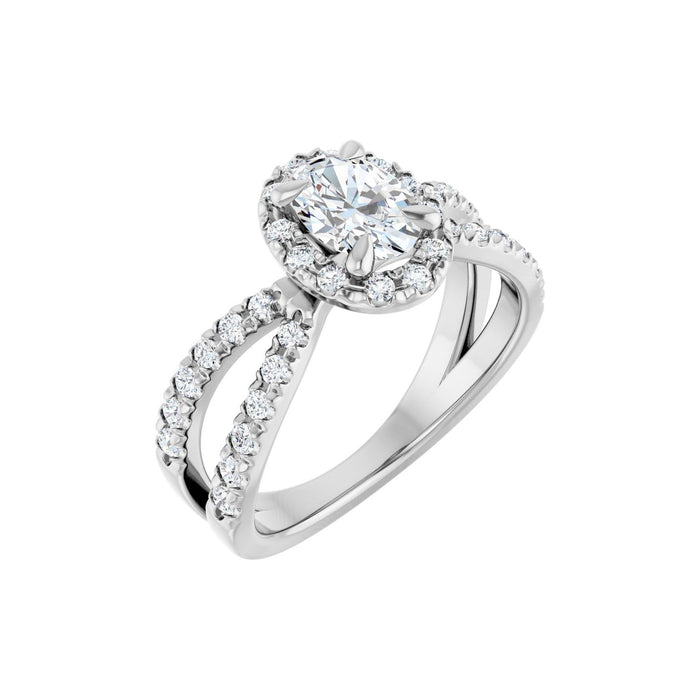
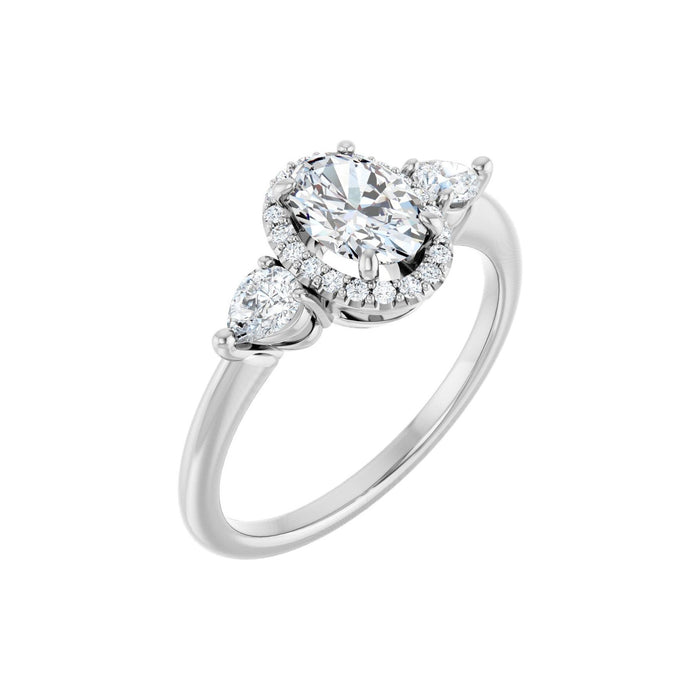
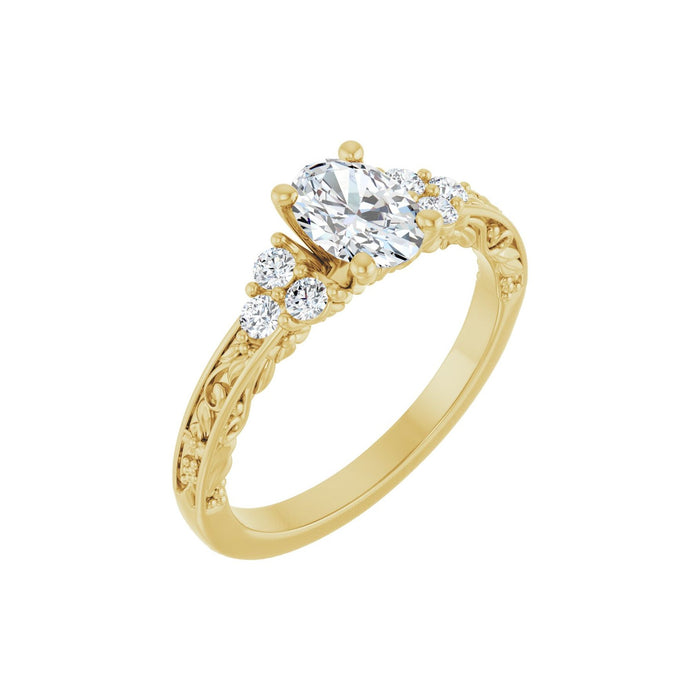
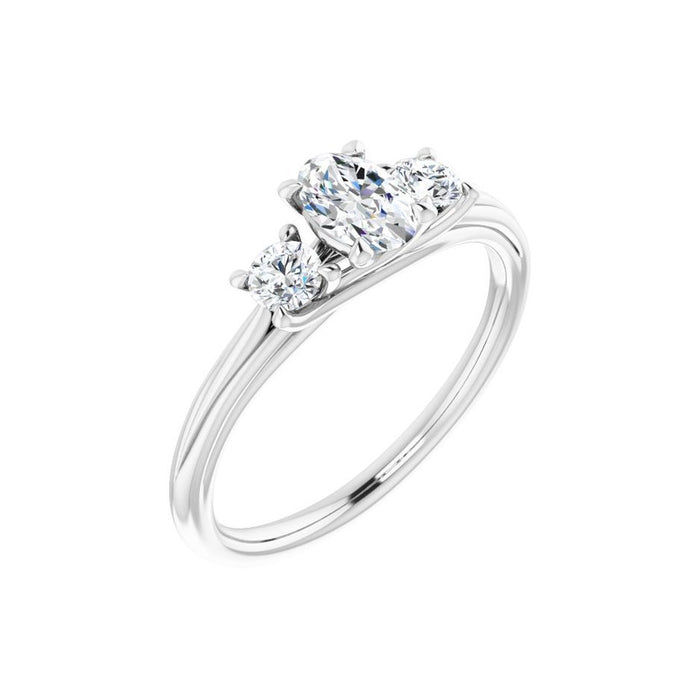
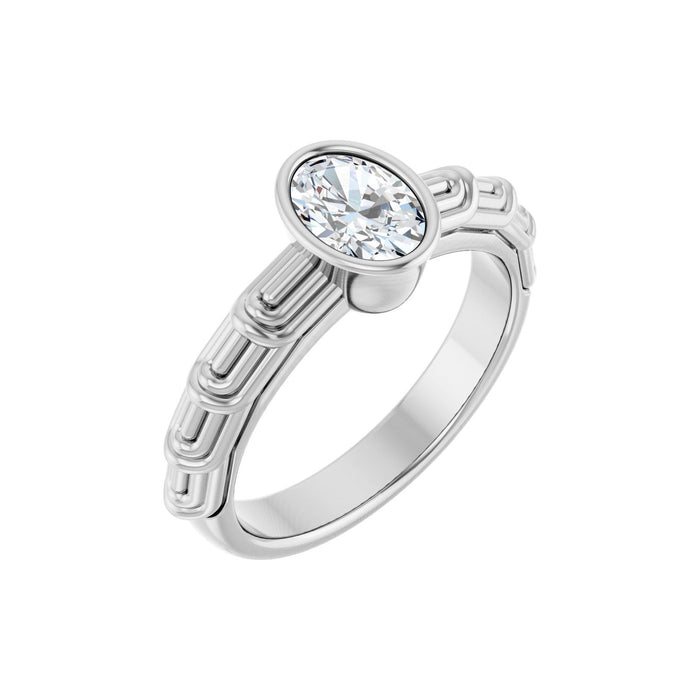
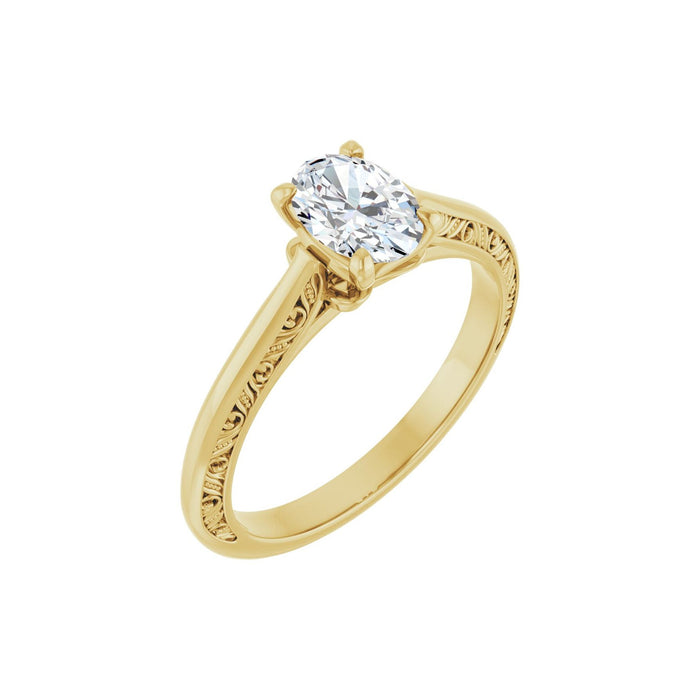
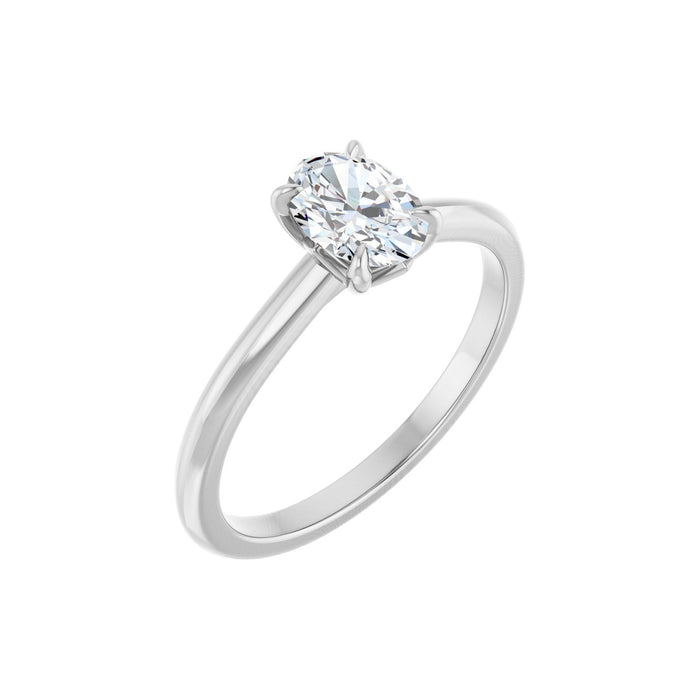
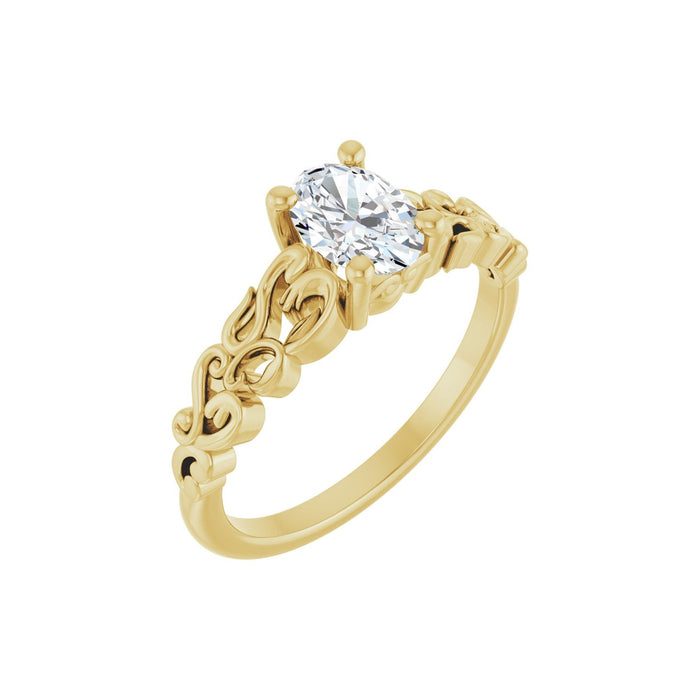
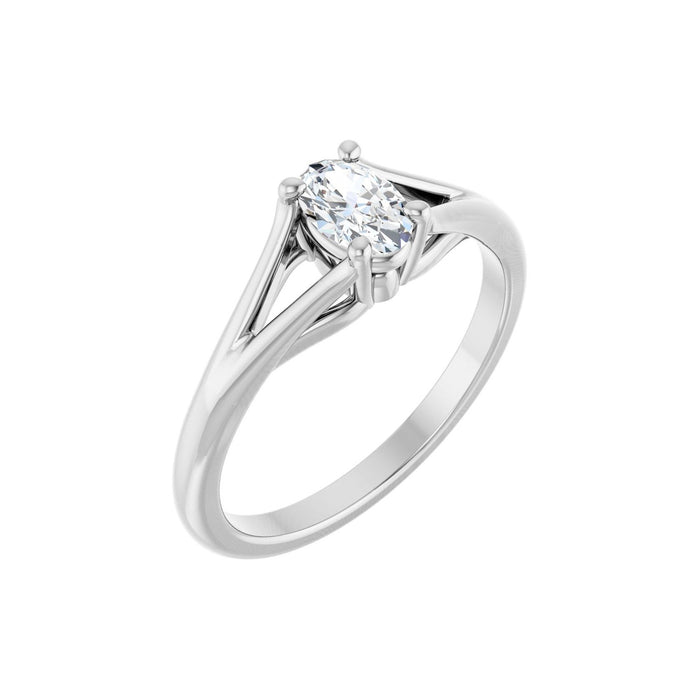
An oval is generous enough to look right in almost any setting, which is part of its appeal. A solitaire lets the shape speak for itself. A halo rings the center in small diamonds and pushes the apparent size larger still. A three-stone flanks the oval with side stones and draws the eye further along the finger. A bezel wraps the stone in metal for a clean, modern, snag-free profile. Pavé lines the band with light, and cathedral or split-shank designs lift and frame the stone. Compare the styles in the table above and on each product page.
How do I find my ring size?
Because every ring is made to order, we set it to your exact size rather than a standard default. If you already know your size, choose it at checkout. If you don't, you can be sized by any local jeweler in a couple of minutes, or reach out to our concierge and we'll send guidance on measuring at home. Most designs can also be resized after the fact, though getting it right the first time is simplest.
What metal should I choose?
Every design comes in 14K white, yellow or rose gold and in platinum, and the choice is mostly about tone and skin. White gold and platinum keep an oval looking bright, cool and colorless. Yellow gold gives a warm, classic frame and can flatter a center with a hint of warmth. Rose gold reads soft and romantic. Platinum is the densest and most durable of the four and naturally white, so it never needs re-plating, which is why it carries a small premium. The price on each page reflects the metal you select.
How long does an oval engagement ring take to make?
Ready-to-ship configurations leave us in about 2 to 3 business days. Made-to-order designs — certain metals, larger carats and more intricate settings — take roughly 5 to 10 business days, since the stone is set and the ring finished for you specifically. The exact window shows on each product page and updates with your choices, and every order ships free and fully insured.
Do you offer financing?
Yes. You can split the cost of your ring into monthly payments at checkout through our financing partner, with the terms and any rate shown before you commit — no obligation to apply. It's there to make the ring you actually want more reachable, on lab-grown and natural alike.
What's included, and what if something goes wrong?
The price you see is the complete ring — center diamond, setting and your chosen metal — with its grading report in the box. Every order ships free with insured, signature-required delivery, and orders over $250 upgrade to free 2-day express. You have 30 days to return an unworn ring, and each piece carries our free lifetime warranty against manufacturing defects, so a loose prong or a finish issue down the road is on us.
Can I match a wedding band to my oval ring?
You can. An oval sits beautifully against a plain band, a shared-prong diamond band, or a contoured band shaped to nest against the setting. If you're planning ahead, mention it to our concierge and we'll point you to bands that pair cleanly with your chosen design and metal so the two sit flush on the finger.
At a glance
Compare Oval Engagement Rings
| Setting style | What it does | Lab-grown (all-in) | Natural (all-in) |
|---|---|---|---|
| Solitaire | One oval on a clean band — the shape carries the whole ring. | $1,295 – $3,395 | $4,395 – $23,495 |
| Pavé | A diamond-lined band that carries light to the center. | $1,395 – $5,095 | $4,495 – $25,195 |
| Three-Stone | An oval flanked by two side stones — past, present, future. | $1,395 – $5,695 | $4,495 – $25,695 |
| Bezel-Set | A full rim of metal — the modern, snag-free everyday setting. | $1,395 – $4,295 | $4,495 – $24,095 |
| Halo | A ring of small diamonds that makes the center look larger. | $1,395 – $3,895 | $4,495 – $23,695 |
| Split-Shank & Sculptural | Shaped bands that frame the oval and draw the eye up its length. | $1,295 – $2,795 | $4,395 – $16,495 |
All prices are all-in for the complete ring — center stone, setting and metal — and update with your carat and metal choice on each product page.