
18k Gold vs 14k Gold
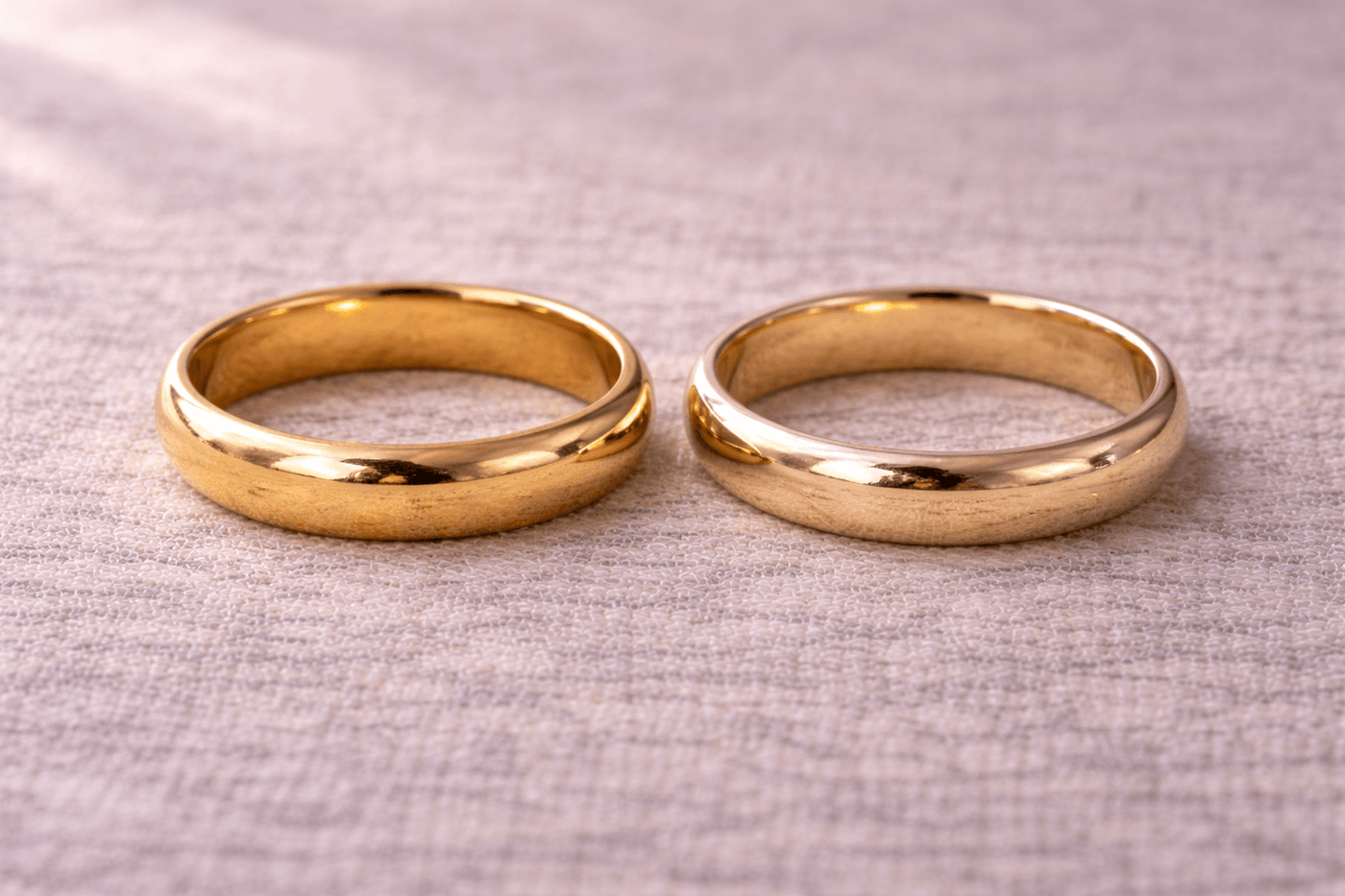
The karat of gold in a piece of jewelry affects its color, durability, and price—sometimes significantly. 18K gold contains 75% pure gold, which produces a deeper, warmer color and higher intrinsic value, though the metal is softer and more susceptible to surface wear. 14K gold, at 58.3% pure, is lighter in tone, harder, and more affordable. This guide explains what those karat numbers mean in practice: how the two alloys differ in composition and longevity, what to consider before buying, and how each performs in yellow, white, and rose gold. Gold jewelry is marked by karat—18K equals 75% pure gold and 14K equals 58.3% (2)—and understanding that distinction is the foundation of a confident purchase.
What Is 18K Gold vs 14K Gold?

Karat measures the proportion of pure gold in an alloy. Pure gold is 24 karats. 18K means 18 of those 24 parts are gold (75%), with the remaining 25% consisting of metals such as copper or silver. 14K means 14 parts gold (58.3%) and 41.7% alloy metals. The practical effects follow directly: 18K gold carries a richer, warmer yellow and commands a higher price per gram; 14K gold looks slightly more muted but gains hardness from its elevated alloy content. Both are legally recognized as gold, and both make beautiful, long-lasting jewelry. The choice between them comes down to how you weigh color, cost, and daily wearability against each other.
Types/Variations of 18K and 14K Gold
Yellow Gold (18K vs 14K)

-
Appearance: Both are unmistakably yellow gold, but 18K reads deeper and more saturated, while 14K appears a touch lighter in tone. The higher proportion of pure gold in 18K is what drives the more vibrant, warmer hue (1).
-
Composition: 18K yellow gold is typically 75% gold, 15% silver, and 10% copper. 14K yellow gold runs approximately 58.3% gold, 30% silver, and 11.7% copper (3)(4). The lower gold content in 14K produces a slightly cooler, less saturated yellow.
-
Durability: 14K yellow gold is harder and more scratch-resistant because of its higher alloy content. 18K yellow gold, being 75% pure, scratches and dents more readily under the same conditions (1). For rings worn daily through active use, 14K holds up better over time.
-
Common Uses: Yellow gold suits a wide range of pieces in both karats. The warm depth of 18K makes it a favored metal for fine diamond engagement rings and heirloom jewelry where richness of color matters most. 14K yellow gold is the practical choice for wedding bands, fashion rings, and bracelets where strength and long-term value both count. Market data confirm that yellow gold—at either karat—remains the most-requested bridal metal (5).
White Gold (18K vs 14K)

-
Appearance: White gold achieves its silvery look through a combination of gold alloyed with white metals—palladium, nickel, or silver—then finished with a rhodium plate for brightness (3). Freshly plated, 18K and 14K white gold are nearly indistinguishable. The underlying difference is purity: 18K carries 75% gold beneath the rhodium surface, while 14K carries 58.3%—a distinction invisible at a glance but meaningful in long-term value.
-
Composition: A standard 18K white gold alloy is 75% gold and 25% platinum or palladium (3). Standard 14K white gold is 58.3% gold alloyed with nickel, zinc, or palladium (6). Both are typically rhodium-plated after casting to achieve the bright white surface finish.
-
Durability: The alloy metals in white gold add hardness; 14K white gold is slightly harder than 18K and holds up better under daily abrasion. Rhodium plating will naturally wear through with time and requires periodic re-application to maintain the bright white surface (6).
-
Common Uses: White gold is a natural setting for diamonds—its cool tone keeps the stone at the center of attention. Both 14K and 18K white gold are popular in engagement and wedding rings, particularly for buyers who want a platinum-like aesthetic at a more accessible price (6). Our fine diamond rings are available in both karats to match your preference.
Rose Gold (18K vs 14K)

-
Appearance: Rose gold gets its warmth from copper. 18K rose gold reads as a deep, rosy pink; 14K is slightly lighter or peachy, leaning more toward copper-red (1). The higher gold content in 18K softens the pink, giving it a more refined blush tone.
-
Composition: A standard 14K rose alloy is 58.3% gold, 9.2% silver, and 32.5% copper. An 18K rose alloy is 75% gold, 9.2% silver, and 22.2% copper (3). The higher copper percentage in 14K (32.5% vs. 22.2%) accounts for its more intense, reddish-pink tone.
-
Durability: As with yellow gold, 14K rose gold outperforms 18K in hardness due to its elevated alloy content. 18K rose gold is softer and more susceptible to surface marks. Rose gold can develop a very subtle patina over extended periods, but both karats hold up reliably under normal wear.
-
Common Uses: Rose gold's romantic warmth makes it especially popular for engagement rings and vintage-inspired or bohemian designs. Both karats work beautifully in rings, bracelets, and accessories where that distinctive blush tone is central to the aesthetic (6).
How to Identify Quality in 18K vs 14K Gold

Start with the hallmark. Every legitimate gold piece bears a karat stamp—14K, 18K, 585, or 750—pressed into an inconspicuous surface such as the inner band of a ring or a bracelet clasp. That stamp is the primary, legally recognized confirmation of purity (4), and its absence is a red flag worth investigating before purchase.
Beyond the mark, examine the piece's construction. Quality gold jewelry has clean, consistent surfaces with no pitting, visible porosity, or rough seams at solder points. Prong tips should be smooth and rounded; shanks should feel substantial without being unnecessarily heavy. A grading report from GIA or IGI is relevant when the piece contains a center diamond, confirming the stone's authenticity alongside the metal's quality (1).
Assess the piece in person where possible. Look for consistent color across the entire surface—uneven tone can indicate a thin plate over base metal rather than a solid gold alloy. For white gold, yellowing through worn rhodium is a normal and easily corrected condition, not a quality defect; re-plating is a straightforward professional service. Reputable jewelers will always disclose karat, alloy composition, and any plating details before purchase—if that information is not offered willingly, ask directly.
Buying Guide: How to Choose the Right Karat Gold
Choosing between 18K and 14K gold comes down to a few clear priorities:
-
Budget: 18K gold costs more per gram due to its higher gold content. 14K is the more affordable option and the sensible starting point for buyers who want genuine gold without paying a premium (1).
-
Durability / Lifestyle: 14K gold is harder and better suited to daily use. Active wearers and those who plan to keep a ring on constantly—an engagement ring, an everyday necklace—will find 14K more forgiving of the small impacts and abrasions that accumulate over time. 18K scratches more easily under the same conditions.
-
Occasion & Style: 18K gold's richer, deeper color suits statement pieces, luxury jewelry, and items intended as heirlooms. The softer tone of 14K works naturally with more casual, flexible designs and is easy to combine with other metals in a stack.
-
Skin Sensitivity: 18K gold is generally the safer choice for sensitive skin. Fewer alloy metals means a lower risk of irritation compared to 14K, which may include nickel or other common allergens (1).
-
Long-Term Value: 18K gold holds more pure gold content, giving it a higher scrap value and a modest investment advantage that compounds over many years (7).
Weigh these factors against what you expect from the piece. A daily-wear engagement ring has different demands than a necklace brought out for special occasions, and choosing the right karat from the start saves adjustment later.
Care, Cleaning & Maintenance

Gold is relatively low-maintenance, but a few consistent habits keep it looking its best. Avoid contact with harsh chemicals—chlorine in particular, from pool water or household cleaners, can dull or pit gold alloys over time (6). Remove gold jewelry before swimming in a chlorinated pool or cleaning with bleach-based products.
For routine cleaning, soak the piece in warm water with a few drops of mild dish soap, then gently brush with a soft toothbrush to remove residue and buildup (6). Rinse thoroughly under clean water and dry with a soft cloth. White gold jewelry will need periodic rhodium re-plating as the surface coat wears through—a quick professional service that fully restores the bright white finish.
Store gold pieces in soft pouches or lined compartments to prevent scratching from contact with other jewelry. Kept clean and stored with a little care, both 14K and 18K gold jewelry maintain their beauty indefinitely. Our gold necklaces and rings are designed to wear well—proper care simply extends that life further.
Common Myths & Misconceptions
-
Myth: "18K gold never scratches."
All gold scratches—and 18K actually scratches more readily because its higher purity makes it softer. 18K remains beautiful and durable fine jewelry; it simply requires a bit more attention to surface care than 14K does (1).
-
Myth: "14K gold isn't real gold."
By legal definition, 14K gold (58.3% pure) is genuine gold (2). The alloy metals added to the mix provide strength and modify color—they do not make the metal less authentic. Both 14K and 18K are real gold alloys at different purity levels, and both meet the standards for fine jewelry.
-
Myth: "Gold jewelry never needs maintenance."
Gold itself does not tarnish the way silver does, but the alloy metals and any surface plating can change over time. The copper in rose gold may develop a very slight patina over years; the rhodium on white gold will wear through with daily friction. Occasional cleaning and, for white gold, periodic re-plating keep a piece looking its best (6).
Pros & Cons of 18K vs 14K Gold
Feature |
18K Gold |
14K Gold |
Purity |
75% pure gold (4) — higher intrinsic value |
58.3% pure gold (4) — lower pure-gold content |
Color |
Rich, deep yellow hue (1) — more golden glow |
Lighter, paler yellow tone (1) — due to higher alloy content |
Durability |
Softer metal; more prone to scratches (1) |
Harder alloy; more scratch-resistant and durable (1) |
Cost |
More expensive per gram — higher gold content (1) |
More affordable — less gold content (1) |
Hypoallergenic |
Fewer alloy metals; less likely to cause irritation (1) |
More alloy metals (nickel possible); higher allergy risk (1) |
Common Use |
Luxury pieces, high-end engagement rings, heritage jewelry |
Everyday jewelry, wedding bands, fashion pieces requiring durability |
Trends & Modern Market Demand
Yellow gold has returned to the center of fine jewelry design. Industry experts report that yellow gold—in both 14K and 18K—consistently ranks among the most-requested metals for engagement rings, driven by a renewed appreciation for warm tones and classic, enduring forms (5). Two-tone designs that combine the two karats have also gained traction, offering a layered look with subtle tonal variation that appeals to buyers interested in mixing aesthetics.
Regionally, 14K dominates the U.S. market; 18K is the standard across much of Europe and Asia. Both karats sell strongly on a global basis, particularly in yellow gold (5). The larger picture is clear: gold is firmly back in style, and buyers are choosing with intention—selecting karats that align with their specific priorities rather than defaulting to a single market standard.
Investment & Resale Value
Higher karat gold contains more pure gold, which translates directly to higher scrap value. An 18K piece of a given weight will return more than an equivalent 14K piece sold for bullion, because the gold percentage is greater. Industry sources confirm that higher-karat pieces carry more intrinsic value (7).
Resale value extends beyond raw metal content, however. Craftsmanship, brand provenance, and secondary-market demand all factor into a piece's realized price. A finely crafted 14K ring can sell as readily as an 18K piece of lesser quality. That said, 18K gold holds a modest intrinsic advantage, and both karats track the same underlying gold price movements over time—meaning long-term holders of either benefit from gold's general appreciation.
Who Should Buy 18K or 14K Gold?

-
Active Lifestyle or Value-Focused: 14K gold is the practical choice for daily-wear rings and bracelets, or for buyers working within a defined budget. Its hardness (1) makes it more resistant to the small abrasions and impacts that accumulate with everyday wear, and the lower gold content keeps costs manageable without sacrificing quality.
-
Luxury & Rich Color: 18K gold suits buyers who want the deepest, most saturated gold tone and are comfortable with the higher price. Its warmth reads beautifully in statement pieces and fine heirloom jewelry, and its lower alloy content makes it the better option for sensitive skin (1).
-
Collectors & Investors: Those who want the highest gold content per piece—or who collect fine jewelry with long-term resale in mind—will typically prefer 18K for its purity and intrinsic value (7). Browse our luxury gemstone jewelry to see 18K pieces set with exceptional stones.
To simplify: 14K for strength and value, 18K for richness and purity. The better answer depends on your personal taste, how you plan to wear the piece, and what you are comfortable spending over the long term.
Frequently Asked Questions – FAQ
Q1: What does "18K" and "14K" gold mean?
A1: These numbers describe gold purity. 18K gold is 75% pure gold (18 out of 24 parts); 14K is 58.3% pure (14 out of 24) (2). The remaining percentage is alloy metals—typically copper, silver, or palladium—that adjust color and add hardness.
Q2: Is 14K or 18K gold more durable?
A2: 14K gold is generally more durable. Its higher alloy content (41.7%) makes it harder and more resistant to scratches. 18K gold, at 75% pure, dents and scratches more easily under the same conditions (1).
Q3: Does 18K gold cost more than 14K?
A3: Yes. 18K contains more pure gold, so it costs more per gram. The same design rendered in 18K will be priced higher than the 14K version because the metal itself commands a premium (1).
Q4: Which is better for engagement rings, 14K or 18K?
A4: It depends on priorities. Many jewelers recommend 14K for daily-wear rings because its hardness holds up to constant use (1). 18K is a premium choice favored for its richer color and greater purity. Active wearers who rarely remove the ring often find 14K more practical over time. Explore our diamond engagement rings in both karats to compare options.
Q5: Is 18K gold hypoallergenic?
A5: 18K is generally less likely to cause skin reactions because it contains fewer alloy metals. 14K gold often includes nickel or copper, which can trigger sensitivity in reactive skin. Buyers who have experienced irritation from lower-karat pieces frequently find 18K more comfortable (1).
Q6: Which is more popular, 18K or 14K gold?
A6: Popularity varies by region. In the U.S., 14K is the most common standard, balancing durability and cost effectively. 18K is more prevalent in European and Asian fine jewelry markets. Globally, both karats sell well—one trade source notes that "14K is the most popular [in the U.S.], while 18K is widely used elsewhere" (3).
Expert Jeweler Tips
-
Check the Hallmark: Always look for a clear karat stamp—14K/585 or 18K/750—on the piece (4). This is your confirmation that the purity is what was advertised.
-
Ask About White Gold Plating: If you select white gold, confirm whether it is rhodium-plated and ask how the jeweler handles re-plating. Rhodium gives white gold its bright, silvery finish, but it wears through with daily friction—plan on having it refreshed every few years (6).
-
Avoid Harsh Chemicals: Remove gold jewelry before swimming in chlorinated water or cleaning with bleach-based products. Sustained chemical exposure degrades alloy metals over time. Clean pieces gently with mild soapy water and a soft brush (6).
-
Protect Your Investment: Insure valuable gold pieces and keep documentation—receipts, appraisals, and any grading reports. A complete paper trail adds confidence at the point of purchase and credibility at resale.
-
Match Metals Thoughtfully: Stacking or layering pieces that cross karats? Keep in mind that 14K and 18K yellows read at slightly different color temperatures, as do the two karats in white gold. Choose combinations that complement rather than clash—a brief in-store comparison before buying makes this easy to verify.
Closing Thoughts
Both 18K and 14K are genuine, beautiful gold alloys with distinct strengths. 18K offers richer color and greater gold purity (75%), while 14K delivers superior hardness and a lower price point at 58.3% pure gold (1). Neither is objectively superior—the right karat is the one that fits how you live and what you want the piece to accomplish. For durability and value, 14K is the sensible answer. For depth of color or reduced allergy risk, 18K pulls ahead. Either way, a hallmarked, well-crafted piece chosen with clear priorities will serve you beautifully for years to come.
Ready to find the right piece? Browse our fine jewelry collection in 14K and 18K gold, and visit our blog for more guidance on choosing the right metal for your style and lifestyle.
Choose the gold that suits your lifestyle.
Explore Diamond and Sapphire's fine jewelry in both 18K and 14K gold, crafted for beauty and durability.
Read more
Cushion-cut diamonds have soft, rounded corners and a brilliant faceting style that gives them a romantic, vintage glow. Emerald-cut diamonds, on the other hand, have long, step-cut facets that mak...
Read more
Platinum is a naturally white, heavy metal that is valued for its strength, rarity, and ability to not cause allergies. Gold is softer and more common. It comes in yellow, white, and rose alloys th...
Read more