
How Lab Diamonds Are Made?
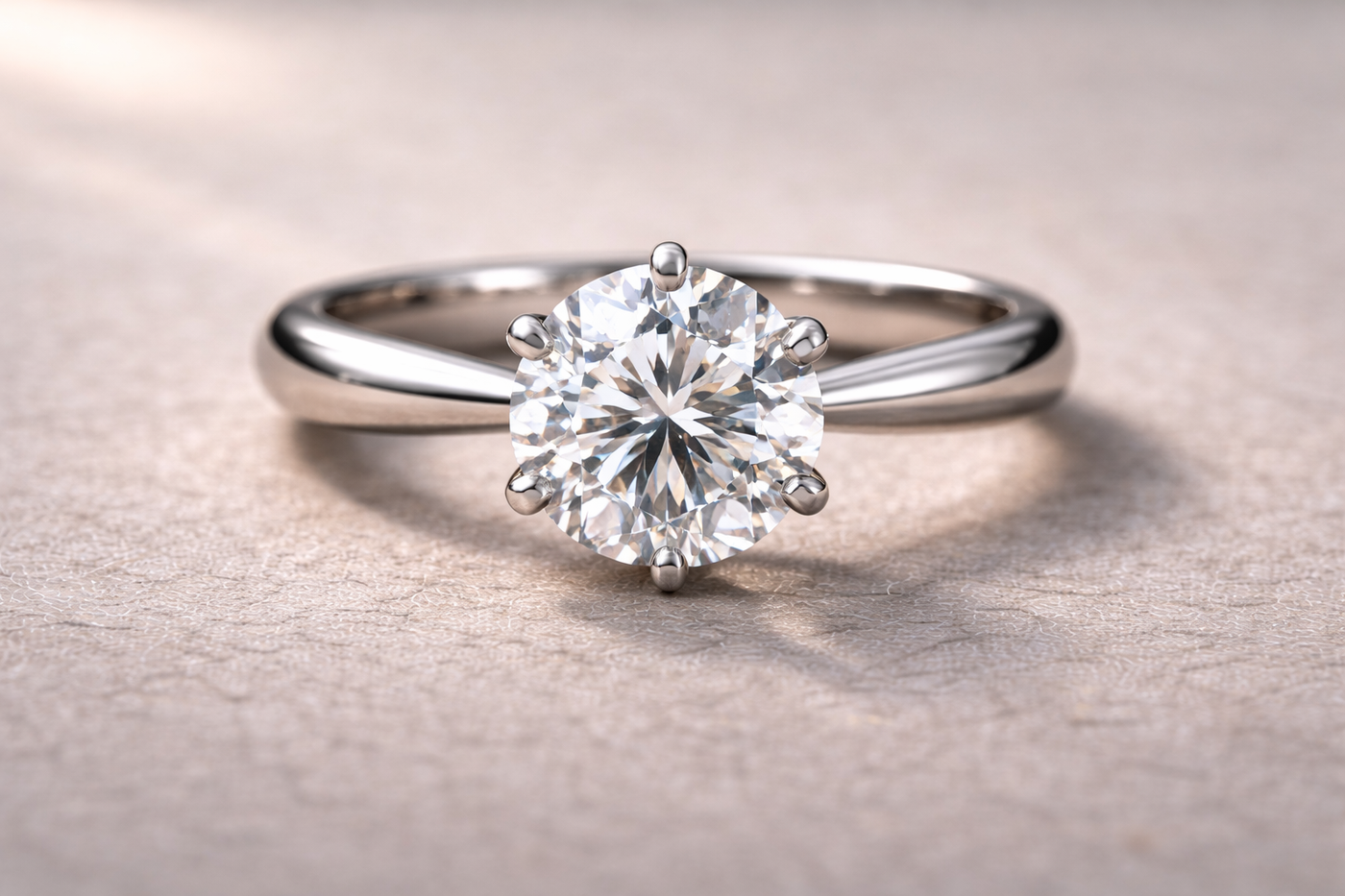
Diamonds have long symbolized love, permanence, and luxury. Lab-grown diamonds offer the same beauty at a lower price, with a more ethical footprint. Lab diamonds are made in controlled environments in a matter of weeks, while natural diamonds take millions of years to form deep within the Earth. Explore our natural diamond rings to compare mined and lab-grown options side by side. They have the same chemical makeup and optical properties as natural diamonds, so you can't tell them apart with the naked eye (2). Knowing how they are made not only clears up the science behind their shine, but it also gives you the power to pick a diamond that fits your values and budget. This guide goes over the two main ways to make diamonds in a lab: HPHT and CVD. It explains the differences between the two, how to tell the difference between good and bad diamonds, clears up common misconceptions, and gives expert advice on how to buy and care for lab-grown diamonds. This guide has everything you need to make an informed choice, whether you're new to fine jewelry or simply curious (2).
What Is a Lab Diamond?
Synthetic or man-made diamonds, also called lab-grown diamonds, are crystals of pure carbon made in a lab that mimics the extreme heat and pressure of the Earth's mantle. Lab diamonds are the same chemically and physically as mined diamonds, unlike diamond simulants like cubic zirconia or moissanite. Like diamonds, they are very hard, have a high refractive index, and last a long time. They can also be cut, polished, and graded using the same methods as natural stones (2). In the last five years, technological advances have made lab-grown diamonds almost impossible to tell apart from natural diamonds. They have the same optical properties and can get high color and clarity grades (2). This means that a well-cut lab diamond will shine and sparkle just like a mined diamond, but it will be more ethical and affordable for consumers.

The first successful synthetic diamonds were produced in the 1950s using high-pressure high-temperature methods, primarily for industrial purposes. Advances in technology later enabled gem-quality diamonds suitable for fine jewelry, transforming lab-grown diamonds from industrial materials into luxury gemstones.
Types / Variations of Lab Diamonds
Most lab-grown diamonds are made using one of two methods: high-pressure high-temperature (HPHT) or chemical vapor deposition (CVD). Each method uses different tools and settings, which causes small changes in the shape of the crystals, how they grow, and what they might include. Knowing how these methods work can help you understand the different types of lab-grown diamonds and make a smart choice when you buy one.
HPHT Diamonds
Appearance: Diamonds grown using HPHT often have a mix of cubic and octahedral faces, and they may have unique growth patterns, metallic inclusions, and color zoning because of the molten metal flux used during growth (1). These crystals usually have a square or octagonal shape and may have graining or flux-metal inclusions that are different from natural diamond inclusions (1). Gem cutters can polish away a lot of these features, but some will still be there to help you figure out what they are.
Composition: To make HPHT diamonds, a small natural or synthetic diamond seed is put into a high-pressure press. When heated to between 1,300 and 1,600 °C and under pressures of more than 5.5 GPa (about 870,000 psi), high-purity carbon dissolves into a molten metal flux of iron, nickel, or cobalt. The carbon-rich solution cools and falls out of the air onto the seed, where it crystallizes into diamond (1). Stabilizers keep the diamond's cubic shape, and after a few days or weeks, the crystal is cut and harvested.
Durability: HPHT diamonds are very hard (10 on the Mohs scale) and hard to scratch and wear down because they have the same atomic structure as natural diamonds. But metallic inclusions or stress fields that happen during the growth process can make weak planes. Overall, it lasts as long as natural diamonds, but careful cutting and setting can help keep chips from forming along inclusions (1).
Common Uses: HPHT is the best way to make small melee diamonds and colorless stones for fine jewelry. The method also makes fancy yellow, blue, and pink diamonds by adding small amounts of nitrogen or boron during growth. HPHT-grown diamonds are used in industry for cutting tools, heat sinks, and high-tech uses because they are hard and conduct heat well (1).
CVD Diamonds
Appearance: When CVD diamonds are first made, they usually look like flat, plate-like crystals and may have a slight brown tint. They often have growth lines or graphite residue on the surface, which needs to be removed before the stone can be cut and polished. When they're done, though, they look a lot like high-quality natural diamonds (1). Most CVD diamonds are type II, which means they don't have much nitrogen. They can get top color grades like D through F because they are so pure and are treated properly after they grow.
Composition: The CVD process itself involves putting thin diamond seed plates inside a vacuum chamber that is full of carbon-rich gases like hydrogen and methane. Microwaves and other energy sources break these gases down into a plasma, which lets carbon atoms stick to the seed plates and slowly build diamond layers one atom at a time. The chamber gets hot, between 900 and 1,200 °C, but the pressure is much lower than it is for HPHT growth. Over the course of several weeks, the diamonds grow in stages. After that, the crystals are often treated with HPHT annealing to make them less brown and clearer overall. (1)
Durability: CVD diamonds are real diamonds, just like HPHT diamonds. They are very hard (10 on the Mohs scale) and very tough. They may have better optical properties because they are usually type II diamonds with few flaws. But if the growth isn't done just right, CVD diamonds can have non-diamond carbon (graphite) or strain patterns that could make them less durable. Post-growth treatments and careful cutting help with these problems (1).
Common Uses: CVD technology is great for making big, clear gem diamonds. CVD is used to grow many lab diamonds that are more than 3 carats (1). CVD is also used to make colored diamonds and diamonds for industrial and electronic uses, like heat spreaders in semiconductors and parts in quantum computing (3). This is because it lets you control the levels of impurities very precisely.
How to Identify Quality in Lab Diamonds

Chemically, lab-grown diamonds are the same as natural diamonds, but they are judged by slightly different standards. Certification is still important. GIA and IGI are two reliable labs that give grading reports that show a diamond's color, clarity, cut, and carat weight. These reports make it clear where lab-grown stones come from and often mention a laser inscription on the girdle that says "LABORATORY-GROWN." They also include a report number for identification and traceability (1).
In 2024, GIA said it would start using broader descriptive terms like "premium" or "standard" instead of the full natural diamond grading scale (1). This is because most lab-grown diamonds are in a fairly small range of high color and clarity. This change is meant to help people compare diamonds more easily and keep them from getting confused between lab-grown and natural diamonds.
Cut quality and symmetry should be your top priorities when choosing a lab-grown diamond. Stones that are well-proportioned reflect more light and hide small growth features. You should also look for inclusions or graining. Most lab diamonds are very clean, but HPHT stones may have tiny bits of metal in them, and CVD diamonds may have growth lines or traces of carbon that aren't diamonds. Check the grading report to see if the stone was treated after it was grown, like by annealing or irradiation. Finally, make sure the diamond comes with both a recognized lab report and a laser inscription to prove that it is real and to make sure that everything is clear (1).
Buying Guide: How to Choose the Right Lab Diamond
When choosing a lab-grown diamond, you need to think about your budget, lifestyle, and personal values. Budget is often the first thing to consider. Lab-grown diamonds are much cheaper than natural diamonds; Forbes says they can be 70–90% cheaper. For example, a 2-carat VS1 lab diamond costs about $2,800, while a mined stone of the same size costs $29,500 (4). You can choose a bigger or better stone within your budget because of the price difference, but remember that lab diamonds may lose value more quickly when you sell them (4).
Lifestyle matters when choosing a diamond because, while diamonds are extremely hard, they aren’t impossible to damage. If you plan to wear your ring every day, it’s important to choose a setting that protects the stone’s edges and corners. Diamonds grown by either method—HPHT or CVD—are equally strong, so durability comes down more to design than origin. For people with active lifestyles, low-profile or bezel settings can help prevent chips and reduce the risk of losing the stone.
The occasion also plays a role in the overall look. Colorless lab-grown diamonds are the most common choice for diamond engagement rings, while fashion jewelry often features fancy colors made possible through controlled doping during the growth process—browse our colored diamond rings for inspiration (1). Lab-grown diamonds are made of pure carbon, so they rarely cause skin irritation. However, reactions can sometimes come from the metal used in the setting, so choosing hypoallergenic options like platinum or 18K gold can help avoid sensitivity issues.
It's harder to figure out long-term value. Lab diamonds don't usually go up in value; in fact, their prices have been going down because there are more of them and technology has improved. Forbes says that lab diamond prices have dropped about 16% in 2024 and are about 83% less expensive than natural diamonds (4). If you are mostly buying a diamond as an investment, a natural diamond may hold its value better. If you care about looks, ethics, and price, though, a lab-grown diamond is a great choice because it doesn't have the social and environmental costs of mining (4).
Care, Cleaning & Maintenance

Lab-grown diamonds are cared for just like natural diamonds. According to GIA’s diamond care guidelines, they can be safely cleaned using lint-free cloths, commercial jewelry cleaners, or mild household detergents. For routine at-home care, soak the diamond in warm water with a few drops of gentle dish soap, then lightly brush it with a soft toothbrush kept specifically for jewelry. Rinse well and dry with a lint-free cloth. (1)
It’s best to avoid harsh abrasives or strong chemicals such as bleach, which can damage metal settings. Professional ultrasonic or steam cleaning can be effective, but should be used with care, as the vibrations may loosen stones over time. (1) When storing lab-grown diamond jewelry, keep each piece in a padded compartment or soft pouch to prevent scratching. Having the prongs checked periodically by a jeweler is also a good habit. Since lab-grown diamonds are just as hard and stable as natural diamonds, they don’t need any special maintenance beyond regular cleaning and occasional professional inspections.
Common Myths & Misconceptions
Myth 1: Lab diamonds are fake or simulated.
Lab-grown diamonds are authentic diamonds composed of carbon atoms arranged in the diamond lattice. They share the same hardness, refractive index and optical properties as mined diamonds (2). They are not cubic zirconia or moissanite, which have different chemical compositions and lower hardness.
Myth 2: Lab diamonds are low quality.
Early lab-grown diamonds were often brown or had visible inclusions, but today’s HPHT and CVD technologies produce stones that rival the best natural diamonds in color and clarity. IGI reports that improvements over the past five years have made lab diamonds virtually indistinguishable from natural diamonds, and they can be cut and polished to the same standards (2).
Myth 3: Lab diamonds are not durable.
Both HPHT and CVD diamonds score 10 on the Mohs hardness scale and are extremely resistant to scratching or abrasion (1). They will not yellow or cloud over time like some simulants and can be passed down as heirlooms when properly cared for.
Myth 4: Lab diamonds have no resale value.
It’s true that lab diamonds tend to lose more value than natural diamonds, but even mined stones often sell for less than 50% of their purchase price. Forbes explains that a lab-grown diamond may lose most of its value at resale, yet the absolute loss is smaller because the initial cost is so much lower (e.g., losing 100% on a $2,800 lab diamond versus 50% on a $29,500 mined diamond) (4). Lab diamonds are best seen as beautiful adornments rather than investments.
Myth 5: Lab diamonds are always eco-friendly.
Growing diamonds consumes significant energy, especially in HPHT presses. The University of Vermont’s ecological comparison notes that HPHT synthesis is faster but energy-intensive, whereas CVD uses less extreme pressure and allows more control over impurities (3). While lab diamonds avoid the habitat destruction and human rights issues associated with mining, they still have an environmental footprint. Choosing a manufacturer that powers its growth with renewable energy can reduce the impact.
Pros & Cons of Lab Diamonds

|
Aspect |
Pros |
Cons |
|
Ethics & Environment |
Avoids the human rights issues and habitat destruction associated with mining; can be produced using renewable energy. |
HPHT and CVD processes consume significant electricity and may rely on fossil fuels, leading to carbon emissions. |
|
Cost & Value |
Lab diamonds cost 70–90% less than natural diamonds, allowing larger stones on a budget. |
They generally depreciate more quickly and have limited resale value. |
|
Quality & Beauty |
Chemically and optically identical to natural diamonds, with excellent color and clarity potential. |
Some HPHT diamonds show metallic inclusions or strain; CVD diamonds may require post‑growth annealing to remove brown color. |
|
Variety & Availability |
Ability to produce fancy colors and large sizes; supply is growing rapidly. |
Market oversupply may drive prices down; differentiation from natural diamonds is necessary to maintain value. |
|
Identification & Certification |
GIA and IGI provide grading reports, and girdle inscriptions clearly label lab diamonds. |
Requires consumer awareness; screening devices may need to refer stones for advanced testing. |
Trends & Modern Market Demand
Diamonds grown in labs are no longer rare. Production around the world has skyrocketed, with an estimated 6–7 million carats of gem-quality lab diamonds made in 2020 and still growing. China is the biggest producer (mostly HPHT), followed by India and the United States. (1) The IGI says that the market for lab-grown diamonds has grown by 15–20% each year in recent years, thanks to better technology that makes bigger and better stones (2). According to National Jeweler, lab-grown diamonds now make up about $7 billion in extra sales, and about 40% of lab diamond purchases are extra sales rather than sales that take away from natural diamonds (5). Experts, on the other hand, say that lab-grown and natural diamonds should be sold separately to keep the price of natural diamonds from going down (5).
Affordability, ethical sourcing, and endorsements from famous people all drive consumer demand. Forbes points out that famous people like Emma Watson and Penélope Cruz wear lab-grown diamonds, which helps to reduce stigma and promote sustainable fashion (4). Prices have gone down, making lab diamonds available to more people. The average price is now 83% lower than that of natural diamonds (4). Lab-grown diamonds are likely to stay a big part of the jewelry market as technology improves and the supply grows. This is especially true for lower-priced and mid-range items (5).
Investment & Resale Value
Buying lab-grown diamonds up front can save you a lot of money, but they aren't a good investment because they don't keep their value. Forbes says that lab diamonds often lose most of their value when they are sold again because there are more of them and no shortage of material (4). On the other hand, natural diamonds can keep some of their value because people think they are rare and have been seen as luxury items for a long time. But even diamonds that have been mined usually sell for less than half of what they were bought for (4). A natural diamond might be the best choice if you want to keep your money in a diamond. If you want to buy a nice piece of jewelry without spending a lot of money, a lab diamond is a great choice. The market for reselling lab diamonds is still growing because they are made in large quantities. Some jewelers will buy back lab diamonds, but the prices will be lower because the technology changes quickly and the wholesale price is lower.
Who Should Buy Lab Diamonds?
Lab-grown diamonds are a great choice for people who want to save money, buy ethically, and get more for their money. Couples with a limited budget can choose a bigger carat size or a higher clarity lab diamond than they could normally afford with a natural diamond (4).
People who care about the effects of mining on the environment and on people also like them because lab-grown diamonds don't have many of the social and environmental problems that come with traditional mining (4). Also, people who like fashion jewelry and want to try out bold designs or colorful diamonds without paying the high prices that come with rare natural stones (1) like lab diamonds.
But collectors and investors who care more about how rare something is and how much it will be worth in the future may still prefer natural diamonds.
Frequently Asked Questions (FAQ)
Q1. Are lab-grown diamonds real diamonds?
Yes. Lab-grown diamonds consist of carbon atoms arranged in the same crystalline structure as natural diamonds. They exhibit identical hardness, refractive index, thermal conductivity and optical properties (2).
Q2. How long does it take to grow a lab diamond?
Growth times vary by method. HPHT typically produces a diamond crystal in a matter of days to a few weeks, while CVD growth can take several weeks as carbon atoms deposit layer by layer (1). Additional time may be required for post‑growth treatments and cutting.
Q3. Do lab-grown diamonds require certification?
Absolutely. Reputable laboratories like GIA and IGI issue grading reports that state the stone is laboratory‑grown and assess its color, clarity, cut and carat weight. GIA is transitioning to descriptive terms like “premium” and “standard” for lab diamonds because most fall within a narrow range of quality. Always request a certificate and check for a laser inscription on the girdle (1).
Q4. What is the difference between lab-grown diamonds and diamond simulants like cubic zirconia?
Lab diamonds are real diamonds composed of carbon, whereas simulants such as cubic zirconia (CZ) are different materials. CZ is zirconium dioxide and has a lower hardness (8–8.5 on the Mohs scale) and different optical properties; it lacks the brilliance and durability of diamond (4). Simulants are much cheaper and not graded by diamond laboratories.
Q5. Do lab-grown diamonds hold their value?
Lab diamonds generally depreciate more than natural diamonds. Forbes explains that lab diamonds often lose most of their value at resale because supply is abundant; however, the initial cost is so low that the absolute loss may still be modest (4). If resale value is important, consider natural diamonds.
Q6. Are lab-grown diamonds better for the environment?
Lab diamonds avoid the habitat destruction and social conflicts associated with mining, but they still require significant energy input. The University of Vermont’s ecological comparison notes that HPHT growth is faster but energy-intensive, while CVD uses lower pressures and allows greater control over impurities (3). Choosing suppliers who use renewable energy can mitigate environmental impacts.
Expert Jeweler Tips
-
Insist on certification. Always ask for a grading report from GIA or IGI. The report confirms that the diamond is laboratory‑grown and details its color, clarity, cut and carat weight. Look for a laser inscription on the girdle to match the report number and confirm authenticity (1).
-
Compare HPHT and CVD stones in person. Each method yields slightly different crystal growth patterns and potential inclusions. Viewing several stones side by side can help you notice differences in color, scintillation and transparency. Check for metallic inclusions or graining in HPHT stones and lamination lines or residual color in CVD stones (1).
-
Choose the right setting. Protect your diamond with a secure setting that suits your lifestyle. Bezel and low‑profile prong settings guard against chips and snags. For larger stones, consider four or six prongs for added security.
-
Mind the metal. Some consumers may react to nickel or other alloys in jewelry. If you have sensitive skin, choose hypoallergenic metals like platinum or 18K gold. The diamond itself is inert and unlikely to cause irritation.
-
Monitor price trends. Lab diamond prices have been declining as production increases. If you’re budget-conscious, you might find better deals over time. However, if you’ve found a stone that captures your heart, don’t wait too long—inventory of specific sizes or fancy colors may be limited (4).
Conclusion
Lab-grown diamonds are scientific marvels that provide the brilliance of mined diamonds without the moral and environmental costs associated with conventional mining. Using high-pressure, high-temperature presses and chemical vapor deposition reactors, manufacturers can grow beautiful crystals in just a few weeks. These stones are real diamonds that have the same physical and optical properties as natural diamonds. Leading gemological laboratories have certified them. Lab diamonds usually cost a lot less and give you peace of mind about ethics, but they might not hold their value like natural diamonds. In the end, it all comes down to what matters most to you: price, size, ethical sourcing, or long-term investment. Now that you know how to care for your lab-grown diamond and how it was made, you can confidently choose one that fits your values and celebrates your love.
Are you ready to learn more about the beauty of lab-grown diamonds? Look through our carefully chosen collections of diamond collectionto find a stone that fits your budget and values. Sign up for our newsletter to get more guides on diamonds and fine jewelry, and to stay up to date on the newest developments in the world of lab-grown gems.
Innovation meets elegance.
Explore our lab-grown diamond collection, combining advanced technology with the same beauty and brilliance you expect from Diamond and Sapphire.
Read more
How Much Should a Wedding Ring Cost?
Wedding rings can cost anywhere from under $500 for a simple band to many thousands of dollars for elaborate diamond or platinum designs. The “three-month salary” rule is outdated—experts recommend...
Read more
Cubic Zirconia vs Lab Diamonds
Cubic zirconia (CZ) is a man-made diamond substitute made of zirconium dioxide and other chemicals that keep it stable. It is cheap and beautiful, but it is not as hard as a diamond and can be scra...
Read more