
 View Piece
 View Piece
 View Piece
 View Piece
 View Piece
 View Piece
 View Piece
 View Piece
 View Piece
 View Piece
 View Piece
 View Piece
 View Piece
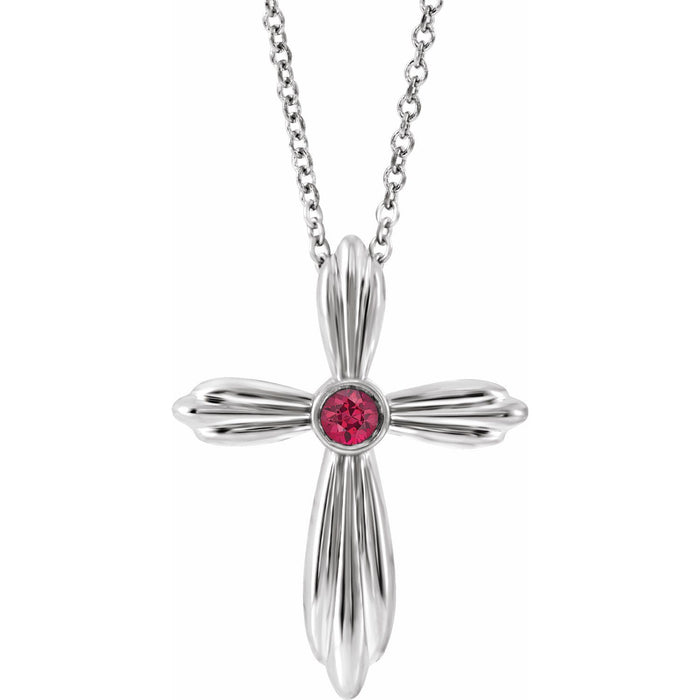 View Piece
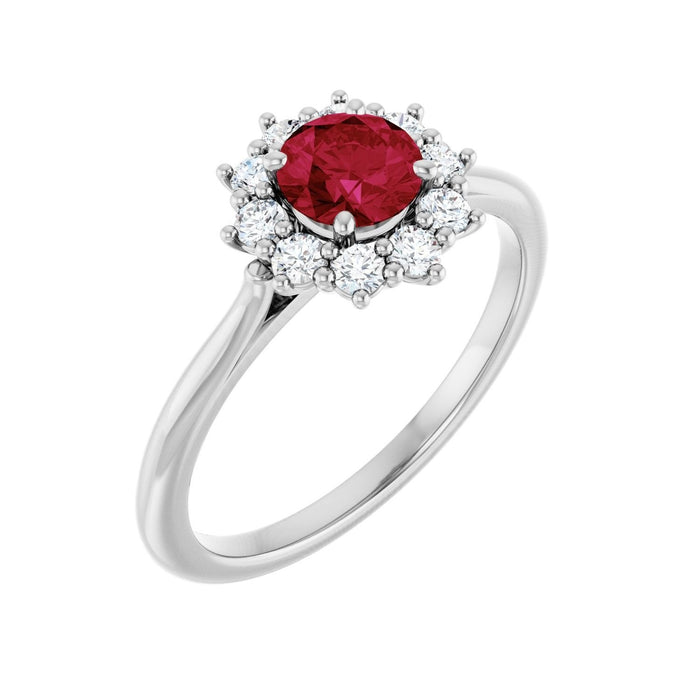 View Piece
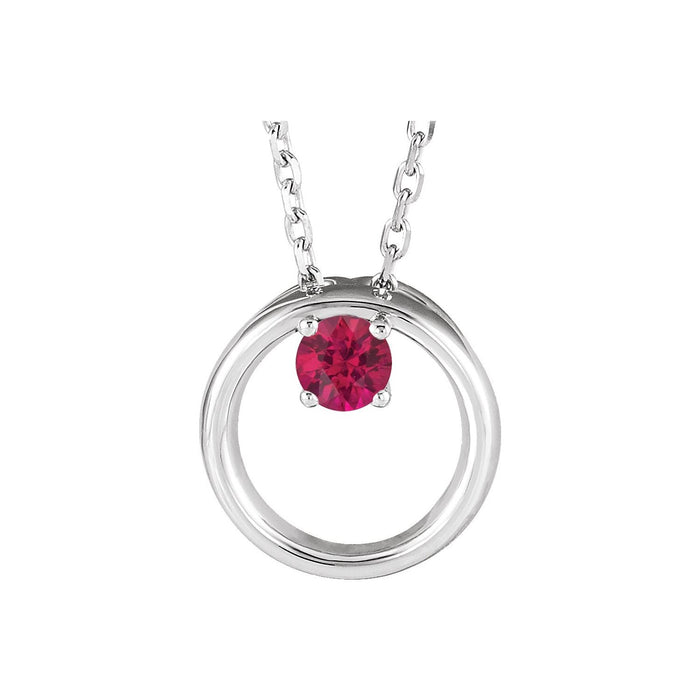 View Piece
Frequently Asked
Ruby Jewelry FAQ
Why choose ruby over other red gemstones?
Hardness is the practical reason. Ruby rates 9 on the Mohs scale, just below diamond at 10, while garnet, the other common red stone, rates 6.5 to 7.5. That gap matters most on a ring, where the stone meets desks, door handles and car keys every day. A harder stone keeps its polish and crisp facet edges longer. Ruby is also the July birthstone, which gives a ruby piece a built-in personal meaning for anyone born that month. Color is the emotional reason: a saturated red reads clearly even in small sizes, so a 4 mm stud or a petite cluster ring still has presence. If you want red that can be worn daily without much fuss, ruby is the dependable pick.
Are the rubies natural or lab-grown?
Both are offered, and each product page tells you which one you are looking at, usually in the title as well. A lab-grown ruby is the same mineral as a mined one: corundum colored red by chromium, with the same hardness of 9. The difference is origin. A natural ruby formed in the earth; a lab-grown ruby was grown in a laboratory under controlled conditions. Some designs, such as the vintage scroll halo engagement ring, are offered in a natural version and a lab-grown version, so you can compare the two side by side in the same setting. Choose the one that fits your budget and what matters to you. If you have a question about a specific stone, write to concierge@diamondandsapphire.com.
Are natural rubies treated?
Natural rubies are commonly heat-treated. Heating is a long-standing practice in the gem trade that improves color and clarity, and the result is standard and stable: it does not wear off or fade with normal use and care. Because the practice is so widespread, heated ruby is the norm in fine jewelry rather than the exception. Lab-grown rubies are grown in a laboratory, so their origin is stated as lab-grown on the product page instead. Every stone in this collection is labeled natural or lab-grown where you shop it. Our catalog pieces are sold to a published specification rather than with an individual grading report, so if you want more detail on a particular piece before you order, our concierge can help.
Which metal looks best with ruby?
Yellow gold and rose gold pick up the warmth in a red stone and give a ruby a classic, rich look. White gold and platinum frame the same stone in a cool, bright tone that makes the red look sharper, and they match diamond accents closely. Most ruby pieces here come in 14K and 18K yellow, white and rose gold, and many are offered in platinum. 18K gold carries a higher share of pure gold and a deeper color; 14K is a little harder and lighter on price. Platinum is dense, naturally white and the most expensive option. A good rule is to match what you already wear daily, especially a wedding band or watch, so the new piece sits easily beside it.
How much does ruby jewelry cost?
Ruby jewelry here starts from $259. The price you see is the complete price for the finished piece: on rings, it includes the ruby and any diamond accents, such as a halo or side stones, so nothing is added at checkout for stones. Price moves with a few clear factors. Natural ruby generally costs more than lab-grown in the same design. Larger stones, diamond halos and heavier settings raise the price, and 18K gold and platinum cost more than 14K gold. Stud earrings and small pendants sit at the lower end, while engagement rings and halo pieces sit higher. Changing the metal on a product page updates the price for that exact configuration before you buy.
Is ruby durable enough for everyday wear, and how do I care for it?
Yes. At 9 on the Mohs scale, ruby is one of the hardest gemstones used in jewelry, and it handles everyday wear in a ring better than most colored stones. It is not unbreakable, though. A hard knock against stone or metal can still chip any gem, so take rings off for heavy lifting, gardening or the gym. To clean ruby jewelry, soak it briefly in warm water with a little mild dish soap, brush gently behind the stone with a soft toothbrush, rinse, and dry with a lint-free cloth. Store pieces separately so harder stones do not scratch softer ones. Every piece carries a free lifetime warranty against manufacturing defects, such as a prong or clasp failing under normal wear.
How do I get the right fit?
Rings are made to your ring size, which you choose when you order. If you are unsure, our sizing guide explains how to measure a finger or match an existing ring, and it is worth checking before you buy, since a ring made to size is easier to get right the first time. Necklaces list their chain length on each product page, so you can compare it with a chain you already wear. Earring backs and closures vary by piece, and each listing shows what that pair uses. For a pendant, check the product page to see exactly what is included. Questions about fit can go to our concierge.
Is ruby jewelry a good gift?
Ruby is the July birthstone, which makes it an easy, personal choice for a July birthday. Red also carries an obvious romantic association, so ruby works well for anniversaries and Valentine's Day. If you do not know the recipient's ring size, earrings or a pendant avoid the sizing question entirely; ruby earrings such as small studs are a safe starting point. Unworn pieces in original condition can be returned within 30 days of delivery, which gives the recipient room to change their mind. Engraved and custom pieces are final sale, so add engraving only when you are sure of the choice. Shipping is complimentary and insured, with a signature required.
How long does ruby jewelry take to arrive?
Most pieces are made to order and ship in about 5-10 business days; ready-to-ship pieces leave in 2-3 business days, and each product page shows its own timing. Shipping is complimentary, fully insured UPS Express with a signature required on delivery. Rings are made to your size after you order, which is why they usually follow the made-to-order timeline. If you need a piece by a particular date, check the timing on its product page before checking out, and contact concierge@diamondandsapphire.com if a deadline is tight. Returns are accepted within 30 days of delivery on unworn pieces in original condition.