


The Men's Rings Guide
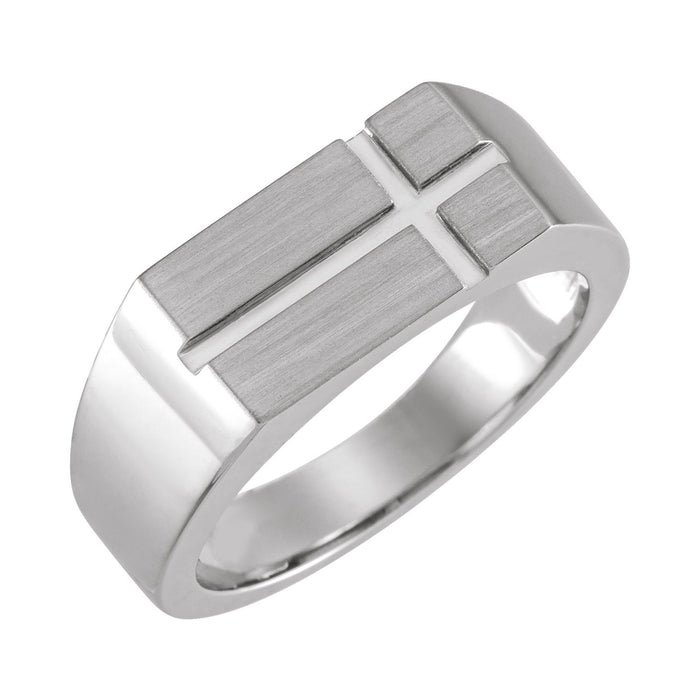
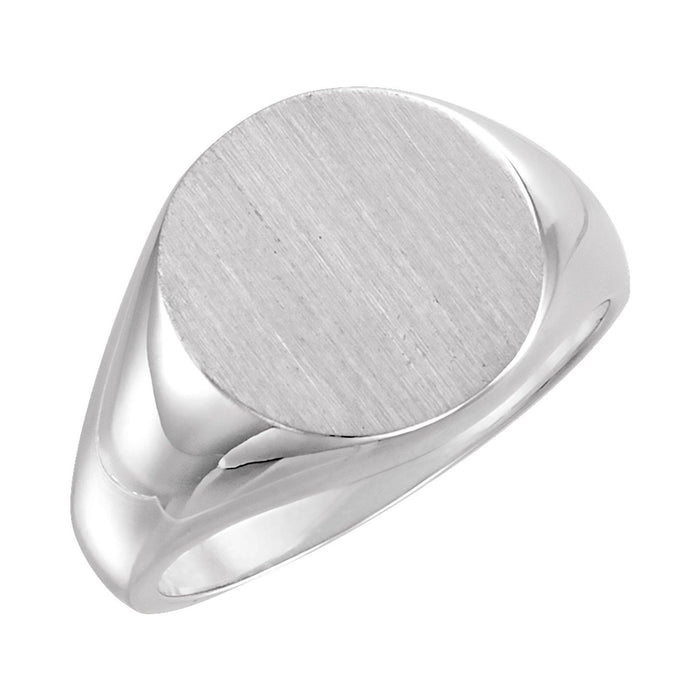
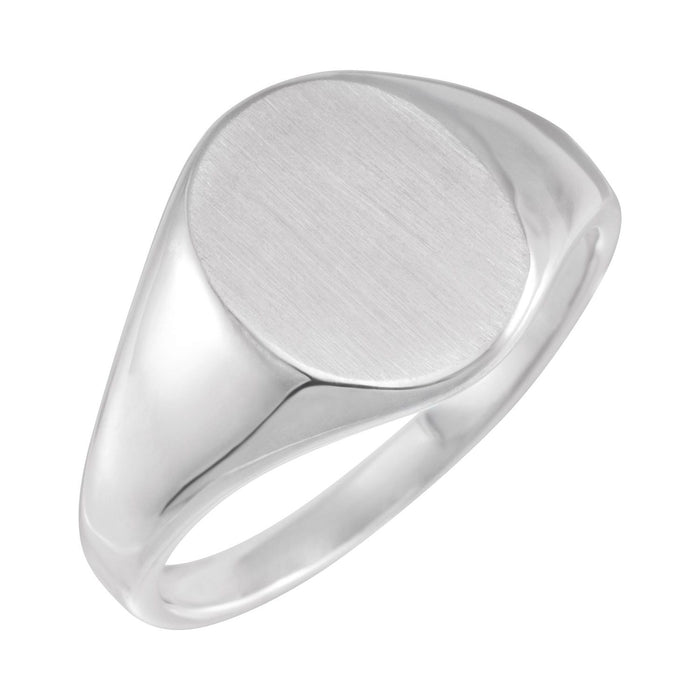
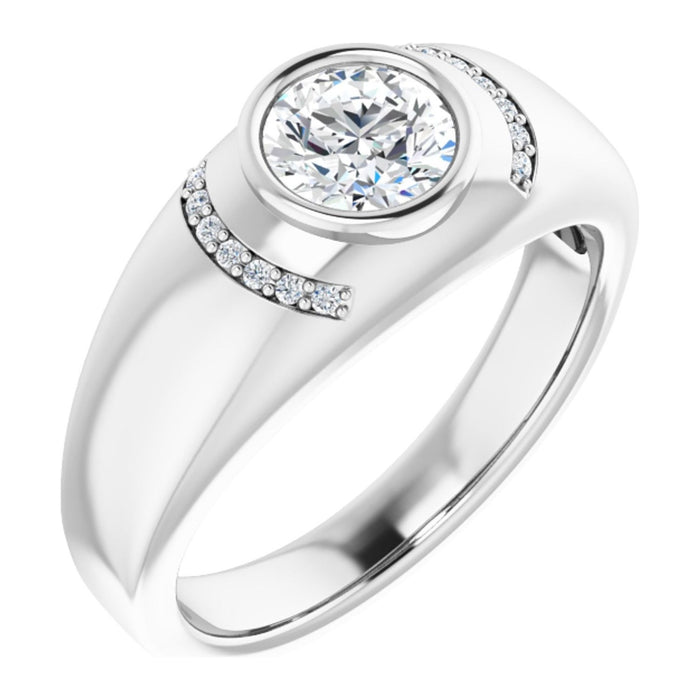
Men's rings are for the man who dresses a hand with intention, one strong piece that says who he is. The collection leans on engravable round and oval signets, a slim rectangle, a cross signet, a nugget and a bezel-set moissanite design. Choose a signet for tradition and a monogram, or the nugget for a rugged, sculptural statement.
To pair the ring with a gift for him, see Men's Cross Necklaces, or explore the full Men's Jewelry edit. For a band to mark the wedding, browse Men's Wedding Bands. Every ring is made to order, a piece to pass from father to son.
Frequently Asked
Men's Rings FAQ
What finger does a man wear a signet ring on?
Tradition says the pinky of the non-dominant hand, and in Britain that is still the rule. Most American men now wear a signet on the ring finger of the right hand, where it balances a wedding band on the left. There is no wrong answer; there is only what feels deliberate on your hand. Larger faces such as the Engravable Octagon Signet sit better on the ring or middle finger, where the knuckle can carry the width.
Can you engrave a signet ring, and what does it cost?
Yes. The signets marked engravable on this page have a flat or gently domed table cut for hand engraving: a single initial, a two or three letter monogram, or full crest artwork on the larger faces. Send your initials or artwork to the concierge after ordering and we will confirm the layout before any metal is cut. Simple monograms are typically modest in cost; full heraldic work is quoted per design, plainly, before you commit.
Are the diamonds in these rings natural or lab-grown?
Each product page says which. Where a design uses moissanite instead of diamond, as on the Men's Square-Head Moissanite Ring, the title says so plainly. Lab-grown diamonds are the same crystal as mined stones, grown in a controlled environment, and they cost meaningfully less. What we will not do is blur the two: the option you select is the stone you receive, disclosed on the page, the invoice and the appraisal.
Do lab-grown gemstones hold up as well as natural ones?
In wear terms, yes. A lab-grown emerald, like the one in our Lab-Grown Emerald & Diamond Men's Ring, has the same hardness and chemistry as its mined counterpart, which is what determines how it survives desks, door handles and gym bags. Where they differ is rarity and resale: lab stones are not scarce and should not be bought as investments. They should be bought for color, which they deliver at sizes most natural budgets cannot reach.
What ring size should I order if I've never worn a ring?
Do not guess. We mail a free ring sizer before you order, and because every ring here is cast to your exact size rather than pulled from a drawer, the size you give us is the size you get. Measure at the end of the day, when fingers run largest, and size wide bands about a quarter size up. Each ring is made to your size and is final sale, so our concierge is glad to confirm your size with you before you order.
Can these rings be resized later?
Almost all of them, yes. Plain-shanked signets and stone rings resize readily, so a jeweler can adjust them later if your size changes. The exceptions are designs with stones or pierced detail along the shoulders, which can usually move a half size but not more. If you are between sizes on one of those, ask the concierge before ordering and we will cast it to the exact size instead.
Which metal is best for a man's everyday ring?
14K gold is the workhorse: harder than 18K, warm in yellow and rose, and in white gold it carries a rhodium finish that we will re-plate as part of normal care. Platinum is the heaviest and the only naturally white choice; it scratches into a soft patina rather than wearing thin, which is why estate platinum rings from the 1930s are still in service. If you work with your hands daily, 14K yellow or platinum hide honest wear best.
Are these rings in stock or made to order?
Made to order, every one. The ship estimate for your selection is shown beside the price, and shipping is fully insured and free. Made-to-order is not a delay tactic; it is how we deliver a solid ring in your exact size and metal without selling you whatever happened to be in a tray. If a date matters, a wedding or a birthday, tell the concierge and we will confirm the timeline before you pay.
How should I care for a black onyx or garnet ring?
Onyx is agreeably tough; warm water, a drop of dish soap and a soft brush keep it deep black indefinitely, and the bezel setting shields its edges. Garnet is durable enough for daily wear but can chip under a hard knock, so take it off for the gym and heavy work. None of this is delicate-flower territory, it is the same respect you give a good watch, and a bezel or low setting does most of the protecting for you.
Is a heavy ring better than a light one?
Heavier usually means more metal, and more metal means a ring that keeps its shape through decades of handshakes and resizings. That is why the signets and nugget pieces here carry real gram weight through the shank. But weight you notice at hour one becomes weight you feel at hour sixteen, so first-time ring wearers often do better starting with the Slim Rectangle Signet or a smaller signet face. Buy the ring you will actually wear daily; the case queen helps nobody.