
Frequently Asked
Tennis Bracelets FAQ
What defines a tennis bracelet?
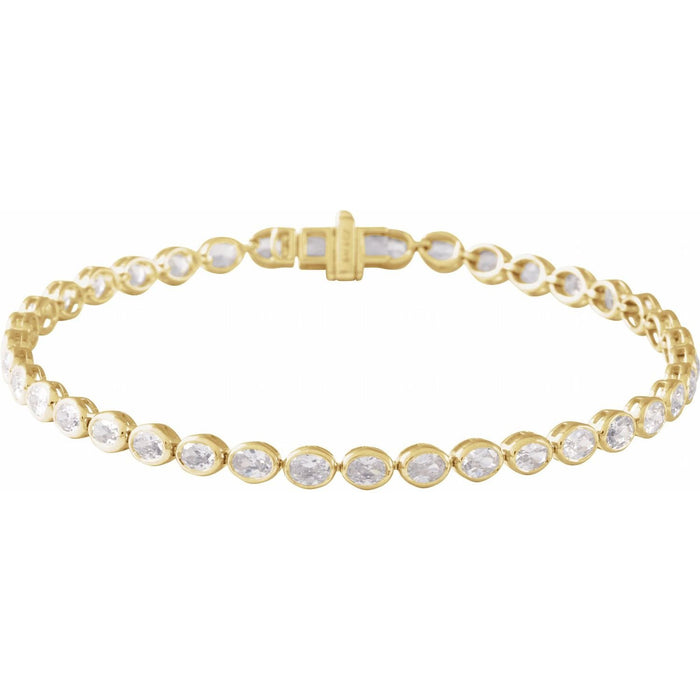
A tennis bracelet is a flexible line of gemstones set in a continuous row, each stone held in its own small setting and linked so the whole bracelet bends around the wrist. The name comes from a 1987 US Open match, when a player's diamond line bracelet came loose and play paused while she looked for it; the style has carried the name ever since. What sets a good one apart is consistency. The stones should match closely in color, size, and cut so the line reads as one clean sweep rather than a string of mismatched gems. In this collection, that line is built from lab-grown gemstones and lab-grown diamonds in 14K gold, with a secure clasp and a safety catch to keep it on your wrist. The result is a piece that sits flat, moves with you, and works for both everyday wear and dressier moments without changing character.
What does lab-grown mean, and are the stones real?
Lab-grown stones are real gemstones grown in controlled conditions rather than dug from the ground. A lab-grown diamond has the same carbon crystal structure as a mined diamond, and a lab-grown sapphire, ruby, or emerald is the same mineral as its mined version, with the same hardness and the same optical behavior. They are not simulants; cubic zirconia and glass are different materials entirely, and these are not that. The main differences are origin and price. Because growing a stone is faster and more predictable than mining one, you get noticeably more carat weight and clarity for the same spend, which is why lab-grown suits a tennis bracelet so well. If you specifically want a mined, natural stone, our concierge can source a natural-stone version of any bracelet on request and quote it for you. We label every stone honestly as lab-grown, so you always know exactly what is on your wrist.
Which stones and colors can I choose?
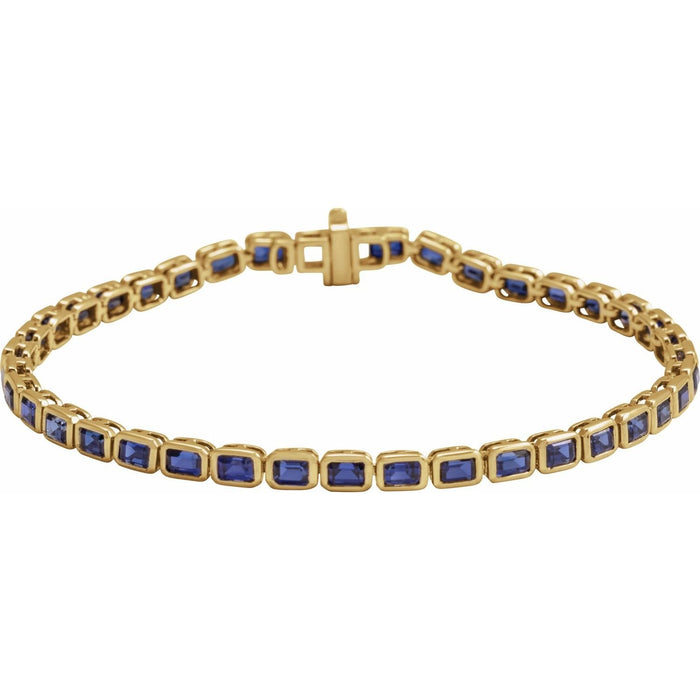
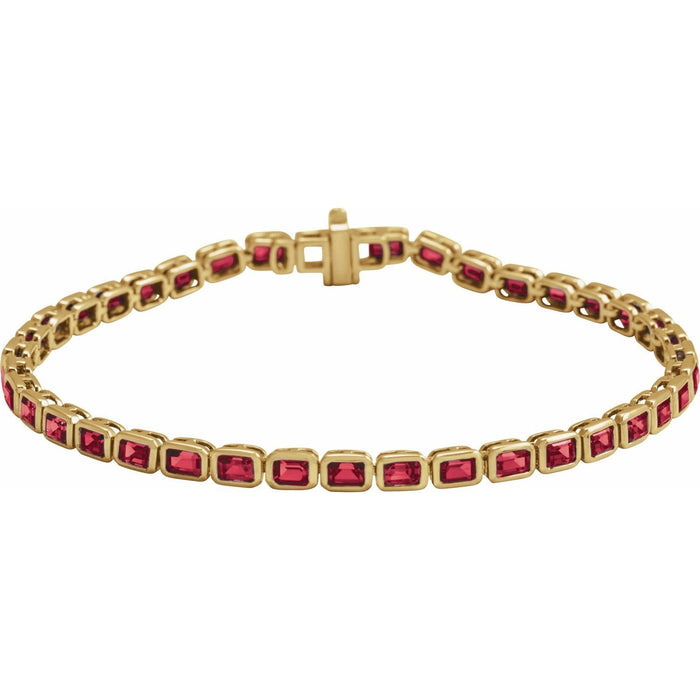
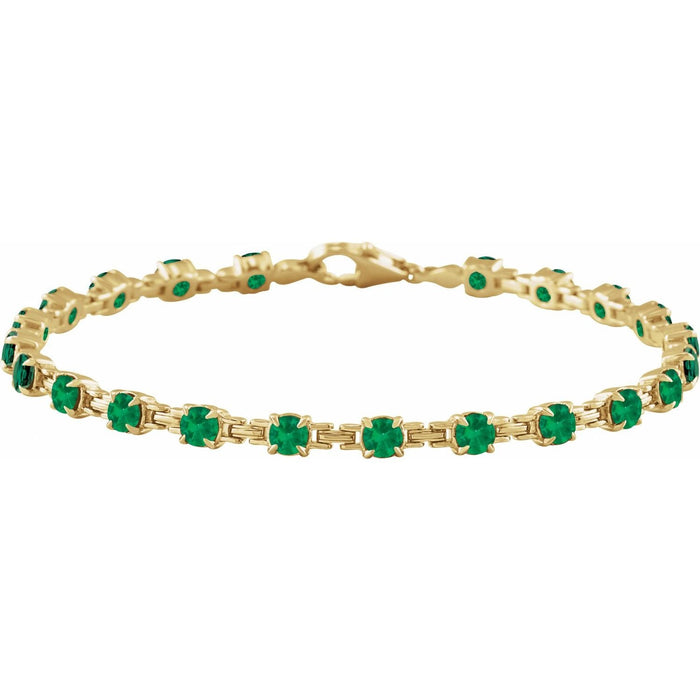
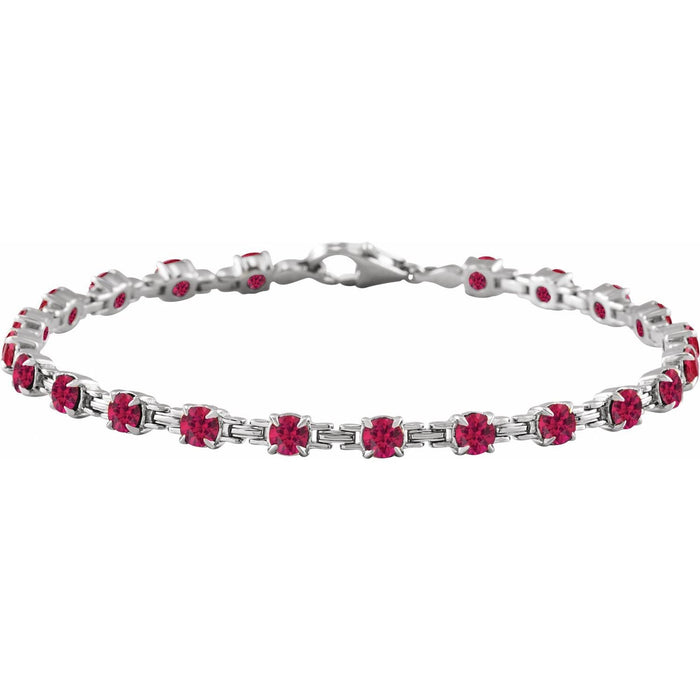
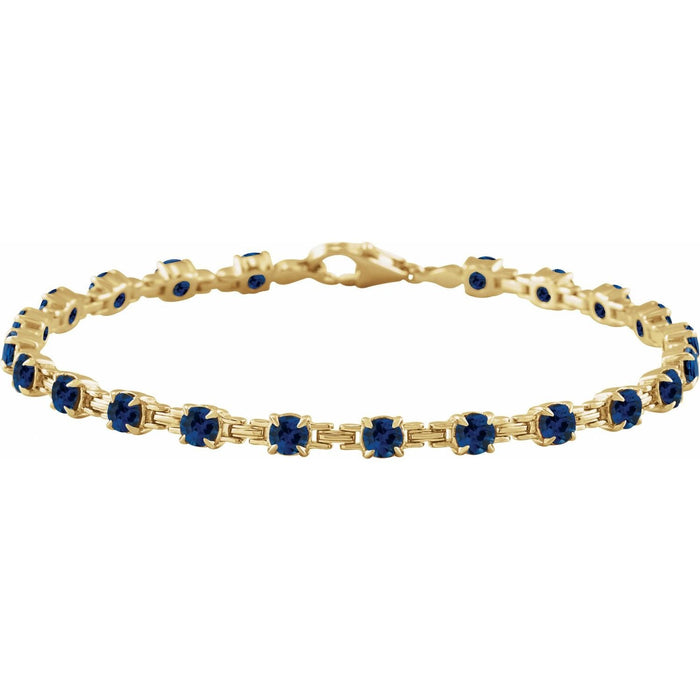
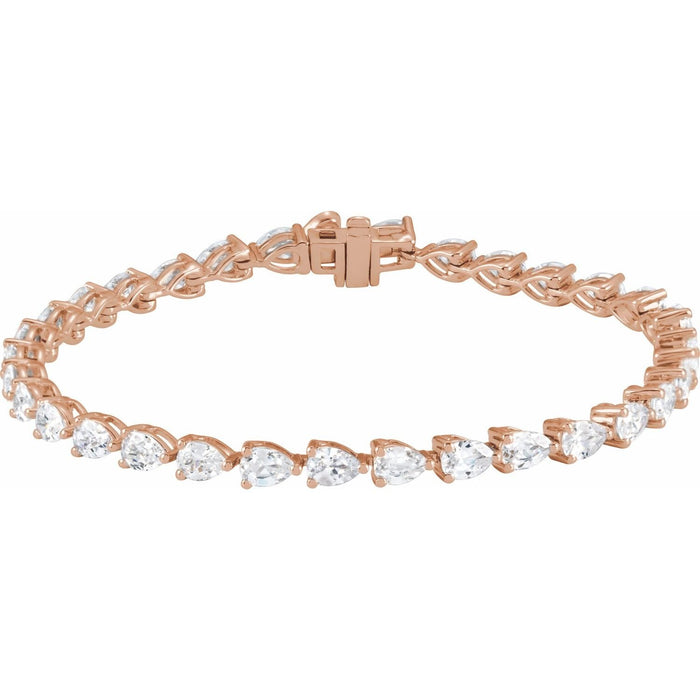
Four stone types run through the collection, each in lab-grown form. Sapphire brings a cool blue and is very hard, which makes it a practical choice for a bracelet worn often. Ruby is its red sibling, the same corundum mineral, and gives a deep, warm color that stands out against the skin. Emerald is green and more delicate, softer and more included than the others, so it reads as the dressier, more careful option. Diamond is the classic white choice, colorless and the hardest of the four, and it gives the bright, familiar sparkle most people picture when they think of a tennis bracelet. Sample pieces include the Emerald-Cut Lab-Grown Sapphire Tennis Bracelet, the Round Lab-Grown Ruby Tennis Bracelet, and a Pear Lab-Grown Diamond Tennis Bracelet. If you want a specific color to match a stone you already own, the concierge can help you get close.
Which cuts are available?
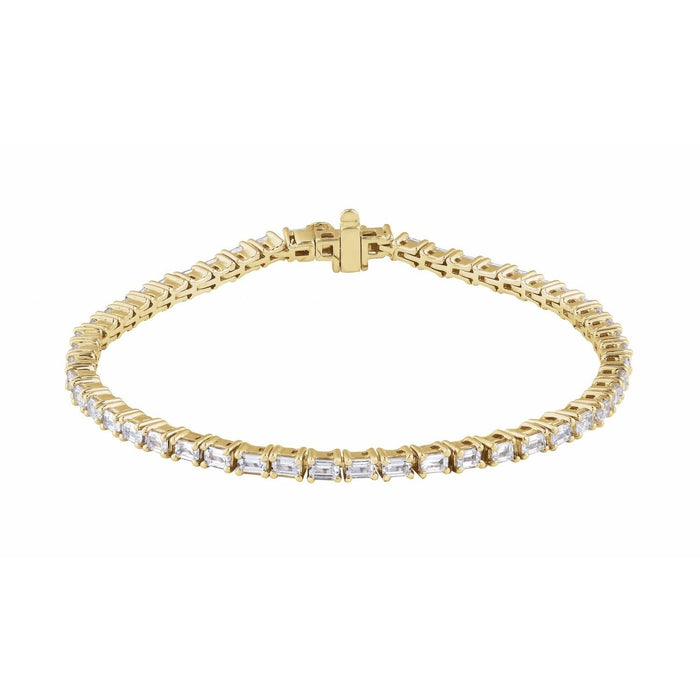
Cut shapes both the look and the way light moves through the bracelet. Round brilliants are the classic tennis choice, cut to throw the most sparkle, and they suit diamond and sapphire especially well. Emerald-cut stones are rectangular with long step facets, which gives a calmer, more architectural flash and shows off the color and clarity of a stone rather than raw sparkle; it looks particularly good in sapphire and emerald. Pear shapes are rounded at one end and pointed at the other, softer and a little less formal, and they read well in diamond. Because a tennis bracelet repeats one cut all the way around, the cut you pick sets the whole personality of the piece. Round for maximum brightness, emerald-cut for a cleaner and more modern line, pear for something softer. Each bracelet keeps a single cut across its length so the line stays even and consistent.
How much carat weight do I actually get?
Carat weight on a tennis bracelet is the total across all the stones, not a single center stone, so it is spread evenly around the wrist. Because these are lab-grown, you can reach a generous total carat weight for far less than the same weight in mined stones, which is one of the main reasons people choose lab-grown for this style. Sample pieces are offered at specific weights, such as a pear lab-grown diamond bracelet at 6.5 carats total, and other bracelets sit at a range of weights depending on stone size. A higher total weight means larger individual stones and a bolder line; a lower weight gives a finer, more delicate look. Each product page lists the total carat weight and the approximate size of the individual stones, so you can picture how it will sit before you buy. If you want a particular weight that is not shown, the concierge can build it to order and quote it.
What metal are the bracelets set in?
Every bracelet in this collection is set in 14K gold. That alloy is a deliberate choice for a piece worn on the wrist, where jewelry takes more knocks than it does at the ear or the neck. 14K gold is harder and more scratch-resistant than higher-karat golds like 18K or 22K, so it stands up better to daily contact with desks, keyboards, and doorframes, while still holding a rich gold color. It also grips the stones securely in their settings, which matters when a bracelet flexes with every movement of your wrist. The gold runs through the links and the clasp, so the whole piece wears as one. If you have a preference on gold tone or want to confirm the exact specification for a particular bracelet, the concierge can give you the details before you order. For most people, standard 14K gold is the practical and long-lasting choice for a bracelet worn often.
How should the bracelet fit, and how is it secured?
Fit matters more on a tennis bracelet than on most jewelry, because a line of stones should sit snug enough to lie flat but loose enough to move a little. Too tight and it digs in; too loose and it spins so the stones face downward. Each bracelet lists its length, and the aim is a small amount of movement without the piece sliding over the hand. Security is built in. The bracelets use a proper clasp backed by a figure-eight safety catch, a small hinged latch that closes over the clasp as a second line of defense, so that if the main clasp is knocked open the bracelet stays on your wrist. This is the feature the famous 1987 tennis match was missing. If you are between lengths or want to match a bracelet you already own, the concierge can advise, and sizing adjustments can often be arranged before the piece ships.
Does a tennis bracelet make a good gift?
A tennis bracelet is one of the safer pieces of fine jewelry to give, because it does not depend on ring sizing and suits almost every wrist and wardrobe. It reads as a considered, milestone-level gift, which makes it a common choice for a significant birthday, an anniversary, a graduation, or a wedding. The lab-grown stones let you give a larger, brighter bracelet for a given budget than mined stones would allow, so the gift looks more generous without overreaching. Color lets you personalize it: blue sapphire, red ruby, green emerald, or classic white diamond, matched to what the person already wears. It also suits a wide age range and works for someone who wants one good piece rather than a drawer of jewelry. For a gift with a set date, check the lead time first, since some bracelets are made to order and need time to build and set.
What does the from price include?
Pricing for this collection starts at $2,895. That figure covers a complete, wearable bracelet: the full line of lab-grown stones, all set and secured, the 14K gold links, and the clasp with its safety catch, ready to wear on arrival. It is not a price for a bare mounting or a single stone. What moves the price up from there is total carat weight, the stone type you choose, and the cut, since a larger diamond line costs more than a smaller sapphire one. There are no separate setting fees added at checkout for a standard bracelet. If you ask for a higher carat weight, a natural-stone version, or another change, the concierge quotes the full number before you commit, so you always see the complete figure first. The from price reflects an entry bracelet that is finished and ready, not a starting point that needs extras to become wearable.
How do I care for lab-grown gemstone bracelets?
Durability depends on the stone. Lab-grown diamond is the hardest at 10 on the Mohs scale, sapphire and ruby are both 9, and all three handle daily wear well. Emerald is softer at 7.5 to 8 and more included, so an emerald bracelet needs a gentler hand and is better kept for calmer days than heavy manual work. Whatever the stone, take the bracelet off before the gym, gardening, or cleaning, since sharp knocks and harsh chemicals are the real threats. To clean it, soak briefly in warm water with a drop of mild dish soap, work gently around each setting with a soft brush, rinse, and dry with a lint-free cloth. Ultrasonic cleaners suit diamond, sapphire, and ruby but should be avoided for emerald, which can crack under vibration. Check the clasp and safety catch now and then, and have the settings inspected by a jeweler once a year if you wear it constantly.