
Cushion Cut vs Radiant Cut
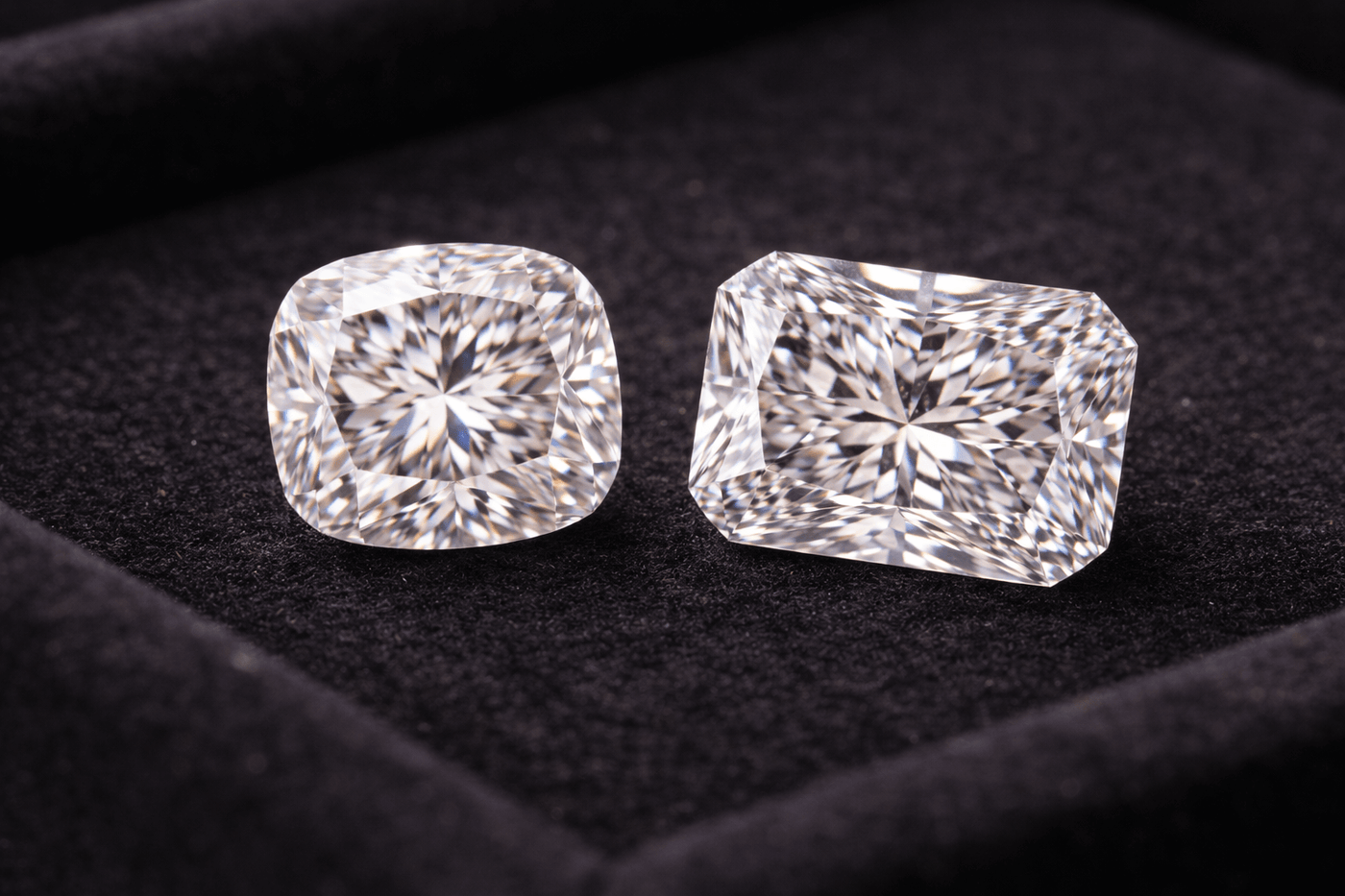

It can be hard to choose the right diamond cut, but knowing what your options are can help a lot. The cushion cut has soft, rounded corners and a "pillow" shape that make it look romantic and old-fashioned. The radiant cut has a square or rectangular shape and many facets that make it look modern and sparkly. Both cuts reflect light in a beautiful way, but they do so in slightly different ways. We'll explain what each cut is, compare their features, and give you expert advice on how to buy, care for, and style these popular shapes in this guide. In the end, you'll know enough to choose between a cushion cut and a radiant cut for your next piece of jewelry.(4)
What Are Cushion and Radiant Cuts?

Cushion Cut: The cushion cut diamond is an old mine cut from the 1700s that is still popular today. Cushion cuts today are square or rectangular with sides that curve gently and corners that are rounded. From the top, you can usually see 4 or 8 kite-shaped facets (mains). Some cushion cuts are "modified" by adding more facets to the crown or pavilion to make them shine more. These cuts carry a warm, vintage character well-suited to our natural diamond rings. Imagine a ring with a glowing pillow of light in it.(5)
Radiant Cut: The radiant cut was invented in the late 1970s. It combines the beauty of the emerald cut with the fire of the brilliant cut(4). It has eight sides and corners that have been cut off(1). Radiants can be square or rectangular, and they have a unique faceting pattern that combines step facets on the crown with brilliant facets on the pavilion(1). Radiant diamonds deliver exceptional brilliance—a quality you can explore across our classic diamond collection. They were made to get the most fire and light return while hiding flaws better than straight-edged cuts(4).
Types / Variations of Cushion & Radiant Cuts
Different Types of Cushion Cuts


There are two main types of cushion cuts:"brilliant cushion"and"modified cushion"(2). A brilliant-style cushion has bigger facets that make things clearer, which gives the sparkle a softer, more romantic look. A modified cushion, on the other hand, adds extra facets, like a "crushed ice" faceting pattern, to make the fire and brilliance more intense(3). In real life, cushion diamonds can look like old mine antiques or modern hybrids. Even though the number of facets varies, all cushions have the same pillow shape. These cuts are very strong because the rounded corners don't chip, and they look great in vintage or halo-style settings.(5)
Different Types of Radiant Cuts


There are two ways to classify radiant cuts: by shape (square or rectangular) and by the way the facets are cut.A square radianthas sides that are the same length and a symmetrical shape.A rectangular radiantis longer and can make fingers look longer when worn. Both have corners that are cut off and a brilliant-cut facet pattern. People often choose the square radiant because it has a classic balance, while the rectangular radiant gives the hand a longer look(3). Radiant diamonds are naturally strong (the cropped corners keep them from chipping) and look great in both modern solitaires and halo settings.(5)
How to Identify Quality in Cushion and Radiant Diamonds
Start with a reliable certification choosing a cushion or radiant cut diamond, and then trust your eyes. A grading report from a reputable lab like GIA or IGI should always be available. This report will confirm the diamond's authenticity, color, clarity, and other important details(1).
Next, look at the diamond's overall symmetry. From every angle, a well-cut stone should look balanced, with sides that are the same shape, corners that match, and facets that are neatly aligned. For example, in a radiant cut, the culet should be in the middle, and the sides should look straight and parallel, giving the stone a clean, structured look(1).
These shapes are especially important to see in person. To see how lively it looks, look at it in different lighting conditions and in natural light. face-up—this step can't be fully replaced by a certificate. Radiant cuts have a lot of facets, which makes small inclusions harder to see. Because of this, a stone with a slightly lower clarity grade may still look clean to the eye. Cushion cuts, especially those with bigger facets, show clarity more easily, so a higher clarity grade usually makes the stone look cleaner and brighter(5).
In short, put certification, symmetry, and how the diamond works in real life at the top of your list. When you first see a good cushion or radiant cut, it should look well-proportioned, sparkle all the time, and make you feel good.
Buying Guide: How to Choose the Right Cut
Budget and Value:A cushion or radiant cut usually costs less per carat than a round brilliant with the same specs(3). Because they use rough material, cushions are often cheaper than rounds. Radiants, which have a lot of sides, usually give you great brilliance for the money. A well-cut cushion can still show off beautiful fire at a very low price. Also, think about how big they look: cushion cuts tend to look a little smaller than round stones of the same carat weight because their facets are deeper(2).
Lifestyle and Personal Style: Think about the person who will wear it and what they do every day. Cushions have a classic, feminine look. They go well with vintage settings or halos and softer, more romantic styles. Radiants are modern and flashy, perfect for someone who likes bold, modern pieces. Pick a cut that shows off your personality and way of life. Both cuts are very strong, so if you live an active lifestyle, it's a good idea to protect any trimmed or rounded corners with protective prongs or a bezel. In the end, choose the cut that fits the recipient's taste and the mood of the piece.(4)
Care, Cleaning & Maintenance

Cushion and radiant diamonds are very tough; they are a 10 on the Mohs scale. But regular care will help them look their best. To clean it regularly, use a soft cloth to wipe it down or soak it in warm water with a little bit of mild dish soap. Use a brush with soft bristles to clean around the diamond and under the setting, where dirt and oils tend to build up. Don't use harsh chemicals or abrasive cleaners, and be careful with ultrasonic cleaners, especially if the stone is set loosely(5).
You should also check the setting on a regular basis. Look for signs of wear on the prongs and edges, especially the corners. Radiant cuts have cropped corners, and cushion cuts have girdle edges that can catch or loosen over time. Getting your ring cleaned and checked by a professional once a year will help keep it shiny and make sure the stone stays secure in its setting(5).
Common Myths & Misconceptions
-
Myth: "Cushion cuts are no longer in style."
Fact: Cushion cuts are one of the oldest styles of diamonds, but they've come back in a big way. Some reports even said that the cushion was the third most popular engagement cut a few years ago. Modern cushion cuts are very popular right now because they combine classic beauty with modern precision.(2) -
Myth: "Radiant cuts don't sparkle as much as round cuts."
Fact: Radiant cuts are very bright, in fact. They have about 70 facets and a mixed cut that makes fire and scintillation as bright as possible. Gem experts say that radiant diamonds "dazzle" with light, which is great for someone who likes a lot of sparkle.(6)
Pros & Cons Comparison
|
Feature |
Cushion Cut |
Radiant Cut |
|
Appearance |
Pros:Warm, pillow-like vintage charm; soft, romantic sparkle. Cons:Facets are large, so sparkle is gentler (not as blinding as round). |
Pros:Bold, modern look with trimmed corners; intense brilliance from ~70 facets. Cons:Less old-world charm; rectangular shape may show color more at lower grades. |
|
Durability |
Pros:Rounded corners (very chip-resistant). Cons:Deep pavilion can look smaller face-up. |
Pros:Cropped corners protect edges (also very durable). Cons:None significant – both cuts handle daily wear well. |
|
Color/Clarity |
Pros:Often hides slight color well with warm glow. Cons:Large facets mean inclusions are more visible, so aim for higher clarity. |
Pros:Many facets help mask inclusions and color imperfections. Cons:Very low color grades can show yellow due to high brilliance. |
|
Versatility |
Pros:Great in vintage, halo, or cushion-friendly settings; popular with celebs. Cons:Classic style might not suit very modern tastes. |
Pros:flexible from solitaire to halos; excellent for those seeking contemporary designs. Cons:Bold look may overshadow more delicate settings. |
|
Price |
Generally more affordable per carat than round brilliants; price varies by quality. |
Usually mid-range; radiants often cost a bit more than cushions due to demand for sparkle. |
Trends & Modern Market Demand
Cushion and radiant cuts are both very popular in the diamond engagement rings market right now. Designs that look like they came from the past are making a big comeback, and the cushion cut is often mentioned as Among the most popular styles right now. A lot of people like it because it reminds them of the past, especially when it's used in modern settings that make it feel new market right now. Designs that look like they came from the past are making a big comeback, and the cushion cut is often mentioned as Among the most popular styles right now. A lot of people like it because it reminds them of the past, especially when it's used in modern settings that make it feel new(7).
The radiant cut is still a popular choice for modern jewelry, though. Industry sources say that radiant diamonds are Among the most popular rectangular engagement ring styles, especially for people who want a lot of sparkle and shine(3). In short, both cuts have loyal fans. People who like classic elegance like cushion cuts, while people who want a bright, modern look like radiant cuts(5).
Investment & Resale Value
You shouldn't think of cushion or radiant cuts as mainly financial investments, just like most diamonds. When you sell a diamond again, it usually sells for a lot less than what it cost new, no matter what shape it is. Experts usually say that diamonds should be seen as luxury or sentimental items, not investments that will go up in value(4).
There is no clear investment advantage between cushion and radiant diamonds because resale prices depend on many things besides cut, like overall quality, market demand, and condition. If you choose a shape you really like, you'll almost always be happier with it in the long run than if you focus on how much it might be worth when you sell it.
Who Should Buy These Cuts?

-
Cushion Cut:This is great for someone who likes a romantic, feminine look. Fashion experts say the cushion is "soft" and "feminine," which is great for brides who want a warm glow and a vintage look. The rounded edges look good on a lot of finger shapes, and it goes well with halo or antique settings. A cushion cut is a natural choice if you like classic Hollywood or bridal heirlooms.(6)
-
Radiant Cut:This is the best choice for someone who wants a modern look and lots of sparkle. Jewel experts say that people who wear radiant cuts are "bubbly and outgoing" and want flash and fire. The sharp, trim corners give it a sleek look, and the many facets make sure it stands out. The radiant cut is perfect for you if you like modern styles or just love a lot of shine in a bold geometric shape.(6)
Frequently Asked Questions (FAQ)
Q: Which diamond cut sparkles more, cushion or radiant?
A:The radiant cut usually has more sparkle than the cushion cut. Radiant diamonds have about 70 facets and a unique brilliant-cut facet arrangement that makes them "quite the dazzler"(6). The cushion has a softer, warmer sparkle, like candlelight from the old days. The radiant was made to have the most fire. The radiant wins if you want the most sparkle.(5)
Q: Which cut hides inclusions better?
A:The radiant cut can usually hide inclusions better. A radiant cut has many sides that scatter light in ways that can hide small flaws inside the stone(3). Because the cushion cut has bigger facets and a deeper pavilion, inclusions are more likely to show up when you look at it face up. If you choose a high clarity grade, both cuts can look clean. However, radiant cuts are a little more forgiving of small flaws.(5)
Q: Is the cushion cut diamond outdated?
A:No, the opposite is true. Cushion cuts have been around for a long time, but they are now very popular again. In fact, they were Among the most popular shapes for engagement rings in the last few years(2). They feel both old-fashioned and modern because they have a mix of old-fashioned charm and new facets. Jewelers say that celebrities and brides are flocking to cushion cuts because they are always in style.(5)
Q: Which diamond cut is better for a romantic, vintage look?
A:People often like the cushion cut for a soft, romantic look. Experts in the field say that its rounded corners and brilliant facets give it a "soft look with a lot of sparkle" that is perfect for a vintage-inspired ring. The shape of it really looks like a soft pillow, which is very elegant and dreamy. The radiant cut, on the other hand, has a more modern, angular look.(6)
Q: Which cut suits smaller fingers or hand shapes?
A:Both cuts can look great on most fingers, but they have different effects. Gemologists say that marquise or oval shapes look best on slender fingers, while cushion cuts (which are more square) look good on a wide range of finger sizes. When the radiant cut is rectangular, it also makes fingers look longer. If your hands are small, you might like a square cushion or a rectangular radiant better, but both cuts work well in general.(4)
Q: Which cut is more popular right now?
A:The cushion cut has been very popular in the last few years, even topping some engagement ring charts(2). Modern brides love it because it has a vintage feel. The radiant cut is still a popular choice for people who want a bright, modern look(3). Round brilliants are still the most popular shape overall, but cushion and radiant shapes are also very popular right now.(5)
Expert Jeweler Tips
-
See It in Person: To see how sparkly both cushion and radiant diamonds are, always look at them in jewelry store lighting and, if possible, in natural light. Jewelers say that pictures or specs alone can't show how brilliant a cut really is(1). Also, try on different settings. A halo can make the same stone look softer, while a solitaire can make it look sharper.(5)
-
Understand Cut Variations: For cushion cuts, "modified" cushions have more facets for more fire, while "classic" cushions have larger, clearer facet planes(3). For radiants, the length-to-width ratio changes the look of a square versus a rectangular shape. Also, Ensure the facets are all the same size (no corners that are too small). A well-cut cushion should have "kite" facets that are the same on both sides, and a radiant should have a facet grid that is balanced.(5)
-
Protect the Corners:Both shapes do better when they are in safe places. Cushion cuts have softer corners, but they can chip at thin girdles, so think about using bezel or halo settings to protect them(2). Radiant cuts have corners that are shorter than normal, which makes them stronger, but they still have prongs at all four corners. A double-prong style or a square halo can protect the edges of any facet. These extra steps protect your diamond from getting knocked around when you wear it every day.(5)
Conclusion
Each of the cushion and radiant cuts has its own charm. The cushion cut has a soft, rounded "pillow" shape that gives it a vintage romantic look. The radiant cut, on the other hand, has sharp angles and a modern sparkle. Today's gemologists stress that neither choice is objectively "better." What matters is what you like. The best diamond cut should show who you are and the story you want to tell. With the information above, you can compare cushion and radiant options with confidence. Think about which look makes you feel good: a classic cushion glow or a bright radiant dazzle. No matter which one you choose, you'll be wearing a beautiful, high-quality diamond that will last for generations.
Check out our carefully chosen groups of cushion and radiant cut engagement rings and fine jewelry. For a personalized consultation, get in touch with a jewelry expert today—or start browsing our curated ring collection. You can also sign up for our newsletter to get more tips and trends on how to choose the perfect diamond cut. (Free advice—let us help you find the gem that tells your own love story!)
Soft romance or vibrant brilliance.
Explore Cushion and Radiant cut diamonds crafted for lasting beauty atDiamond and Sapphire.
Read more
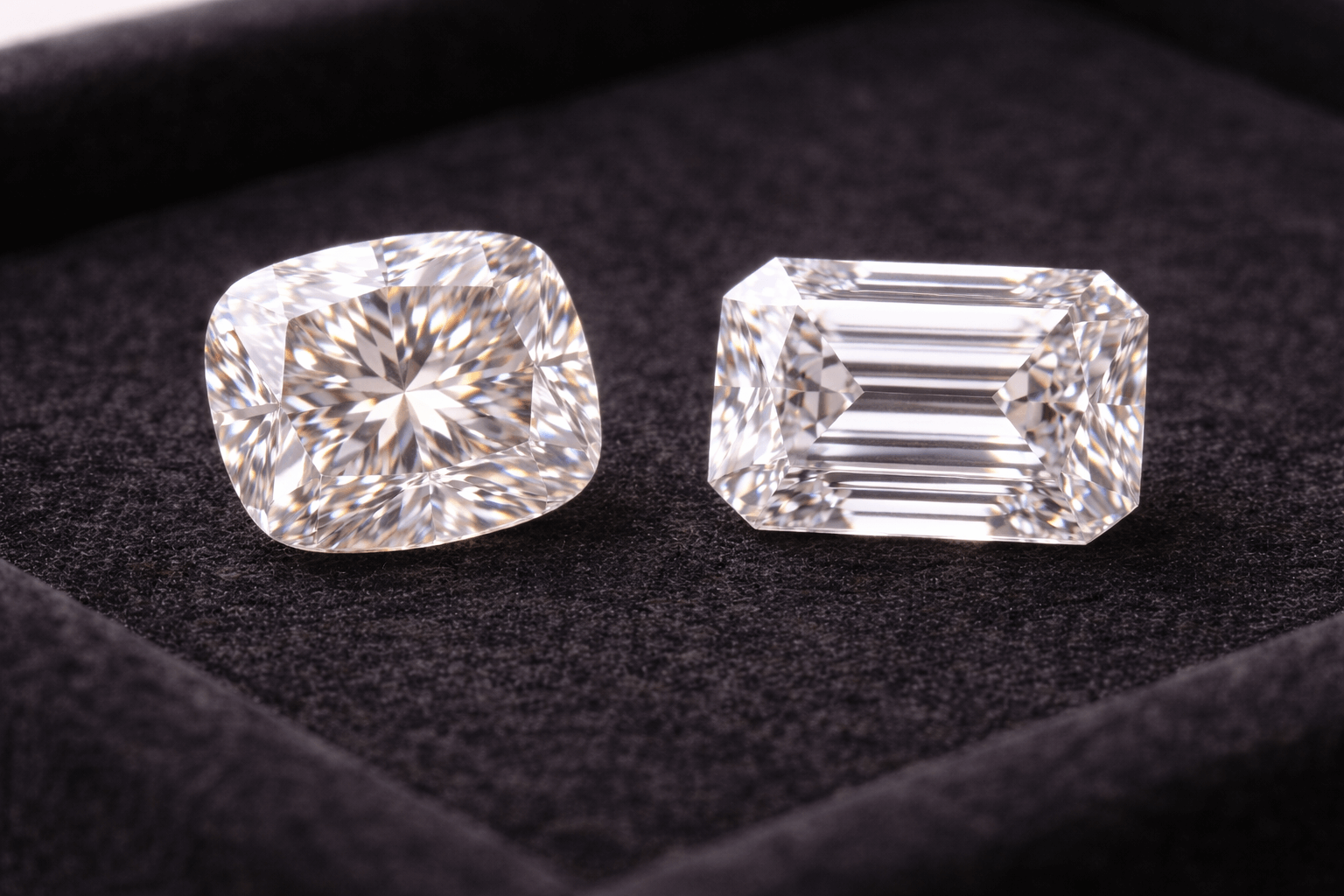
Cushion-cut diamonds have soft, rounded corners and a brilliant faceting style that gives them a romantic, vintage glow. Emerald-cut diamonds, on the other hand, have long, step-cut facets that mak...
Read moreCushion-cut diamonds have soft, rounded corners and a brilliant faceting style that gives them a romantic, vintage glow. Emerald-cut diamonds, on the other hand, have long, step-cut facets that mak...
Read more