
Frequently Asked
Diamond Hoop Earrings FAQ
What are diamond hoop earrings, and what styles do you carry?
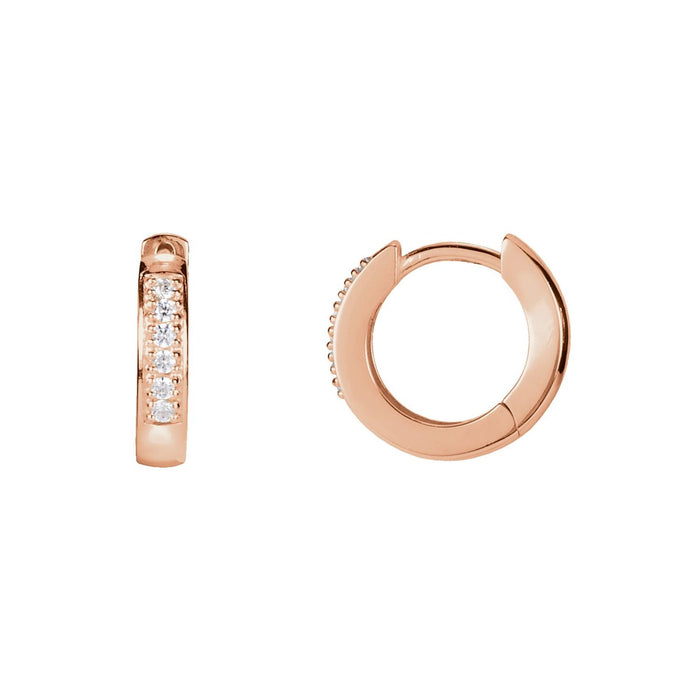
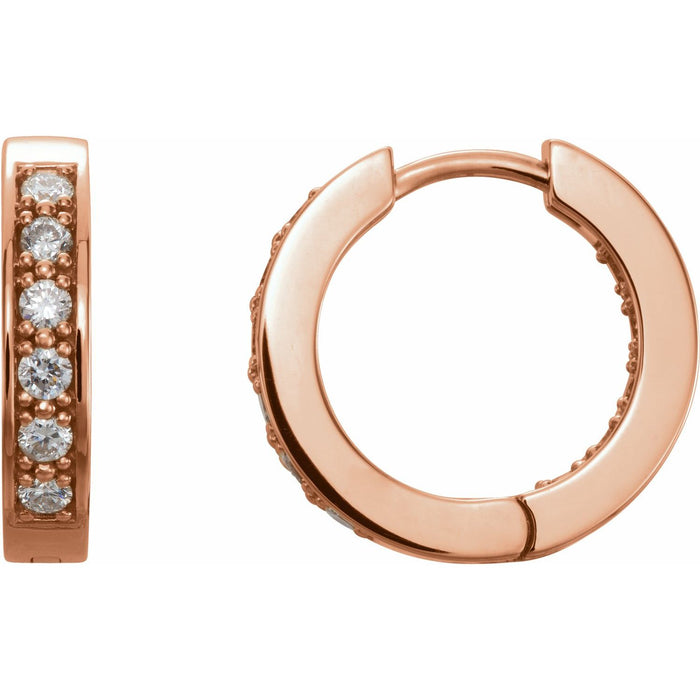
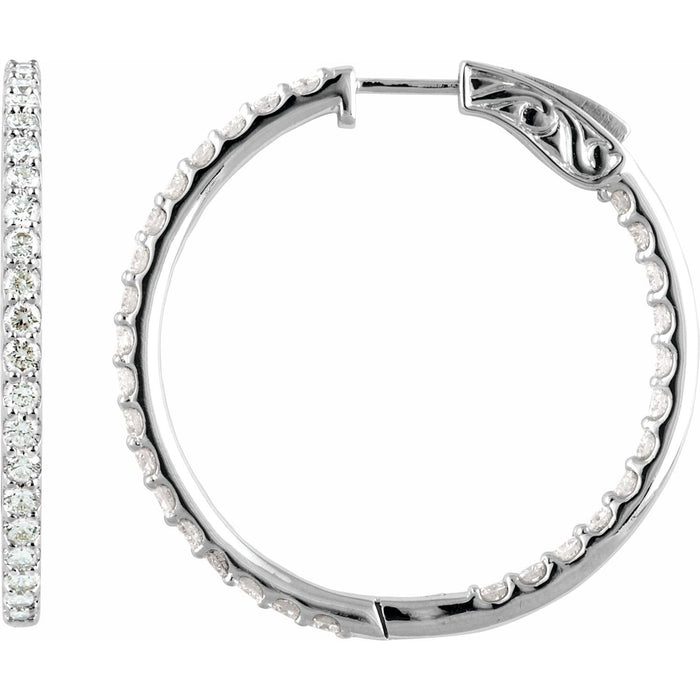
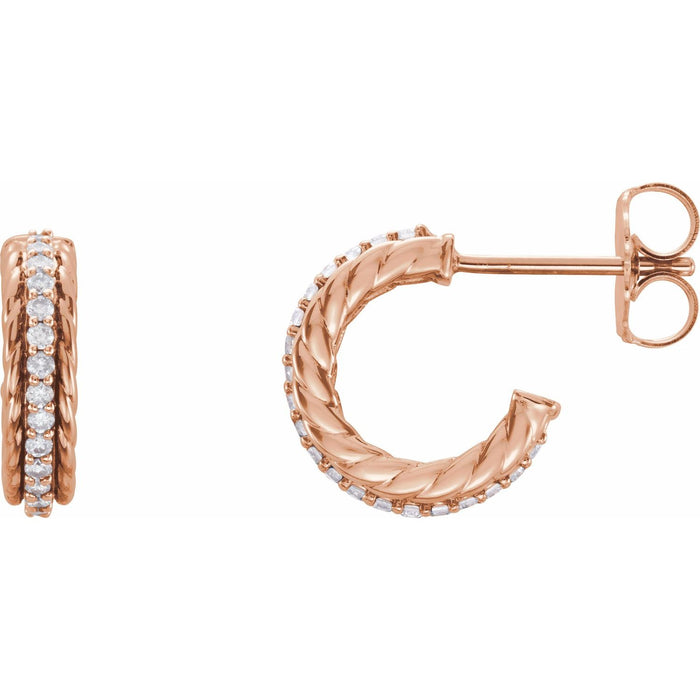
Diamond hoop earrings are hoops set with diamonds along the front face or all the way around, worn close to the earlobe in a continuous or near-continuous loop. We carry four core silhouettes. Huggies are small, snug hoops that hug the lobe, easy to layer and comfortable around the clock. Classic hoops are the everyday shape most people picture: an open circle with diamonds across the front. Inside-out hoops set stones on both the inner and outer surfaces, so they sparkle from the front and from the side as you turn. Oversized or statement hoops go big and bold for evenings and photos. Within each shape you will find single-row, multi-row, and pavé settings, plus different diameters and carat weights. That range means you can find a pair for a first piercing, a daily driver, or a showpiece, all in the same collection, in your choice of metal and diamond type.
Are the diamonds real? What is the difference between lab-grown and natural?
Yes, every diamond we set is a real diamond, offered in both lab-grown and natural. Lab-grown diamonds are chemically, physically, and optically identical to mined ones; the difference is origin, not the stone itself. Lab-grown typically costs less per carat, so you get more size or a higher grade for the same budget, while natural diamonds appeal to buyers who want an earth-mined origin. Each pair's product page states which type it uses, and any lab-grown accents are disclosed. We do not claim a separate certificate for every tiny stone: melee and pavé diamonds are sold to a published color and clarity spec at a stated carat weight, which is standard in fine jewelry. For center or feature stones, a grading certificate is available on request. If you are weighing the two, our guide on lab-grown vs natural diamond walks through cost, sparkle, and resale.
How do I pick a hoop diameter in mm?
Hoop size is measured by outside diameter in millimeters, and it changes the whole look. Small huggies run about 8-12mm and sit tight to the lobe, subtle, stackable, and great for a second or third piercing. Everyday hoops fall around 15-25mm: big enough to read as hoops, small enough to wear to the office or the gym without catching. Statement hoops start near 30mm and climb from there for a bolder, dressier effect. A quick trick: hold a ruler up to a mirror and picture the circle against your ear, or measure a hoop you already love. Remember that diameters are approximate, and thicker settings or more diamonds make a hoop look larger than the number suggests. If you are between sizes, the smaller one usually wears more often, while the larger one delivers more presence for events and photos.
What is the difference between single-row and inside-out hoops?
The difference is where the diamonds sit. A single-row, or front-facing, hoop places one line of diamonds across the outer front of the hoop, the part people see head-on. It is the classic, efficient look: maximum sparkle where it shows, at a friendlier price because fewer stones are used. An inside-out hoop sets diamonds on both the front outer surface and the inner surface that faces your neck, so the pair sparkles head-on and in profile, front and side alike. Inside-out hoops carry more total carat weight and cost more, but they never show a plain metal edge. If your hair is usually up or you want brilliance from every angle, inside-out is worth it. If you mostly want front-on shine and value, a single-row hoop is the smart, comfortable everyday choice. Both come in each of our diameters.
Which metal should I choose?
We offer 14K white, yellow, and rose gold, plus platinum. 14K gold balances durability and value: white gold gives a bright, cool backdrop that makes diamonds look extra white; yellow gold reads warm and classic; rose gold is soft and pink and flatters many skin tones. Platinum is denser, naturally white, and hypoallergenic, so it is a good pick for sensitive ears and for holding diamonds securely over decades. White gold is plated with rhodium for its shine and needs occasional re-plating, while platinum keeps its color but develops a soft patina some people love. For daily hoops, any of these works well; the choice is mostly about color and budget. If you are deciding between the two white metals, our comparison of white gold vs platinum covers upkeep, weight, and cost so you can match the metal to how you will wear them.
What closures do diamond hoops use, and why does it matter?
Closure matters more on hoops than on studs because a hoop passes through the ear and hangs there all day. We use a few types. A click or latch closure snaps a hinged post into a catch with a reassuring click, secure and easy one-handed, ideal for everyday hoops. A hinged snap works similarly and keeps the circle looking seamless. La pousette, a friction or locking back on a straight post, shows up on some huggies and smaller styles for a very low-profile fit. Whatever the mechanism, the goal is the same: it should close firmly, sit flush, and not loosen as you move. Heavier statement hoops especially benefit from a positive-locking clasp so a bump against a scarf or phone does not pop them open. Each product page notes the closure type. Give any hinge a gentle test when your pair arrives, and have it checked if it ever feels loose, an easy fix under our lifetime warranty.
What does carat total weight mean on hoops?
Carat total weight (CTW) is the combined weight of all the diamonds in the pair, not the size of a single stone. Because hoops use many small diamonds set in a row or all around, CTW is the honest way to describe how much diamond you are getting. A pair of delicate huggies might carry well under half a carat total, everyday hoops often land around 0.5 to 2 carats total, and inside-out or statement hoops can climb well beyond that. Higher CTW means more sparkle and usually more presence and cost. Keep in mind that carat weights are nominal and approximate; stones are matched to a spec, so the actual total can vary slightly pair to pair. More carats do not always mean a bigger-looking hoop, either; diameter and setting style drive perceived size just as much. Check each product page for the stated CTW alongside the metal, diameter, and diamond type so you are comparing like with like.
Are diamond hoops a good gift, and who are they for?
Diamond hoops make one of the easiest fine-jewelry gifts because they suit almost everyone and do not require knowing a ring size. They are a natural choice for a birthday, anniversary, graduation, a new job, a push present, or a milestone like a 30th or 40th. For a first serious piece, everyday hoops around 15-25mm in a versatile metal are a safe, much-worn bet. For someone who already has the basics, inside-out or statement hoops feel like an upgrade. Huggies are perfect for a first pair of diamonds or for someone with multiple piercings. If you are unsure of metal, white gold and yellow gold are the most universally flattering starting points. Every pair ships in gift-ready packaging with free shipping, and our lifetime warranty means the gift keeps its shine for years. If you are stuck between two pairs, the more classic, mid-size option is almost always the safer gift.
What is the price range, and what does the all-in "from" price include?
Pricing depends on diamond type, carat total weight, metal, and size, so the collection spans approachable everyday pairs up to serious statement hoops. Rather than show a low teaser and add costs later, we display honest all-in from-pricing on each pair: the "from" figure reflects a real, buyable configuration including the diamonds and the metal shown. Choosing lab-grown over natural, a lighter carat weight, or 14K gold over platinum lowers the price; more carats, natural stones, inside-out settings, or platinum raise it. There are no hidden setting or finishing fees baked in after the fact. Free shipping is included on every order, and every pair is backed by our lifetime warranty, so the number you see is the number you pay for that configuration. If you have a target budget, filter by price and lean toward lab-grown and 14K gold to maximize the diamond size and sparkle you get for it.
How do I care for and clean my diamond hoops?
Diamonds are the hardest natural material, a 10 on the Mohs scale, so the stones themselves are extremely tough. The parts that need attention are the metal and the closure. Clean your hoops with warm water, a drop of mild dish soap, and a soft toothbrush, working gently around the settings to lift off skin oils and product buildup, then rinse and pat dry with a lint-free cloth. Do this every week or two and your diamonds will look bright again. Take hoops off before swimming, showering, workouts, and sleep to protect the closure and avoid snags. Every so often, check that the hinge or clasp still closes firmly and that no small stones feel loose; catch a problem early and it is an easy repair under our lifetime warranty. Store pairs separately so they do not scratch each other. For a full routine and what to avoid, see our guide on how to clean jewelry.