
Frequently Asked
Diamond Stud Earrings FAQ
What defines a classic diamond stud earring?
A classic diamond stud is a single diamond set on a small post that sits flush against the earlobe, worn as a matched pair. The look is deliberately simple: no dangle, no halo, nothing to compete with the stone itself. What makes a pair read as classic is a round brilliant diamond in a low-profile setting that lets the light do the talking. Our studs are cut to return brightness from every angle, then matched left to right for color and size so the pair looks even on the ear. Because the design is so pared back, quality shows quickly, so we hold each stone to a published color and clarity spec at a stated carat. You can browse round brilliants for the traditional look, or explore other shapes if you want something a little different while keeping that quiet, everyday elegance.
Are the diamonds real, and do you offer lab-grown or natural?
Yes, every stone we set is a real diamond. The only question is origin. We offer both lab-grown and natural diamonds, and they are chemically and optically identical, so the sparkle is the same. The difference is how the crystal formed and what it costs. Natural diamonds grew underground over a very long time and carry that rarity in their price. Lab-grown diamonds are created in a controlled setting in weeks, which is why a lab-grown pair typically costs less for the same size and grade, letting your budget reach a larger or cleaner stone. Neither is better; it comes down to what you value. Studs are sold to a published color and clarity spec at a stated carat, and a fully certified, graded pair can be sourced on request. If you're weighing the two, our guide on lab-grown vs natural diamond walks through it plainly.
Is the carat size per stud or total weight, and how big does each look?
Carat is the most misread spec in studs, so it's worth being clear. When we list a carat weight, we tell you whether it's per stud or total carat weight, often shown as ctw or tw. A pair described as 1 ctw holds two half-carat diamonds, while 1 ct each means a full carat in each ear, a very different size and price. Carat is a weight, not a diameter, so we treat listed sizes as nominal and approximate rather than an exact millimeter promise. As a rough feel: a quarter-carat round reads as a tasteful everyday dot, a half-carat starts to catch the light across a room, and a full carat in each ear makes a clear statement. For a true sense of how each size looks on the ear, our diamond size chart shows diameters and on-ear scale side by side.
Which setting should I choose: 4-prong basket, martini, or bezel?
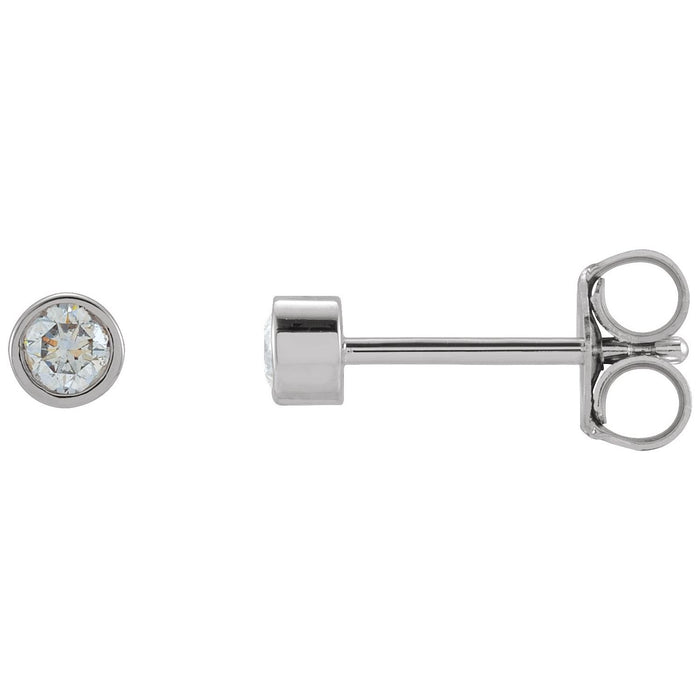
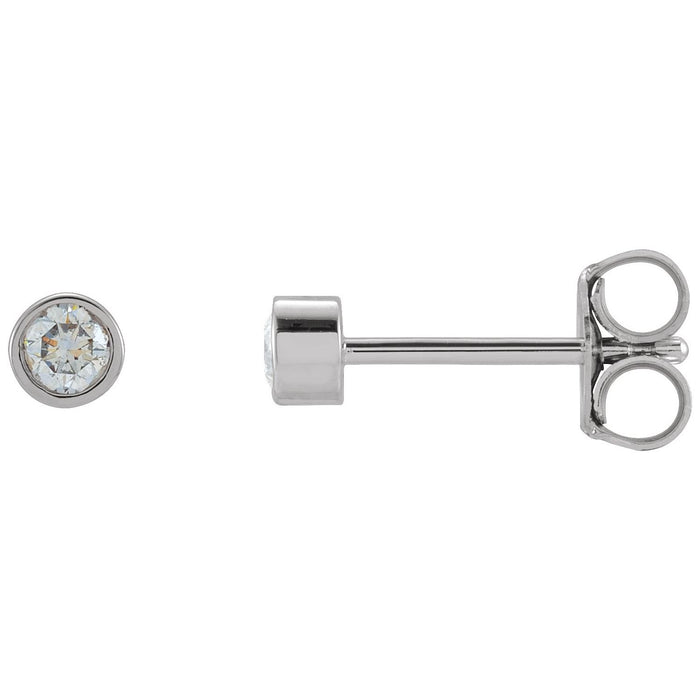
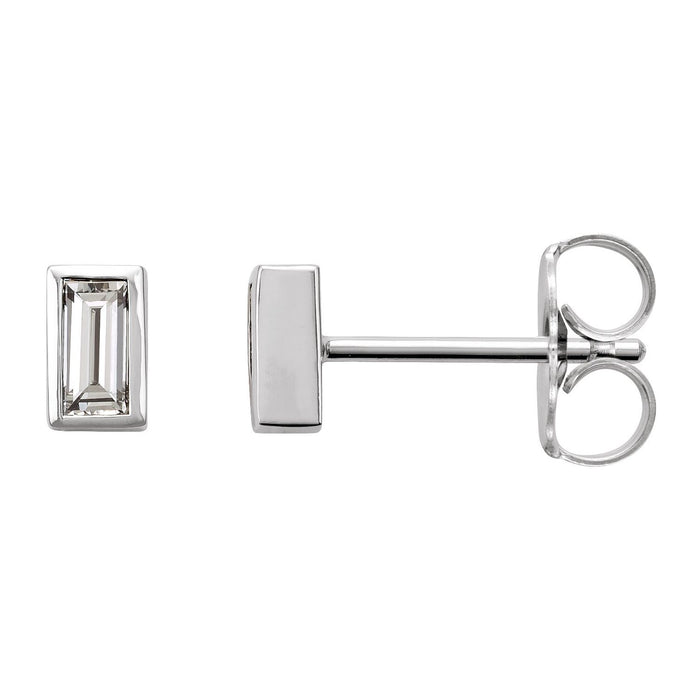
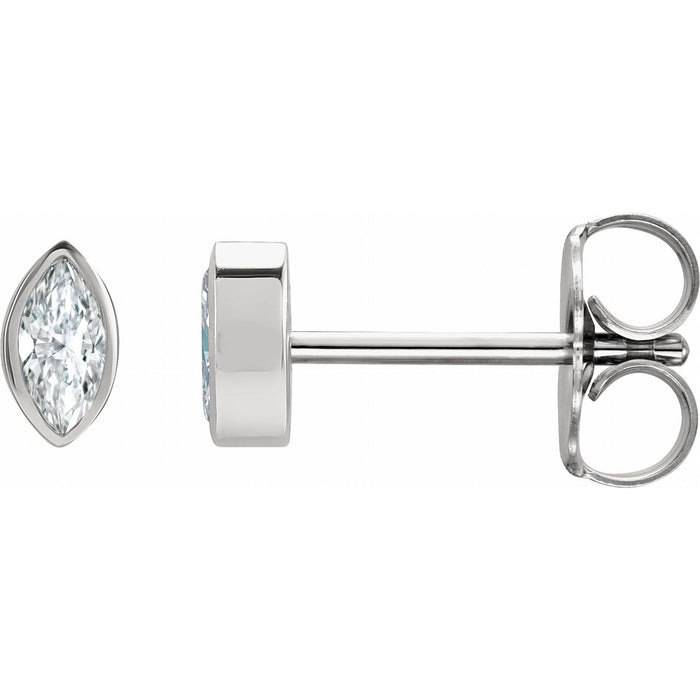
The setting is the little metal structure that holds the diamond, and it changes both the look and how the stud wears. A four-prong basket is the traditional choice: four slim claws lift the stone so light enters from the sides, giving an open, sparkly look. A martini or three-prong setting sits lower and tighter to the ear, forming a small triangle that hugs the earlobe and snags less on hair or scarves. A bezel wraps a thin rim of metal fully around the diamond, the most protected option and the smoothest against clothing, though it shows a touch less of the stone's edge. None is objectively best. Prongs maximize sparkle, martinis balance security and light, and bezels prioritize protection and comfort. If you're active, or buying for a child or a first piercing, lean toward martini or bezel. The comparison table above lays out each option side by side.
Which metal is best: 14K white, yellow, rose gold, or platinum?
Studs come in 14K white gold, yellow gold, rose gold, and platinum, and the choice is mostly about tone and skin. White gold and platinum both look bright and silvery and tend to make a white diamond read whiter, which is why they're the most popular for studs. Platinum is denser, naturally white all the way through, and holds prongs securely over decades, while 14K white gold is lighter and more affordable and is rhodium-plated for that bright finish. Yellow and rose gold bring warmth and a vintage feeling, and they flatter warmer skin tones beautifully. For everyday studs you'll rarely take out, many people choose white gold or platinum for a discreet look. If you're deciding between the two brights, our guide on white gold vs platinum compares durability, upkeep, and cost so you can pick with confidence.
What earring backs do studs use, and why are screw-backs recommended?
The back is what keeps a stud on your ear, and it matters more with valuable diamonds. A standard push back, or friction back, slides onto the post and holds by tension; it's easy to use but can loosen over a busy day. A screw-back threads onto a grooved post and locks in place, which is why we recommend it for studs you'd hate to lose; it takes a few extra seconds but won't slip out on its own. A la pousette, or locking, back has a small spring mechanism that clicks securely and releases with a gentle squeeze, offering strong hold with quick on and off. For everyday diamond studs, and especially for gifts or larger stones, screw-backs or la pousette backs give real peace of mind. Whichever you choose, press the backs firmly into place and check them now and then, since a lost back is the most common way studs go missing.
How do I choose the right size for everyday wear versus a statement?
Choosing size is really about how you want the studs to feel day to day. For everyday wear, most people are happiest in the quarter- to half-carat range per pair: big enough to catch light, small enough to disappear into a work call, a workout, or a night's sleep without a second thought. This is also the most forgiving size if you're unsure, since it flatters nearly everyone. For a statement, or a milestone purchase, three-quarter to one carat in each ear reads as unmistakably present and photographs beautifully, though larger stones sit higher and you'll feel them more. Face and earlobe size play a part too: smaller lobes carry petite studs gracefully, while larger stones balance a fuller face. Remember carat is nominal and approximate, so check real diameters before you decide, and when in doubt, size down for comfort and up for occasion.
Are diamond studs a good gift, and who are they for?
Diamond studs are one of the most reliable fine-jewelry gifts because they suit almost everyone and get worn constantly. They're a classic first fine gift, the piece someone keeps and reaches for daily long after trendier things fade. Graduations, a milestone birthday, an anniversary, a new baby, or simply a you-earned-this moment all fit studs perfectly. They work across ages and styles, need no sizing like a ring, and carry real meaning without being fussy. For a gift, a quarter- to half-carat pair in white gold is a safe, beloved choice, and screw-backs add security you'll both appreciate. If you're buying for someone with sensitive ears, platinum or 14K gold posts are a kind pick. Not sure of size or metal? Each pair comes ready to wear in gift-ready presentation, and our lifetime warranty means the gift is protected for the long run.
What's the price range, and what does the all-in from price include?
Diamond studs span a wide range because the price follows the diamond: carat weight, color, clarity, cut, whether the stones are lab-grown or natural, and the metal all move the number. Lab-grown pairs offer the most size for the money, while natural stones and platinum sit higher. Rather than show a teaser and surprise you at checkout, we use all-in from-pricing displayed on each pair, so the from price reflects a complete, ready-to-wear pair: two matched diamonds set to a published color and clarity spec at the stated carat, the setting, the posts and backs, and our lifetime warranty and free shipping. There are no hidden setting or finishing fees added afterward. Choosing a larger carat, a higher grade, a natural stone, or platinum moves the price up transparently as you select. If you'd like a fully certified, graded pair, that can be sourced on request.
How do I care for and clean my diamond studs?
Diamond studs are wonderfully low-maintenance because diamond is a 10 on the Mohs hardness scale, the hardest natural material, so the stones resist scratching through daily wear. The setting and metal need the attention. To keep them bright, soak the pair in warm water with a drop of mild dish soap, brush gently behind the diamond with a soft toothbrush where lotion and skin oils collect, rinse, and pat dry; that film behind the stone is the usual reason studs look dull. Avoid wearing them in pools or hot tubs, since chlorine is hard on gold alloys and can weaken prongs over time. Every few months, check that the prongs feel snug and the backs click firmly, and bring them in if anything feels loose. For a fuller routine and what to avoid, see our guide on how to clean jewelry. Handled simply, a good pair of studs stays beautiful for a lifetime.