
 View Piece
 View Piece
 View Piece
 View Piece
 View Piece
 View Piece
 View Piece
 View Piece
 View Piece
 View Piece
 View Piece
 View Piece
 View Piece
 View Piece
 View Piece
 View Piece
 View Piece
 View Piece
 View Piece
 View Piece
 View Piece
 View Piece
 View Piece
 View Piece
What a pearl is
Pearls are the only gems grown by a living animal. A saltwater oyster or freshwater mussel coats an irritant in layer after layer of nacre, the same lustrous material that lines its shell. Natural pearls form by chance and are now extremely rare; cultured pearls start when a technician places a bead or a piece of tissue inside the mollusk, which then does the rest. According to GIA, cultured pearls account for the vast majority of pearls sold today. Every pearl in this collection is a real cultured pearl. Our pearl guide goes deeper.
Akoya and freshwater pearls
Akoya pearls, cultured mainly in Japan and China, are the classic round white pearl with a bright, mirror-like luster; they are what most people picture in a strand or a pair of studs. Freshwater pearls, cultured mostly in China in mussels, come in a wider range of shapes and soft colors, including white, gray and black, often at a gentler price. We also use tiny seed pearls in crosses and halos, a keshi hoop and one mabé stud. Each product page names the pearl type and size. Pearls are routinely bleached to even their color, a standard practice across the trade.
Pearl, the June birthstone
Pearl is a birthstone for June, alongside moonstone and alexandrite. GIA's anniversary list names pearls for the 3rd year and cultured pearls for the 30th. Pearls have long stood for purity and simplicity and were traditionally given as wedding gifts, which is why a pair of studs remains one of the most-given pieces of fine jewelry. Read about the June birthstones, see birthstones by month, or browse birthstone jewelry.
How to judge pearls
Luster comes first: a fine pearl reflects light sharply from its surface and seems to glow from within. Then look at surface (fewer blemishes is better), shape (perfectly round is rarest, though baroque shapes have their own charm), color and overtone, size, and how well pearls match in a pair. Akoya generally wins on luster and roundness; freshwater on value and variety. For studs, 6 to 7 mm reads classic, 4 to 5 mm is delicate, and anything larger makes a statement.
Caring for pearls
Pearls rate just 2.5 to 3 on the Mohs scale, softer than any other gem we sell, and they react to chemicals. Put pearls on last, after perfume, hair spray and makeup, and wipe them with a soft, damp cloth after wearing. Never use an ultrasonic or steam cleaner. Store them apart from other jewelry, which can scratch them, and never in a plastic bag. Pearl rings and bracelets meet the most wear, so take them off for washing up, the gym and the beach. See our Mohs hardness scale and jewelry cleaning guide.
| Gem | Mohs hardness |
|---|---|
| Diamond | 10 |
| Sapphire and ruby | 9 |
| Amethyst and citrine | 7 |
| Opal | 5 to 6.5 |
| Pearl | 2.5 to 3 |
How to choose pearl jewelry
For a first piece, choose studs: they go with everything and suit every age. Yellow gold gives pearls a warm, classic finish; white gold and platinum make them look cooler and more modern. A diamond halo or accent turns a stud into evening jewelry. Pearl rings and cuffs are lovely but need gentler wear, so they work best as occasion pieces. Rings are made to order in your size, so check the sizing guide before choosing one.
Pearl Jewelry at a glance
| Piece | Wear level | Best settings | Good to know |
|---|---|---|---|
| Pearl stud earrings | Low | Classic, diamond halo, accented | Akoya and freshwater; 4 to 8 mm |
| Pearl earrings | Low | Drops, hoops, huggies, climbers | No sizing needed; an easy gift |
| Pearl rings | High | Halo, bypass, toi et moi | Best for occasions; made to your size |
| Pearl necklaces and pendants | Low | Strand, circle, cross, solitaire | Put on after perfume and makeup |
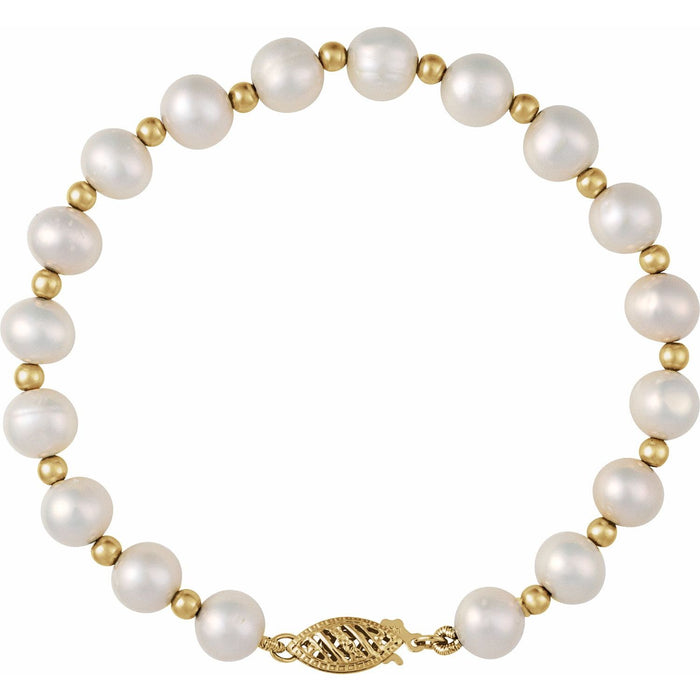
| Pearl bracelets | Medium | Cuff, station, strand | Remove for washing and sport |
Frequently Asked
Pearl Jewelry FAQ
What is pearl jewelry?
Pearl jewelry is any piece set with pearls, gems grown inside oysters or mussels. Ours includes studs, drops, hoops and climbers, rings, necklaces, pendants and bracelets, set with cultured akoya and freshwater pearls in solid 14K gold, with platinum on about half the designs.
Are your pearls real?
Yes. Every pearl here is a real cultured pearl, grown in a living oyster or mussel. Cultured pearls account for the vast majority of pearls sold today; natural pearls found by chance are extremely rare. Each product page names the pearl type.
What is the difference between akoya and freshwater pearls?
Akoya pearls are saltwater pearls, mostly from Japan and China, known for round shapes and a bright, mirror-like luster. Freshwater pearls grow in mussels, mostly in China, and offer more shapes and soft colors at a gentler price. Both are real cultured pearls.
Is pearl the June birthstone?
Yes. Pearl shares June with moonstone and alexandrite. GIA lists pearls for the 3rd wedding anniversary and cultured pearls for the 30th. See the June birthstones.
What size pearl studs should I choose?
6 to 7 mm is the classic size most people picture. 4 to 5 mm is delicate and good for everyday or a second piercing; 8 mm and above makes a statement. Our pearl stud earrings list the size on each page.
Can you wear pearls every day?
Pearl earrings and pendants, yes, with a little care. Pearls are soft at 2.5 to 3 on the Mohs scale and sensitive to chemicals, so put them on after perfume and makeup, and remove pearl rings and bracelets for washing, sport and the beach.
How do I clean pearl jewelry?
Wipe pearls with a soft, damp cloth after wearing. Never use ultrasonic or steam cleaners, harsh cleaners or ammonia. Store them apart from other jewelry, and never in a plastic bag. See our jewelry cleaning guide.
Are pearls treated?
Pearls are routinely bleached to even their color, a standard practice across the industry. Some colored pearls are also treated to achieve their shade. If you want more detail on a specific piece, ask our concierge.
Which metal looks best with pearls?
Yellow gold is the classic choice and warms a white pearl. White gold and platinum look crisp and modern, and rose gold flatters pearls with a pink overtone. Nearly every piece comes in 14K yellow gold, and most in white and rose gold.
Do you sell pearl necklaces?
Yes. This collection includes an akoya strand, a freshwater circle necklace, seed pearl and cross pendants and other pearl necklaces, all shown here.
Do you sell pearl bracelets?
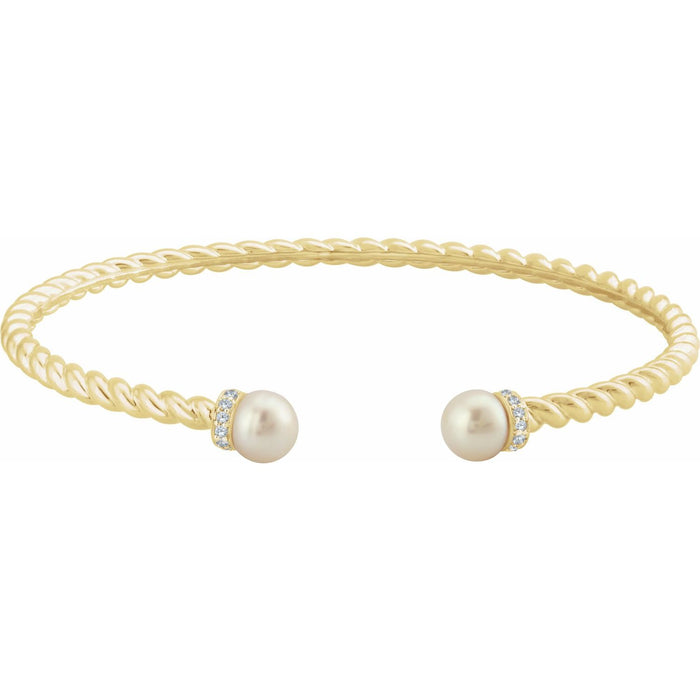
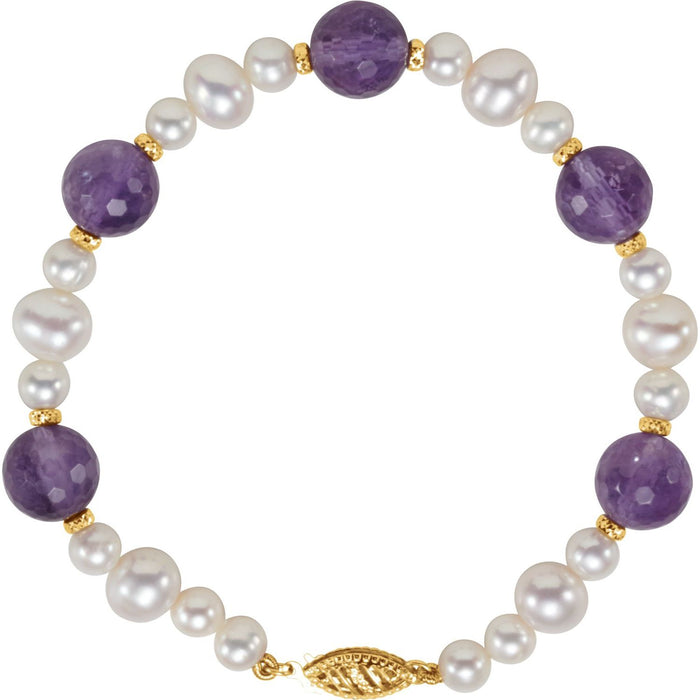
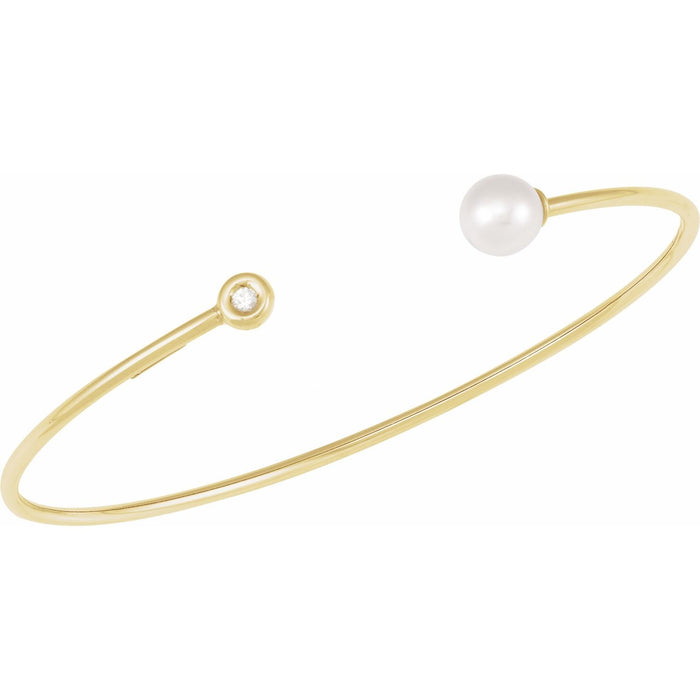
Yes: pearl cuffs, station and strand bracelets in our pearl bracelets collection, including a diamond rope cuff and an amethyst and pearl station bracelet.
How do I choose the right ring size?
Every pearl ring is made to order in the size you select, and rings are final sale, so measure first with our sizing guide. Between sizes, choose the larger one for wider bands.