

Frequently Asked
Vintage Engagement Rings FAQ
Are these vintage engagement rings antique, or newly made?
Every one of these vintage engagement rings is newly made, designed with the details of an earlier era but built from fresh metal around a new center stone. Nothing here is an estate or period piece. You get the look people love in antique rings, milgrain edges, old-world shapes, and soft halos, without the worn prongs, thinned bands, and unknown history that often come with a ring that has already lived a life.
What is milgrain, and why does it read as vintage?
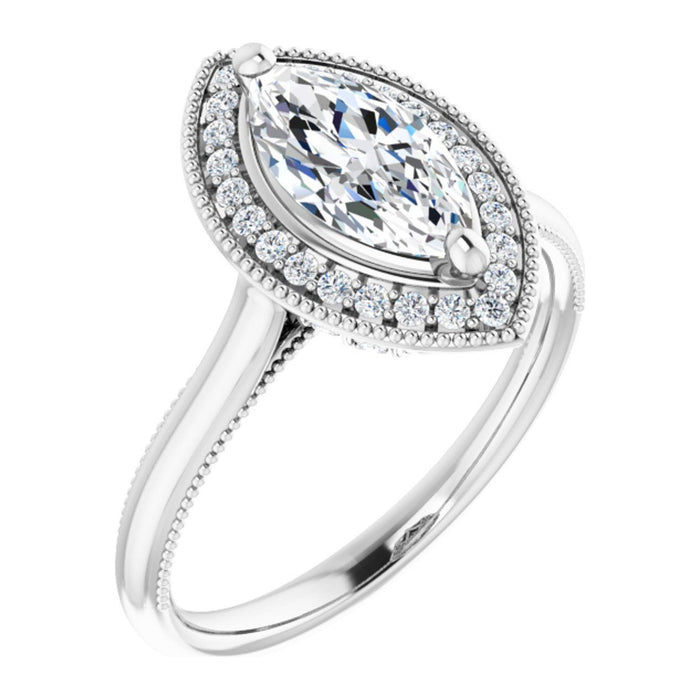
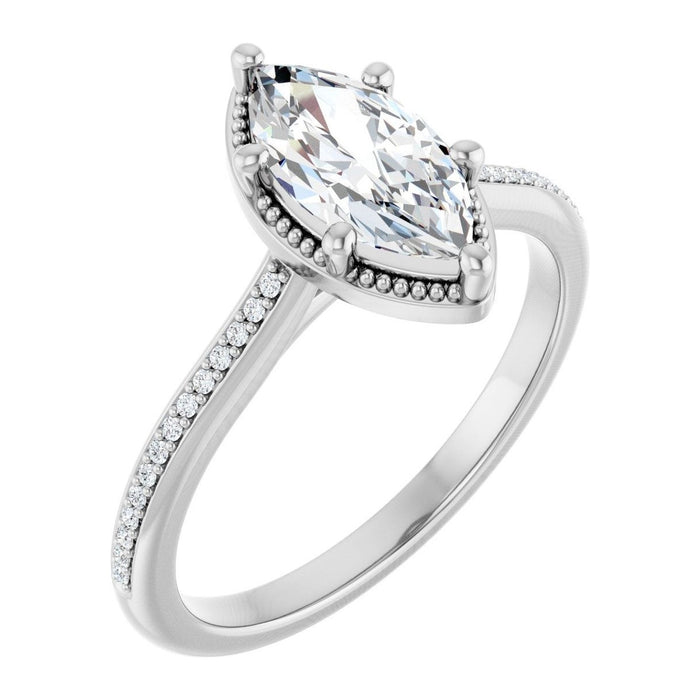
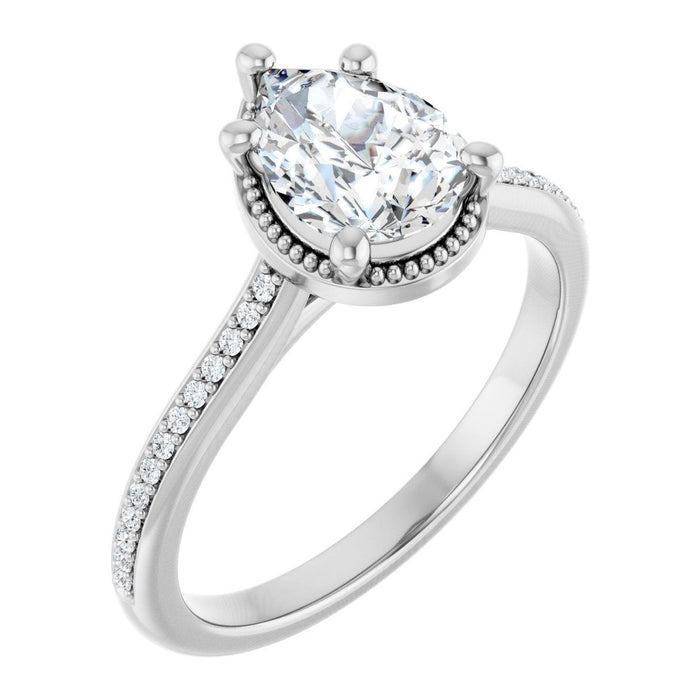
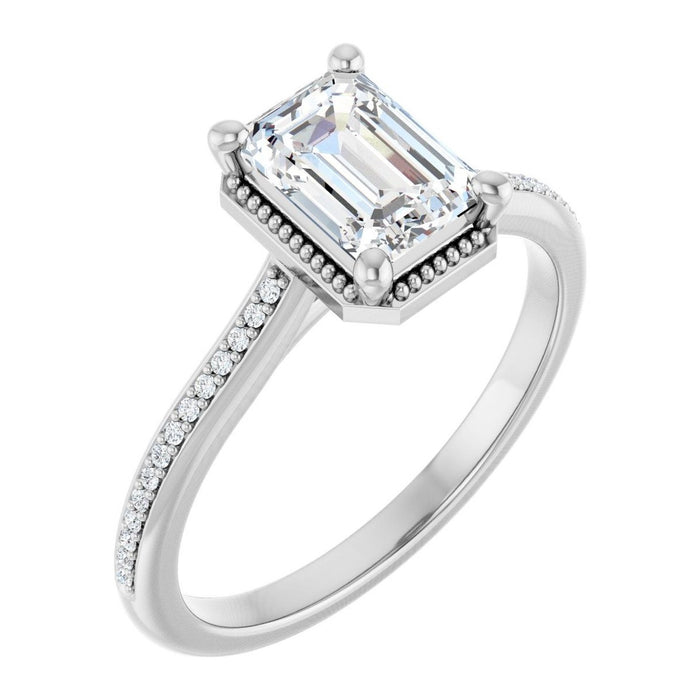
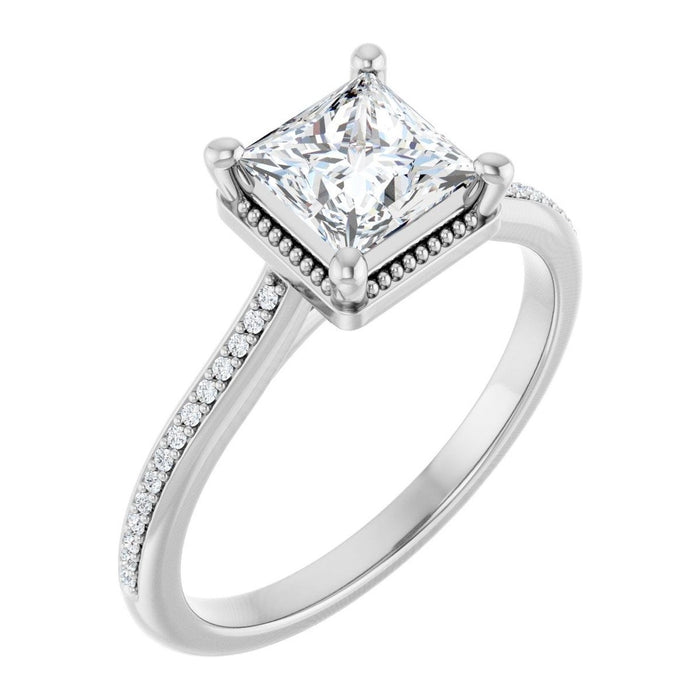
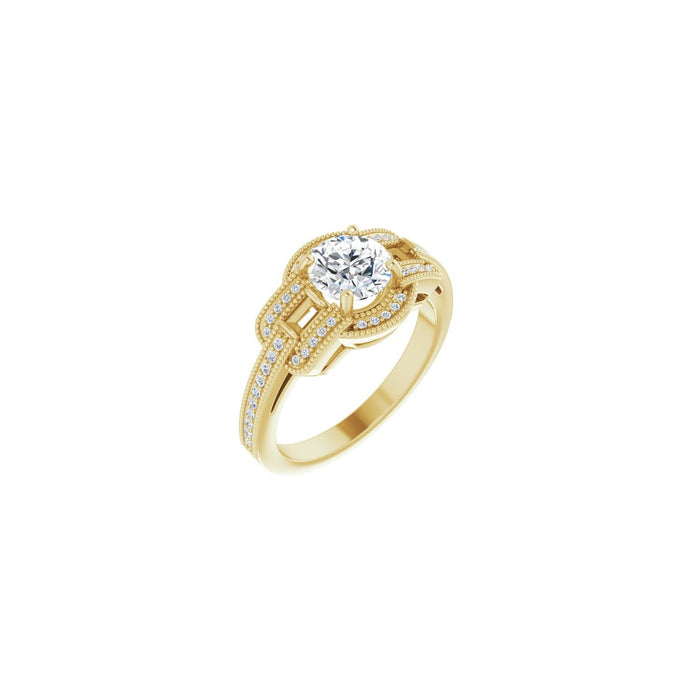
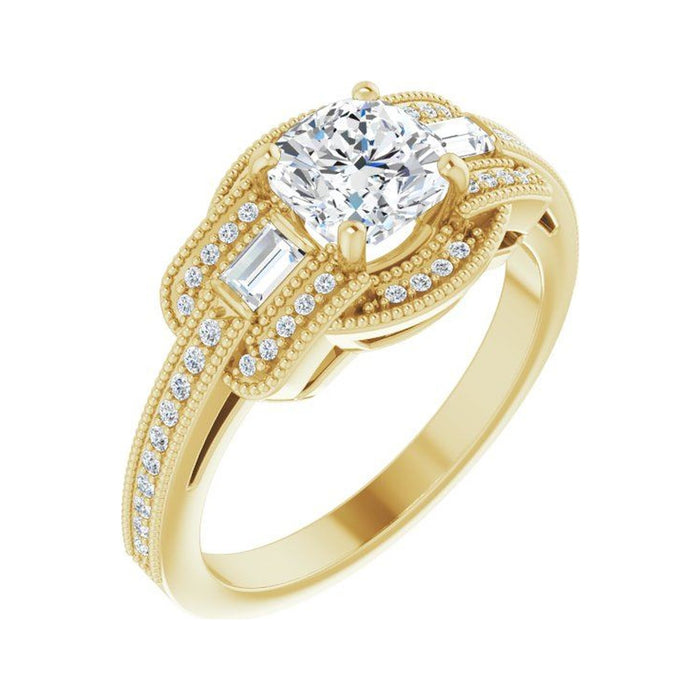
Milgrain is a fine row of tiny metal beads running along the edge of a band, a halo, or a bezel. The name comes from the French for a thousand grains, which is roughly what it looks like up close. Jewelers of the Edwardian and Art Deco years used it constantly to outline stones, and it remains the quickest visual cue that a ring belongs to that tradition. Every design in this collection carries it, from the Vintage Milgrain Solitaire styles to the Vintage Milgrain Halo designs.
Which diamond shapes suit vintage engagement rings?
This collection centers on the shapes with the deepest roots in older jewelry: cushion, pear, marquise, emerald cut, and princess cut. The cushion, with its soft corners, descends from the old mine cut of the 1800s, and the marquise has been worn for centuries. The emerald cut is a natural fit for Art Deco geometry, and the Emerald-Cut Vintage Milgrain Solitaire shows that well.
The princess cut is the most modern of the five, and set with milgrain it makes a crisp bridge between eras.
Are the center diamonds lab-grown?
Yes. Every center in this collection is a laboratory-grown diamond, and every title says so. Lab-grown diamonds are real diamonds, chemically and optically identical to mined ones, and they let you choose a larger or finer center for the same budget. Center stone options run from 0.65 ct to 2.75 ct depending on the design.
Should I choose a halo or a solitaire?
A halo makes the center look larger and adds a frame of small diamonds, which is the most romantic, ornamented interpretation of vintage. The Pear Vintage Milgrain Halo and the Marquise Vintage Milgrain Halo are strong examples, as are the two cushion halos. A solitaire is quieter and lets the milgrain do the work, as on the Princess-Cut, Pear, and Marquise Vintage Milgrain Solitaire styles. If she wears little jewelry day to day, the solitaire is usually the safer choice.
What makes the Cluster-Shoulder Milgrain Bezel design different?
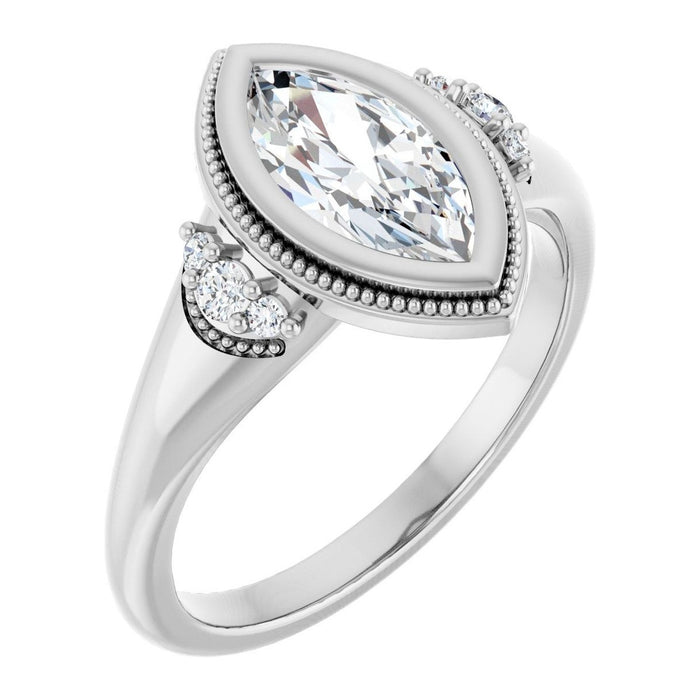
It sets a marquise center in a bezel, a rim of metal that wraps the stone and protects its fragile points, then adds small clusters of diamonds on the shoulders. The look is closer to a Victorian or Georgian ring than an Art Deco one. It is also the most practical choice in the collection for someone who works with her hands, since the bezel guards the two points of the marquise, which are the most vulnerable part of that shape.
Which metal is most authentic to the period?
Platinum was the defining metal of Edwardian and Art Deco jewelry, prized for holding fine detail like milgrain, and it is the most authentic choice here. Each design also comes in 14K and 18K yellow, white, and rose gold. Yellow and rose gold lean warmer and feel more like Victorian jewelry, while white gold gives the platinum look at a lower price.
Does milgrain wear away over time?
Slowly, yes. Milgrain beads soften after many years of daily wear, especially on the outer edges of the band. That is normal and part of how a ring ages, and a jeweler can refresh the beading if you want it crisp again. Removing the ring for gym work and heavy chores keeps the detail sharper for longer.
How do I clean a vintage-style ring?
Soak it for a few minutes in warm water with a drop of mild dish soap, then work a soft toothbrush gently around the milgrain and behind the stone, where lotion and dust collect. Rinse and dry with a lint-free cloth. Have the prongs and bezel checked once a year.
Can vintage engagement rings be returned?
No. Each ring is made to the ring size you choose and is final sale, so measure carefully before ordering. Our sizing guide walks you through it, and a local jeweler can confirm the size quickly. Each one carries our lifetime warranty against manufacturing defects.
How long does shipping take?
Each ring is made to order, and the product page shows its ship time, so allow lead time before a proposal. Every ring in this collection crosses the $500 mark, so it travels by free UPS Express with a signature required, fully insured.