
Frequently Asked
Rainbow Moonstone Earrings FAQ
What makes rainbow moonstone earrings special?
Movement. A pale, almost colorless stone releases a flash of blue, and sometimes violet or gold, as you turn your head. In conversation the color seems to come and go, which is why these pairs look so different across a dinner table than they do in a photo.
Is rainbow moonstone a true moonstone?
Here is the honest answer: no. Rainbow moonstone is the trade name for white labradorite, a plagioclase feldspar related to classic moonstone, which is an orthoclase feldspar. The two share nearly identical hardness and care, and the trade has used the name for decades. We would rather you know that now than find out later; what you are buying is a natural feldspar chosen for its blue flash. For true moonstone, see our moonstone jewelry.
Is rainbow moonstone a June birthstone?
No. The June birthstones are pearl, moonstone and alexandrite. Rainbow moonstone is labradorite, so it is not a birthstone, though its moonlit look makes these earrings an easy gift in any month.
Why are the stones cut smooth instead of faceted?
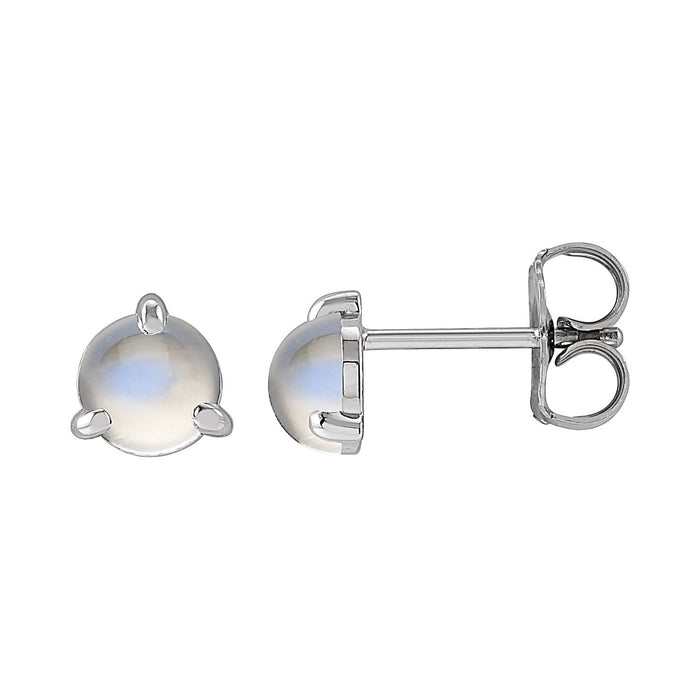
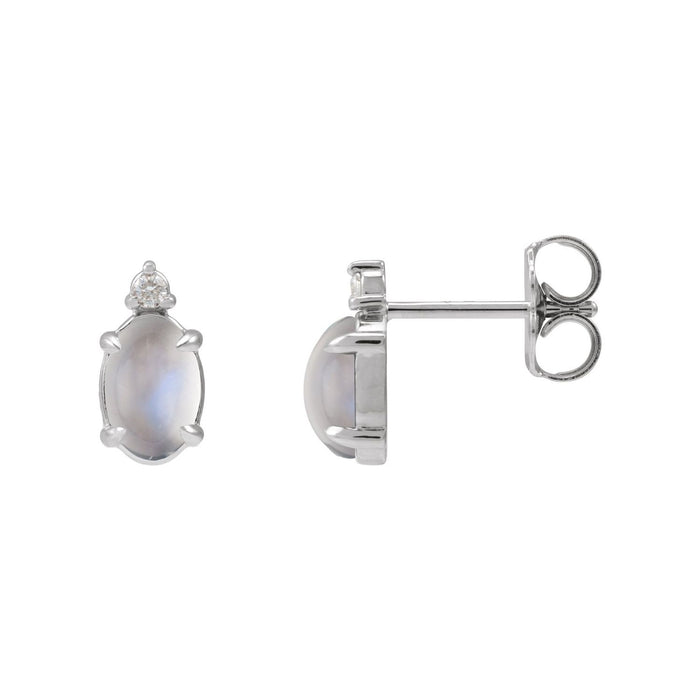
Because the flash lives inside the stone, not on its surface. A smooth, domed cabochon lets light roll across the top and reveal the color from every angle, where facets would break it into small pieces. That is also why rainbow moonstone looks best in motion.
Will the blue flash show in every light?
Not equally, and it helps to know why before the earrings arrive. The flash is strongest under a single, direct source of light, such as sunlight through a window, a lamp or a restaurant spotlight. Under flat, overcast daylight or a ceiling full of diffuse fixtures, the stone reads as a soft, milky white with only a hint of blue. Tilt it toward a light and the color returns.
Which stud size should I choose?
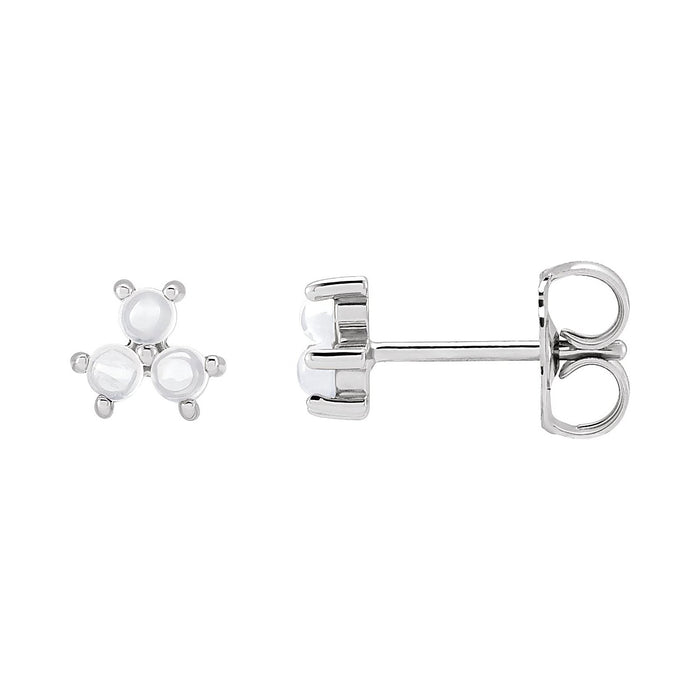
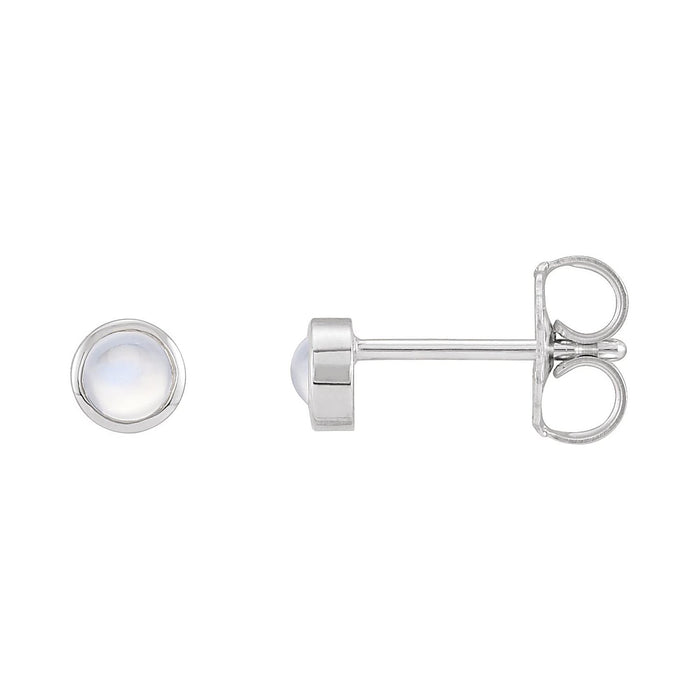
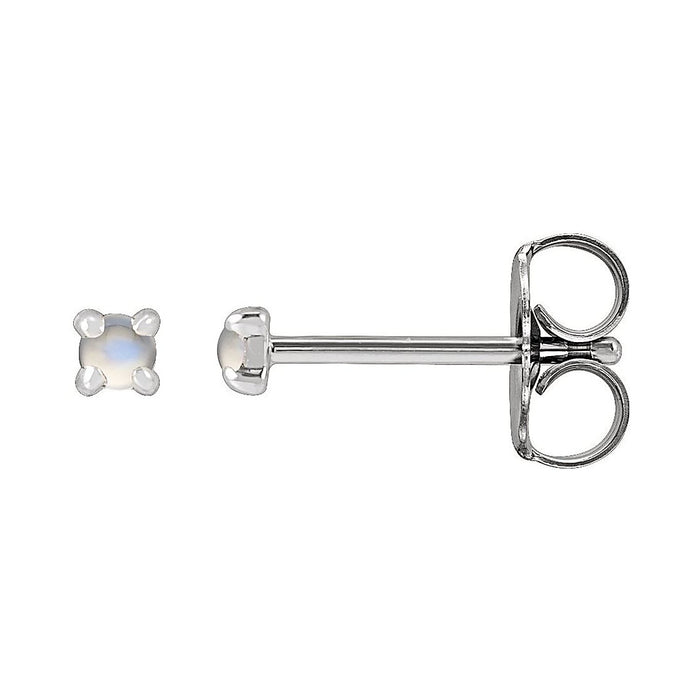
Think about where they will be worn. The Stud Rainbow Moonstone Earrings (2mm) and the Bezel-Set Stud Rainbow Moonstone Earrings (2mm) are quiet everyday choices and work well in a second piercing; the bezel pair, with its smooth rim of gold, is the most protective setting in the collection. The Stud Rainbow Moonstone Earrings (5 mm) are the larger everyday pair, and the 8 mm pair has real presence on the lobe, with a small natural diamond alongside.
How durable are rainbow moonstone earrings?
Durable enough for regular wear, with a little respect. Rainbow moonstone rates 6 to 6.5 on the Mohs scale, softer than quartz, and it can cleave if it takes a sharp blow. Earrings are an ideal home for a softer gem, since they rarely knock against anything. The main risks are dropping one on tile and storing it loose beside harder stones that can scratch its dome.
What pairs well with rainbow moonstone?
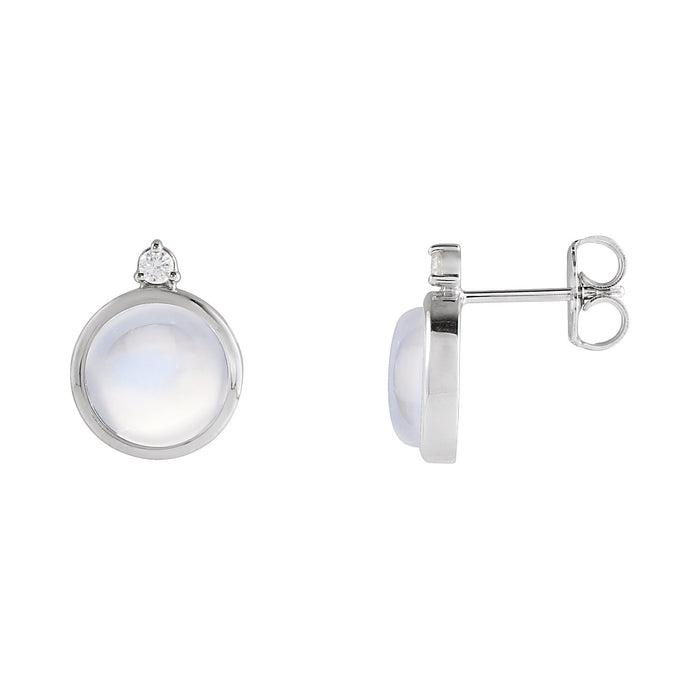
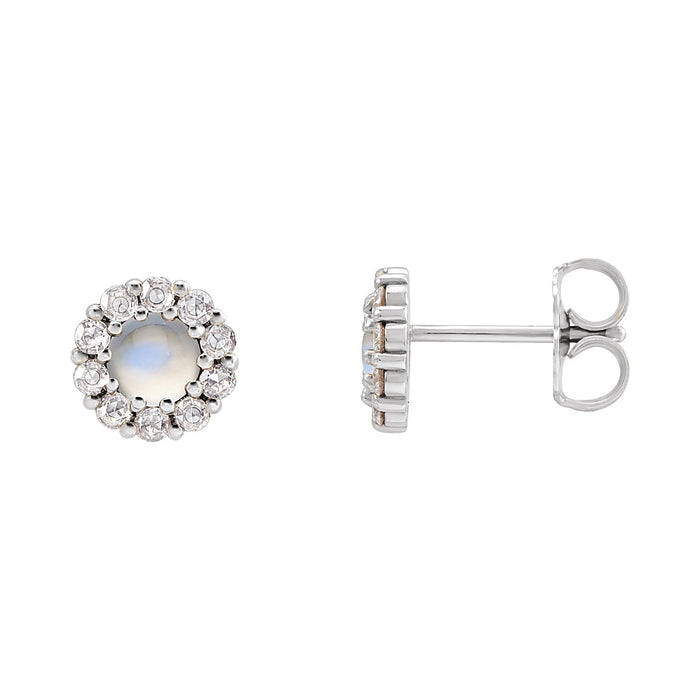
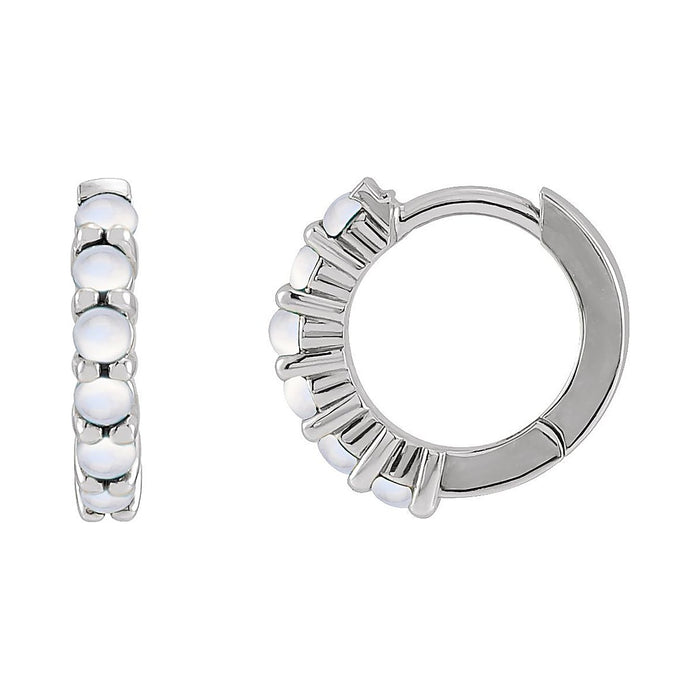
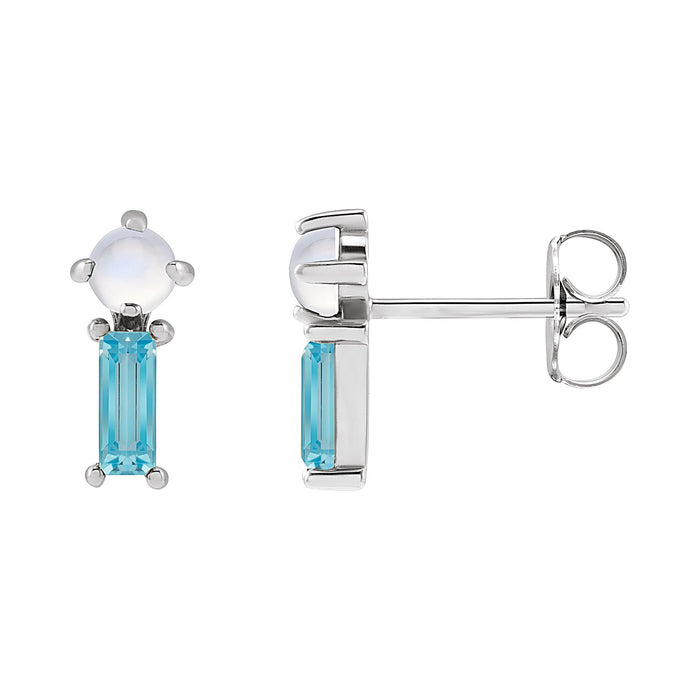
The Blue Topaz Rainbow Moonstone Drop Earrings show one answer: a Swiss blue topaz picks up the same blue that flashes in the moonstone, and topaz, at 8 on the Mohs scale, is the tougher of the two. The Halo Stud Rainbow Moonstone Earrings, the Three-Stone Stud Rainbow Moonstone Earrings and the Rainbow Moonstone Oval Cabochon Diamond Earrings add sparkle around a stone that otherwise glows rather than glitters. The Hoop Rainbow Moonstone Earrings put the stones in motion, which suits them better than almost any other format.
Which metal looks best with rainbow moonstone?
Most pairs come in 14K white, yellow or rose gold, or platinum; the Rainbow Moonstone Oval Cabochon Diamond Earrings come in 14K gold only. White gold and platinum keep the look cool and let the blue flash lead. Yellow gold warms the milky body and makes it feel more vintage, and rose gold is the softest pairing.
Are rainbow moonstone earrings a good gift?
Yes, and an easy one, because there is no ring size to guess. The small studs or the bezel pair suit someone who wears small jewelry daily; the hoops or the drops feel more like an occasion.
How should I clean rainbow moonstone earrings?
Wipe them with a soft cloth after wearing, and when they need more, wash them briefly in lukewarm water with mild soap and dry them right away. Never use ultrasonic or steam cleaners, and avoid sudden temperature changes. Store each pair in its own soft pouch or compartment so harder gems cannot scratch the domes.